
Victorian Ebonised Side Table
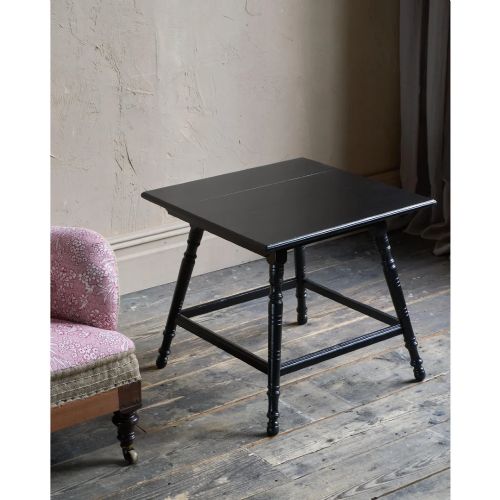
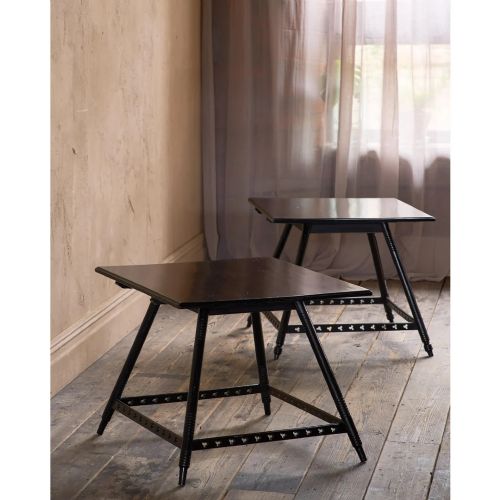
When you search for a Victorian ebonised side table, you find dark, polished timber surfaces shaped by the tastes of the nineteenth century.
Victorian Ebonised Side Table
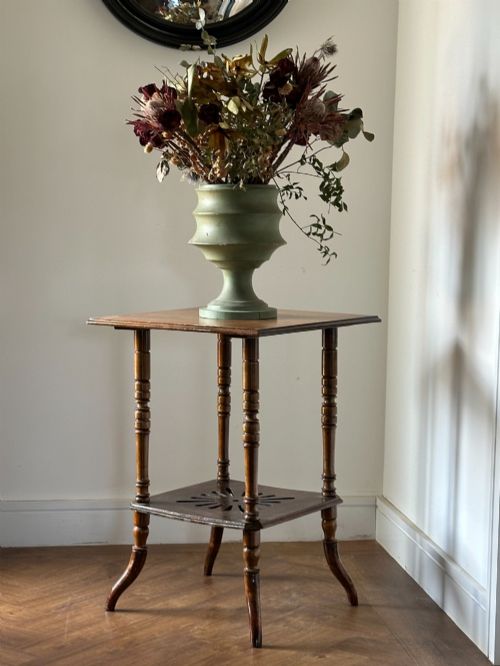
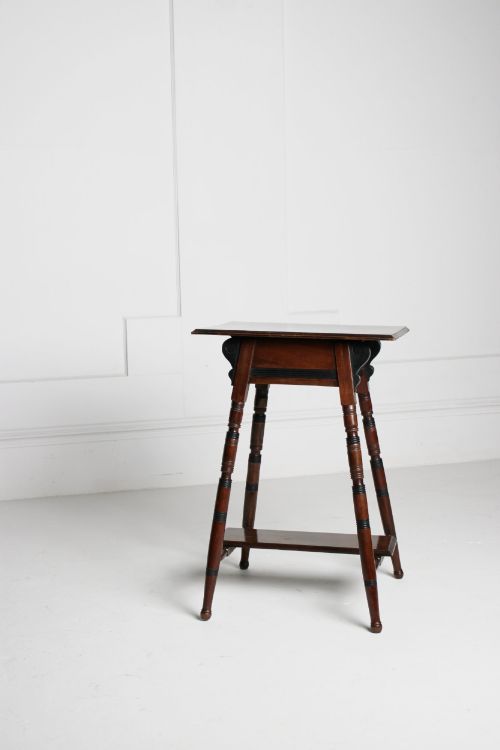
A Victorian ebonised side table sits quietly in a room, offering a dark timber surface that contrasts with lighter walls and fabrics. These pieces emerge chiefly from the nineteenth century, spanning decades from the eighteen-sixties through to nineteen-hundred.
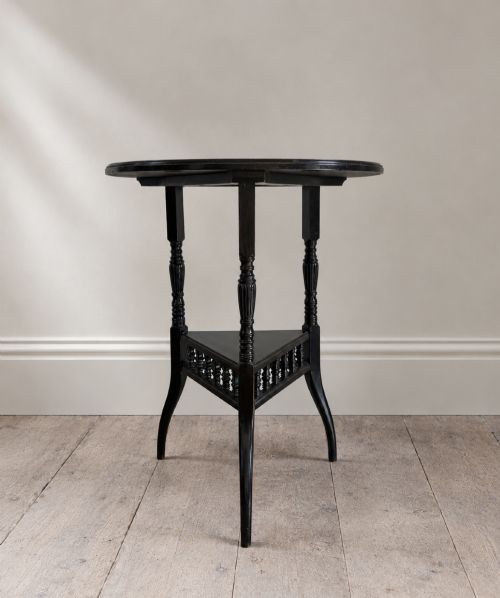
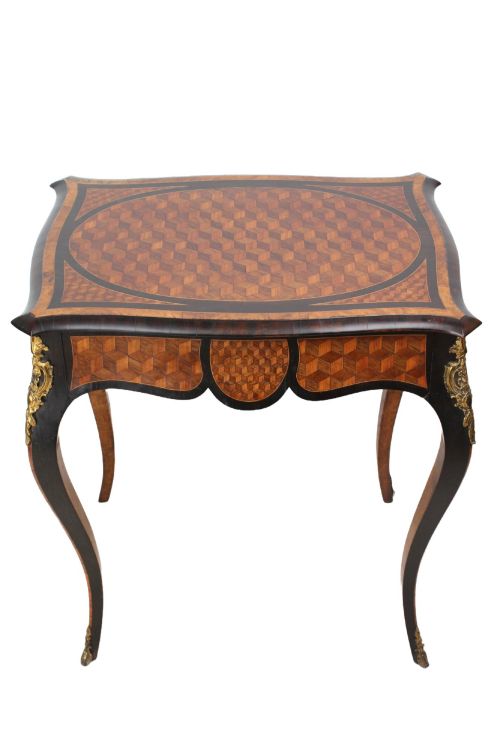
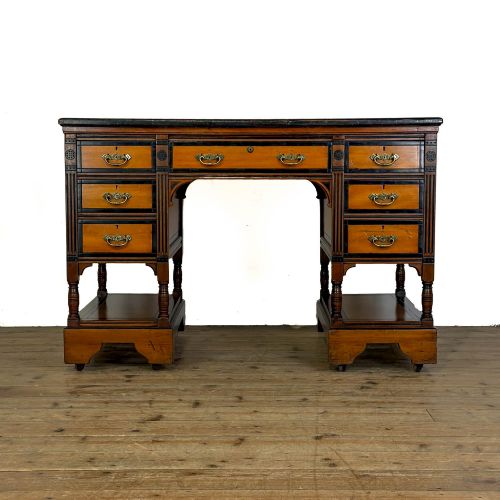
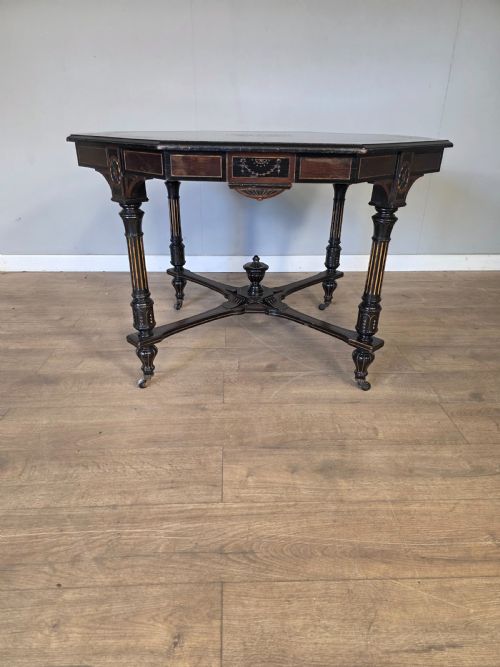
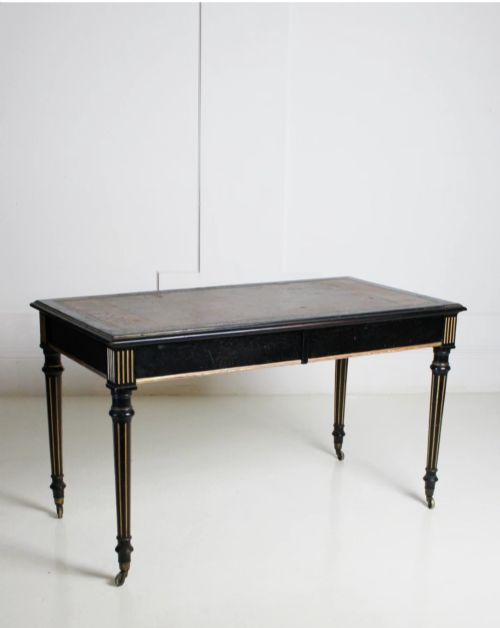
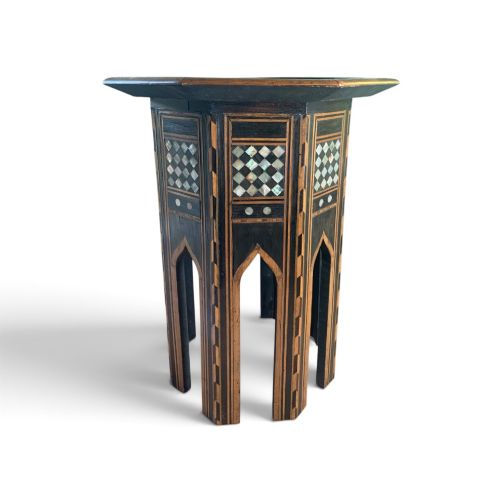
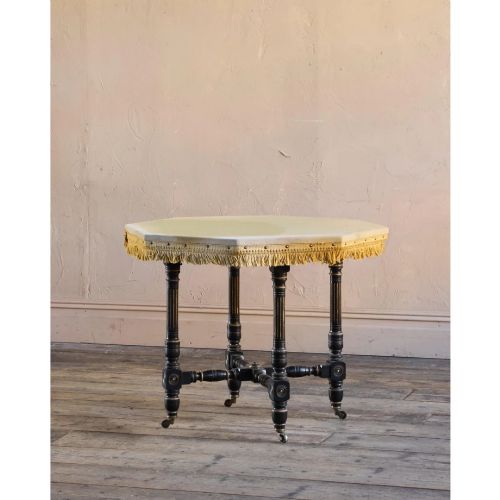
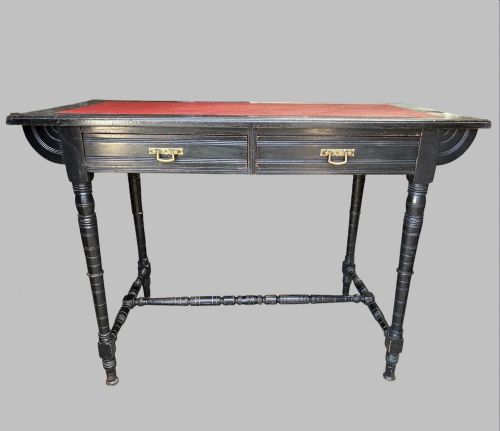
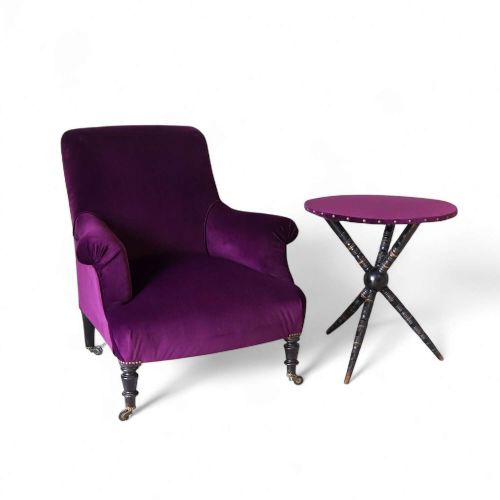
The version you meet most often on this page is an occasional or centre table shaped by the Aesthetic Movement or Louis XV Revival. Makers also produced writing desks, gypsy tables, and occasional stands with octagonal or round tops.
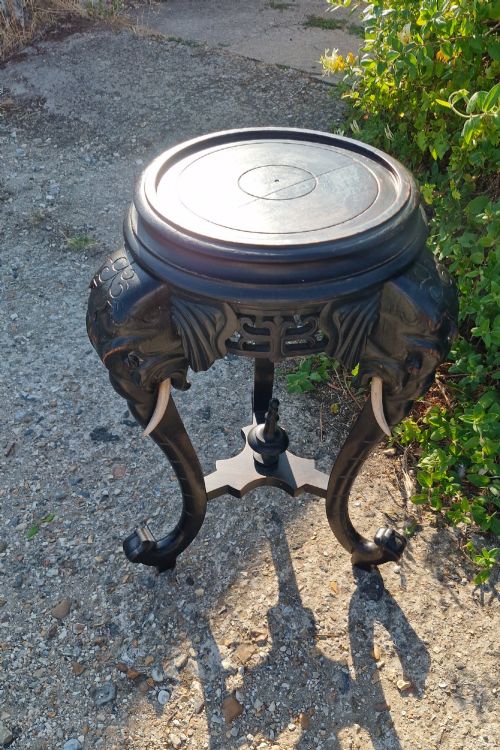
Moorish Revival and Anglo-Japanese influences appear alongside plain ebonised hardwood, showing how makers drew inspiration from global design. Forms range from simple tripod wine tables to larger library and partners desks.
Materials and Technique
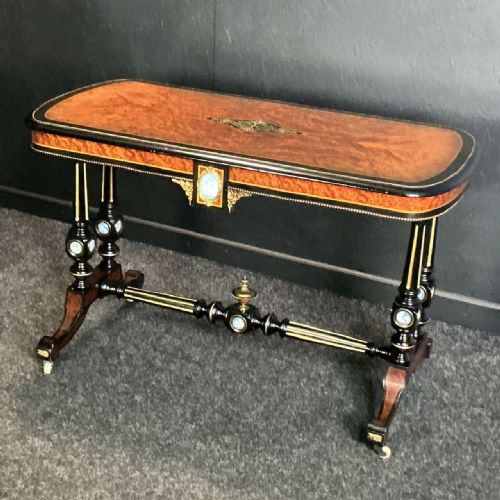
Carpenters utilised hardwood, walnut, and amboyna as the structural foundation, applying an ebonised finish to mimic costly exotic timbers like ebony. Craftsmen added brass mounts, gilt detailing, and intricate parquetry inlay to elevate the plain dark surfaces.
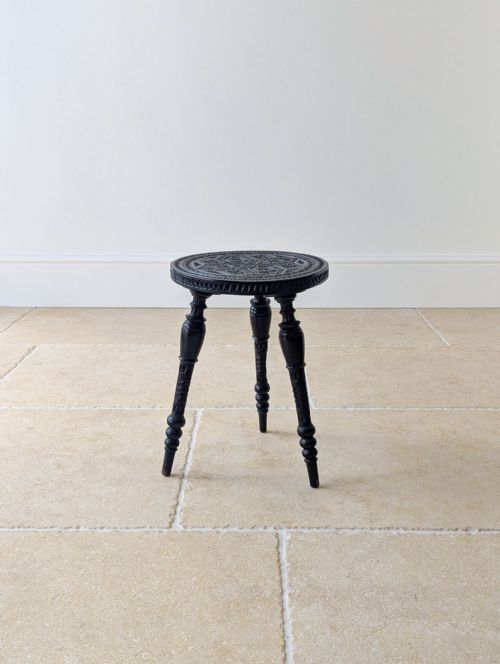
Japanning and chip-carving transform basic timber into textured decorative objects, sometimes paired with papier mâché or painted elements. Workshops employed skilled turners and cabinetmakers to build sturdy tripod bases, octagonal frames, and folding card table mechanisms.
Listings feature nineteenth-century ebonised wood alongside walnut, amboyna, and brass.
Craftsmanship and Distinction
The distinction between standard production and superior craftsmanship lies in the depth of the ebonised finish and the precision of the joinery. Finer examples display meticulous chip-carving, genuine amboyna or walnut secondary woods, and intact brass hardware rather than stamped replacements.
Design ambition separates basic utility items from pieces linked to notable retail houses or specific artistic movements. Proportion, stability in the pedestal or legs, and the crisp execution of inlay work determine the standing of each piece.
JAS Shoolbred·Edward And Roberts·Hindley and Sons·Druce And Co London·Liberty And Co
The Victorian Ebonised Side Table Glossary
- Ebonised
- Wood treated with stain, paint, or polish to imitate genuine ebony. This finish became immensely popular during the nineteenth century for furniture influenced by Asian design.
- Aesthetic Movement
- A late nineteenth-century design current prioritising visual beauty over narrative or moral function. Pieces in this style often feature geometric lines and Japanese motifs.
- Japanning
- European imitation of traditional Japanese and Chinese lacquerwork. Artisans built up layers of varnish and paint, sometimes adding gold decoration.
- Parquetry
- Geometric mosaic woodwork used for decorative floors and table tops. Craftsmen fitted small blocks of contrasting timber together within precise borders.
- Amboyna
- A highly prized burl wood harvested from tropical trees. It yields a rich, mottled grain often used for tabletops and cabinet veneers.
Victorian Ebonised Side Table: Frequently Asked Questions
What is an ebonised table?
An ebonised table is a wooden piece of furniture treated with a dark finish to simulate costly ebony wood. This treatment was widely adopted by nineteenth-century cabinetmakers.
These tables range from simple occasional stands to elaborate centre tables with inlaid brass and exotic veneers.
How do I date a Victorian table?
Dating relies on observing construction methods, timber choices, and stylistic cues recorded in the physical piece. Secondary woods and fastener types help narrow down the decade of manufacture.
Design influences like the Aesthetic Movement or Louis XV Revival further point to specific periods within the nineteenth century.
Where were these tables used?
These tables served various domestic functions in Victorian homes, acting as lamp stands, writing surfaces, or decorative centrepieces in parlours and drawing rooms. Smaller occasional tables could be moved easily to accommodate tea or cards.
Larger library tables and partners desks provided sturdy surfaces for reading and correspondence in studies.
How do I care for ebonised wood?
Care involves keeping the dark polished surfaces away from direct sunlight and excessive moisture to protect the finish. Gentle dusting with a soft cloth maintains the lustre without harming the wood.
Avoid chemical polishes that can build up a residue and dull the original ebonised sheen.