


Victorian Easel Mirror
These Victorian easel mirror pieces combine functional glass with decorative frames designed to stand unsupported on dressing tables and surfaces.
Victorian Easel Mirror
A victorian easel mirror serves as a tabletop dressing accessory, featuring a hinged rear support that holds the glass upright without wall mounting. The pieces appearing here range from compact travel forms to large decorative dressing table mirrors produced across the nineteenth century.
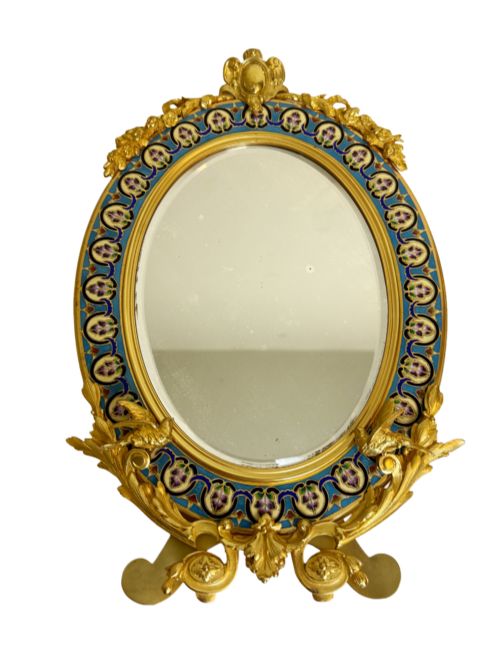
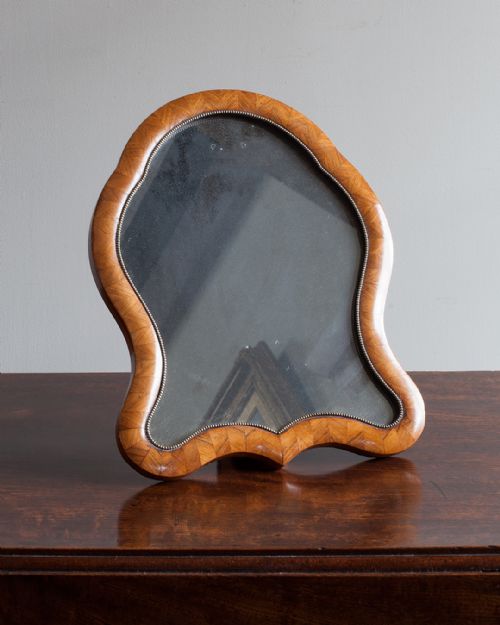
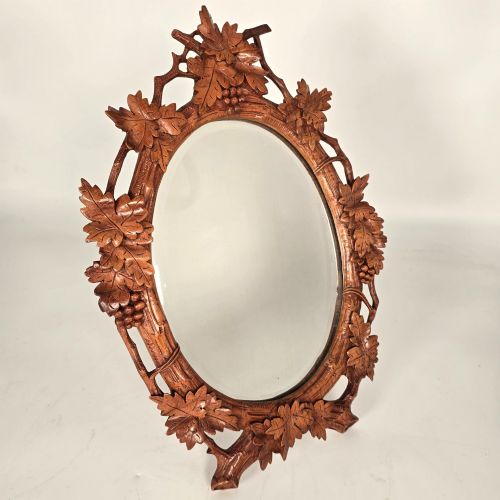
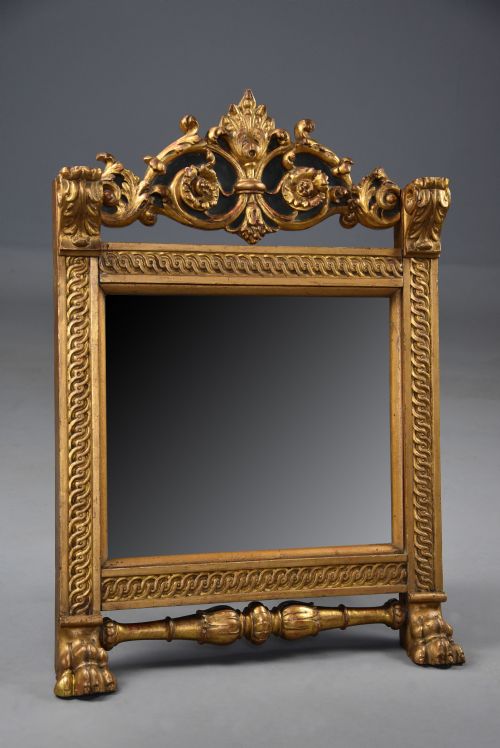
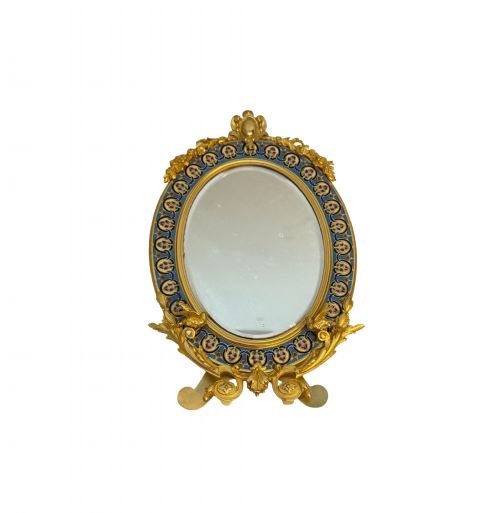
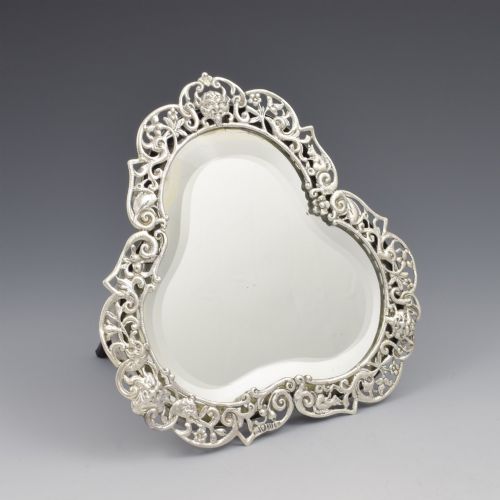
The material selection spans precious metals, carved timber, cast brass, and enamelled bronze, reflecting the diverse taste of the period. Forms include oval, circular, and heart shapes framed in sterling silver, gilt bronze, porcelain, and lime wood.
Origin points encompass British workshops alongside continental European production, particularly French gilt bronze and German porcelain. Buyers find both simple domestic shaving glasses and ornate display pieces intended for prominent bedroom placement.
Materials and construction
Silversmiths embossed, pierced, and cast sterling silver mounts, often incorporating organic motifs and hallmarks indicating assay offices in London and Birmingham. These silver fronts are typically mounted onto wooden easel backs lined with velvet or fabric.
Carved timber examples utilise lime wood, kingwood, or mahogany, shaped through manual chiselling and joinery to support heavy bevelled mirror glass. Giltwood and gilt bronze pieces apply metallic leaf or fire gilding over carved wood or cast metal bases.
Porcelain and champleve enamel panels integrate directly into the metal or ceramic frames, bonded with traditional adhesives and mechanical pins.
Table mirrors appear in oval, circular, and heart formats with easel stands lined in velvet or wood.
Indicators of quality
The depth and crispness of hand carving in wood or chasing in metal dictate the refinement of the frame. Superior examples display sharp relief work in floral, animal, or architectural motifs without softening of detail.
Structural integrity of the easel mechanism determines daily usability. High quality items retain original hinges, secure backing boards, and substantial glass plates free from excessive silver degradation.
William Comyns·Henry Matthews·Sitzendorf
The Victorian Easel Mirror Glossary
- Easel back
- A hinged leg attached to the reverse of a mirror frame allowing it to stand independently on a flat surface. This support folds flat against the glass when not in use.
- Champleve
- An enamelling technique where troughs are dug into a metal surface and filled with vitreous paste before firing. This coloured decoration frequently enhances nineteenth century bronze frames.
- Hallmark
- A stamp impressed into silver indicating the maker, assay office, and year of testing. British pieces commonly display these official marks on the outer silver border.
- Gilt bronze
- An alloy of copper and zinc treated with gold leaf or mercury gilding to produce a rich metallic lustre. It provides durability and decorative warmth to continental mirror frames.
- Bevelled glass
- A mirror plate with edges cut and polished at an angle to create a framed optical border. This technique adds depth to the reflection.
Victorian Easel Mirror: Frequently Asked Questions
How do I date a silver mirror?
Examine the hallmarks stamped along the border of the silver frame, which indicate the specific assay office and year of production. British pieces from this era frequently carry clear maker marks and date letters.
Stylistic elements like rococo revival curves or art nouveau flora also assist in narrowing the decade of manufacture when combined with hallmarking evidence.
Are the easel backs original?
Many surviving pieces retain their original wooden backing boards and folding metal or fabric covered struts. Replacements often show modern screw types or mismatched timber grains.
Inspect the hinge attachments where the strut meets the frame for consistent wear and period appropriate fastening methods.
Can silver frames be polished?
Sterling silver mounts tolerate careful cleaning with non abrasive silver cloth to maintain their lustre without removing fine detail. Avoid liquid dips that can seep behind the mirror plate and damage the backing.
Take care around velvet linings and enamel panels to prevent staining or chemical degradation during maintenance.
Where should I place a table mirror?
Position the piece on a sturdy dressing table, chest of drawers, or mantelpiece where the easel support rests securely without risk of tipping. Adequate clearance prevents strain on the rear hinge mechanism.
Indirect natural light enhances the reflective glass and highlights the detailed metalwork or carved wood framing.