



Sterling Silver Easel Mirror
These sterling silver easel mirror examples combine reflective glass with hallmarked metal mounts to stand upright on a dressing table.
Sterling Silver Easel Mirror
When you search for a sterling silver easel mirror, you encounter tabletop dressing pieces designed to reflect light and aid personal grooming. These table mirrors and vanity mirrors primarily emerge from the Victorian era and the year 1900, reflecting late nineteenth and early twentieth century domestic habits.
The most common version you meet on this page is the Victorian silver mounted easel mirror supported by a hinged rear strut. These objects frequently incorporate materials such as velvet, wood, leather and mirror glass alongside sterling silver mounts.
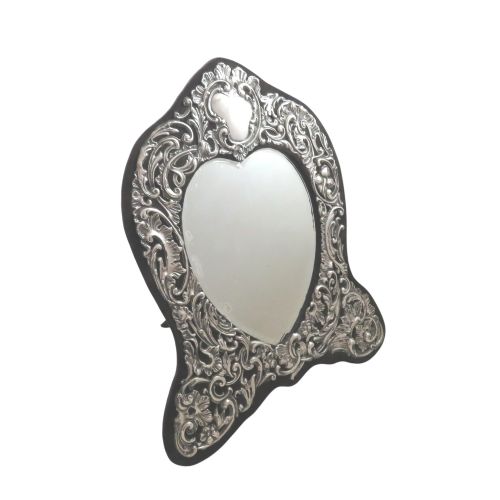
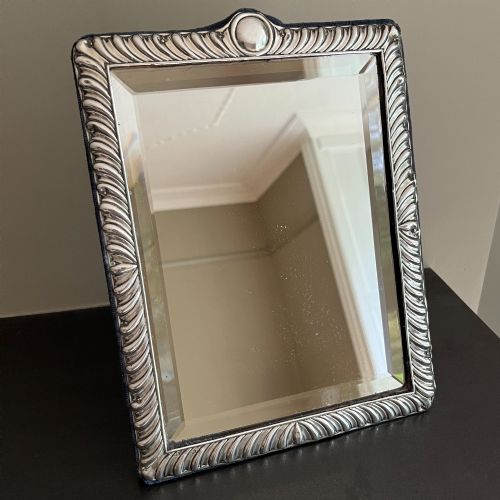
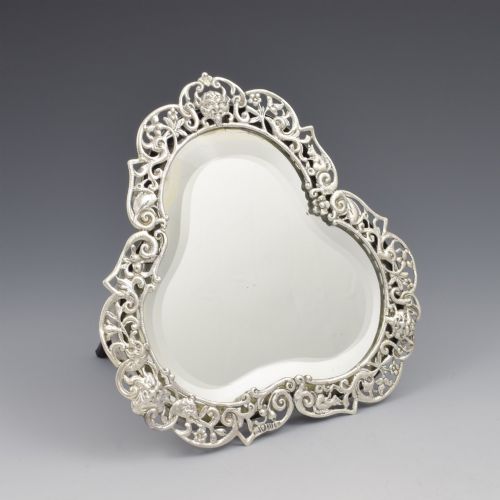
Makers shaped these dressing table mirrors in various forms, ranging from standard rectangular table mirrors to heart shaped mirror designs and pierced frames decorated with animals and birds.
How they were made
Silversmiths constructed these vanity mirrors using sterling silver sheet metal, which they embossed, pierced or mounted onto rigid wooden backings. The metal frames surround bevelled mirror glass and secure with backing materials like velvet or leather.
Makers incorporated hinged rear struts constructed from metal or wood to allow the tabletop mirrors to stand upright. Hallmarks were stamped directly into the silver mounts to indicate the assay office, date and purity.
Sterling Silver Easel Mirror Retail Price Guide 2026
Typical asking prices for sterling silver easel mirror among the pieces listed under this phrase on Sellingantiques today, from the lower quarter to the upper quarter. They describe what is for sale here now, not the wider market.
What varies in quality
The calibre of a dressing table mirror depends upon the depth and definition of the embossed or pierced decoration across the silver mount. Elaborate motifs such as animals and birds reflect greater craftsmanship than plain or minimally decorated frames.
Scale and proportion distinguish the range, with larger antique examples requiring more substantial silver sheet and sturdier structural backing to support the weight of the glass.
William Comyns·Henry Matthews
The Sterling Silver Easel Mirror Glossary
- Easel mirror
- A tabletop mirror supported by a hinged rear leg or strut rather than a fixed frame. This design allows the glass to tilt at an angle on a dressing table.
- Hallmark
- An official stamp applied to precious metals indicating the standard of purity, the assay office, and the date letter. English examples display these marks on the silver mount.
- Strut
- The hinged support attached to the back of a dressing table mirror that holds it upright. It is frequently covered in velvet or leather.
- Embossed
- Metalwork raised into relief by hammering or pressing from the reverse side. Victorian pieces often use this technique to create floral or figurative patterns.
- Pierced
- Metalwork cut through to create decorative openwork patterns. This method appears on frames featuring birds and animals.
Sterling Silver Easel Mirror: Frequently Asked Questions
What is a sterling silver easel mirror?
A sterling silver easel mirror is a portable dressing table accessory featuring a reflective glass plate framed in hallmarked silver. A hinged strut at the back allows the piece to stand upright on furniture.
These items served practical functions in Victorian and Edwardian bedrooms for grooming and dressing. Their decorative metal mounts also added ornamentation to vanity surfaces.
How do I date a silver mirror?
You date these mirrors by examining the hallmarks stamped into the sterling silver mount, which record the specific assay office and year of production. Stylistic clues such as Victorian Rococo Revival ornamentation or Edwardian lines also help determine the period.
Makers often registered specific frame designs, providing further evidence for the timeline of manufacture. Comparing the backing materials like wood, leather, or velvet offers additional contextual clues.
Where were these mirrors placed?
These mirrors were designed primarily for placement on dressing tables, vanity desks, and tabletops within bedrooms and dressing rooms. Their integrated easel struts allowed users to adjust the viewing angle easily.
Because they were portable, owners could reposition them to catch optimal natural light near windows during daytime grooming routines.
What materials support the silver?
The sterling silver frame typically encases a wooden backing structure that gives the mirror rigidity and weight. Materials such as velvet, leather, or watered silk then cover the reverse side and enclose the back of the glass.
Mirror glass forms the reflective surface at the front, held securely within the metal bezel or mount.