


Victorian Drinks Tray
When you search for a victorian drinks tray, you find practical serving pieces in timber and silver plate designed for hospitality.
Victorian Drinks Tray
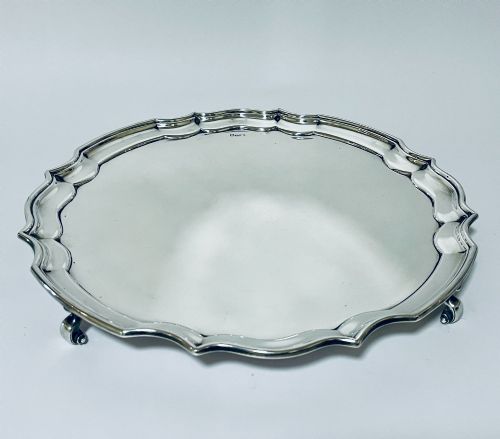
A victorian drinks tray encompasses portable wooden platters, gallery edges, and large salvers intended for entertaining during the nineteenth century. These items range from simple afternoon tea carriers to elaborate presentation pieces used across dining rooms and parlours.
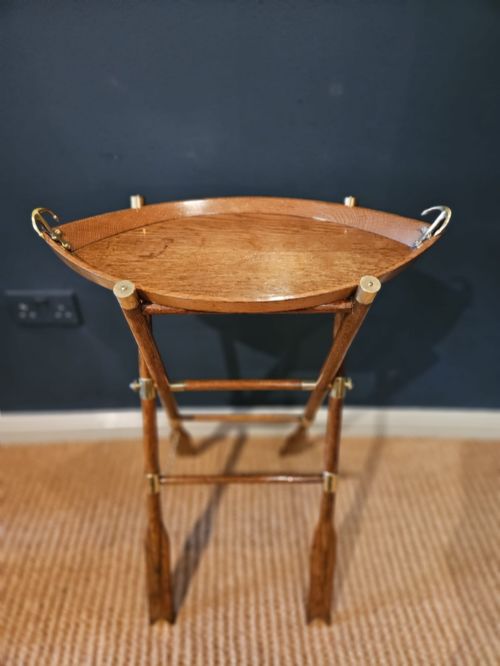
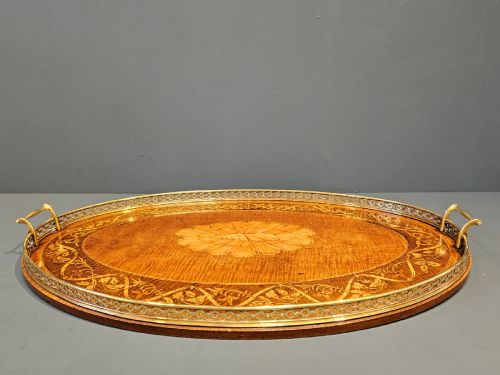
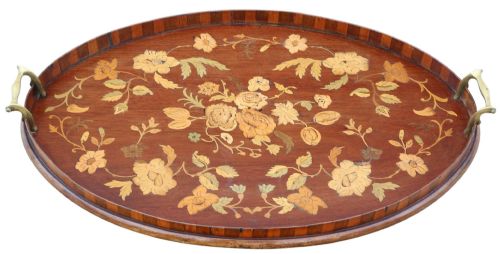
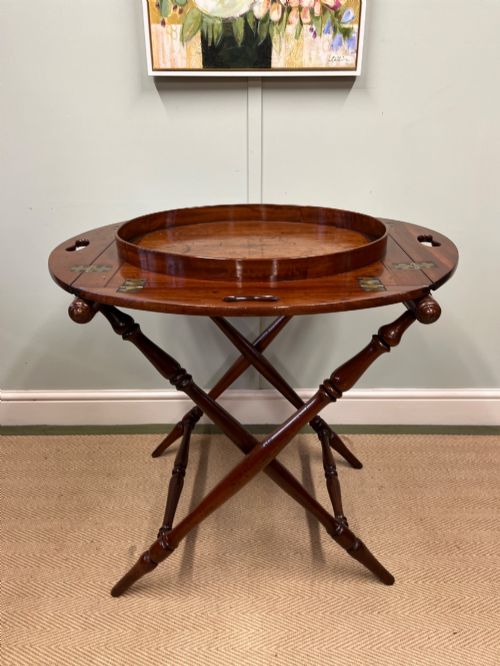
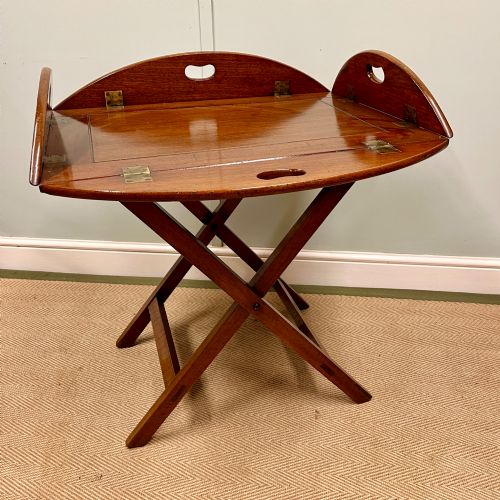
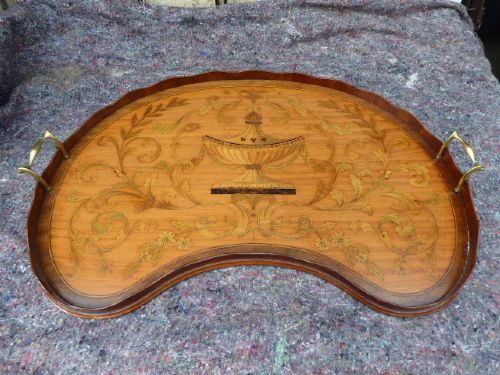
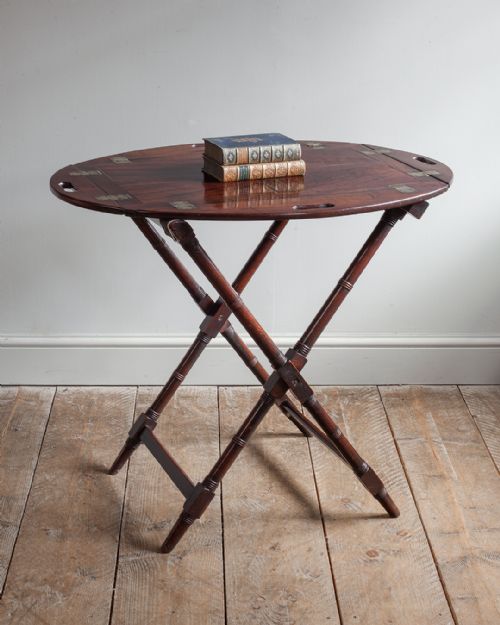
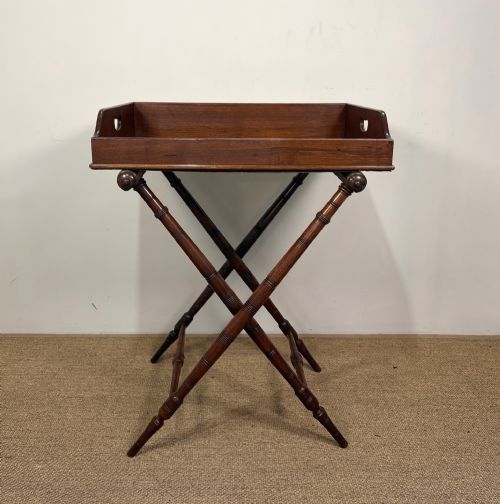
The most common formats on this page include mahogany serving trays with inlaid details and folding butler trays mounted on dedicated stands. Oak, walnut, and silver-plated examples also appear frequently, often associated with specific decades of the period.
Many variants bridge the gap between portable serving equipment and occasional furniture, functioning as standalone tables when paired with folding bases. Their origins span standard English domestic workshops as well as colonial production centres.
How They Were Made
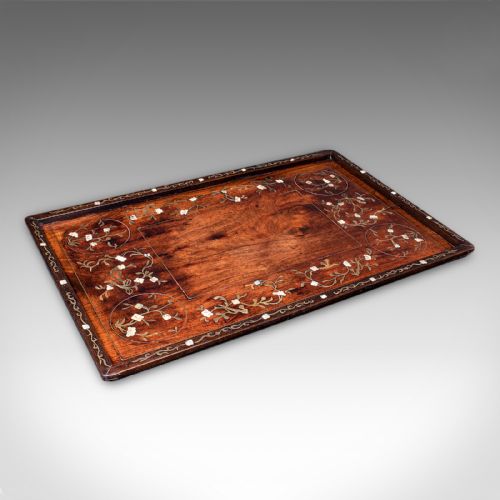
Makers utilised dense timbers such as mahogany, oak, walnut, and teak, often applying intricate inlay, marquetry, or floral chinoiserie decoration. Metal pieces rely on silver plating over base metals or solid silver construction, paired with brass handles and galleries.
Construction techniques include traditional joinery for wooden frames, folding leg mechanisms for butler stands, and specialised stamping or plating methods for metallic salvers. Ebonised finishes and papier-mâché bases further broaden the technical repertoire found in the archive.
Materials recorded across the inventory include silver, copper, brass, satinwood, oak, mahogany, and papier-mâché.
What Varies in Quality
Quality rests in the crispness of carved details, the precision of wood inlay, and the structural integrity of folding stands or raised handles. Superior pieces display thoughtful timber selection and well-preserved plating without heavy wear.
Workshop origin and maker attribution influence the standing of individual trays, alongside the complexity of decorative motifs such as marquetry patterns or pierced brass galleries.
William Hutton and Sons·Edwards and Roberts·John Harrison·Elkington and Co
The Victorian Drinks Tray Glossary
- Butler Tray
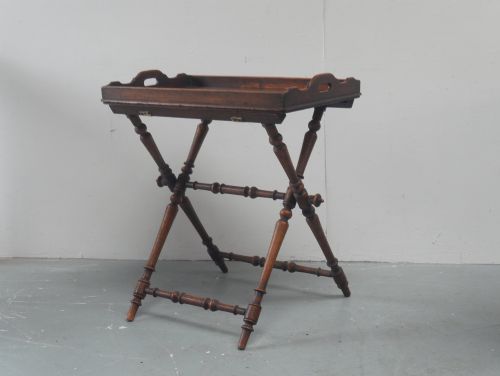
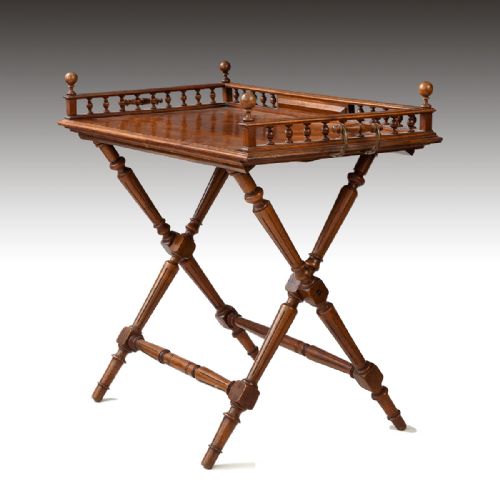
- A removable wooden tray with hinged or handled sides designed to sit upon a folding X-frame stand. This configuration allowed servants to clear glasses and decanters efficiently.
- Salver
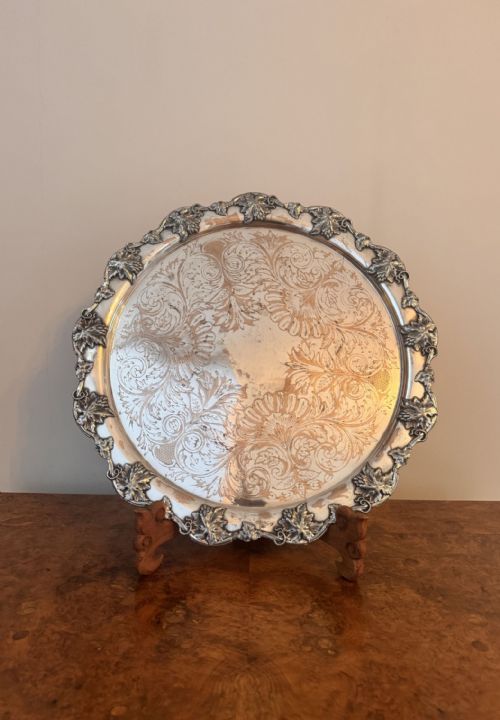
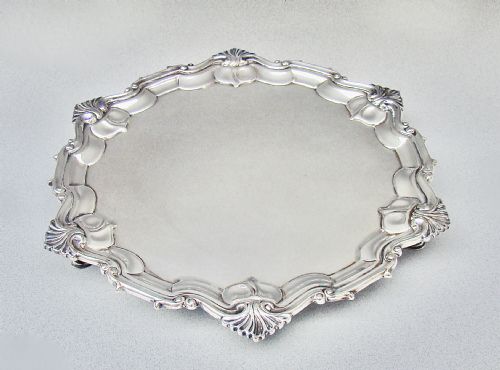
- A flat metal disc or tray, usually silver or silver-plated, used for serving drinks or presenting cards. These items often feature raised feet and engraved borders.
- Gallery Tray
- A tray encircled by a pierced or solid raised metal rim that prevents glassware from sliding off during transport. They appear in both silver plate and brass.
- Marquetry
- The art of applying decorative veneer pieces to a wooden structure to form pictorial or geometric designs. This technique frequently decorates satinwood and mahogany surfaces.
- Sorrento Ware
- Tunbridge or Italian woodwork characterised by micro-mosaic inlay and olive wood construction. Such pieces display elaborate banded decoration.
Victorian Drinks Tray: Frequently Asked Questions
What is a butler tray stand?
A butler tray stand is a folding wooden base designed to support a removable serving tray at a comfortable height.
This setup turned a portable platter into a temporary side table for drinks during parlour gatherings.
How were silver plated trays made?
Makers applied a thin layer of silver over a base metal foundation using electrochemical or mechanical plating methods.
This provided the appearance of solid silver for domestic hospitality at a lower production cost.
Where were serving trays used?
Victorian households utilised these trays in drawing rooms, dining spaces, and gardens for afternoon tea or evening drinks.
Portable designs allowed servants to transport decanters and glassware safely between rooms.
What timber was most popular?
Mahogany and oak served as the primary hardwoods for domestic serving trays throughout the nineteenth century.
Exotic woods like satinwood, walnut, and teak also appeared on fine inlaid and colonial examples.