






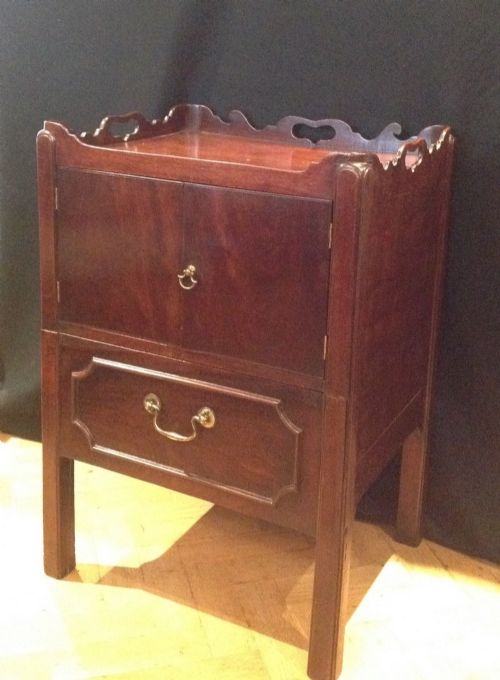
Antique Galleried Tray
An antique galleried tray is a practical serving piece bordered by a raised wooden or metal rim, prized for its refined craftsmanship and utility in daily entertaining.
Antique Galleried Tray
When you search for an antique galleried tray, you encounter items designed for serving tea or drinks with a protective raised edge that prevents items from sliding off. The selection spans George III, Regency, Edwardian, and Victorian eras, reflecting shifting tastes in domestic hospitality.
Mahogany forms the core of the wooden examples, frequently enhanced by satinwood, boxwood, and intricate veneer work. Silver plate and brass also appear in the record, often paired with mahogany, oak, or metal frames to create durable serving surfaces.
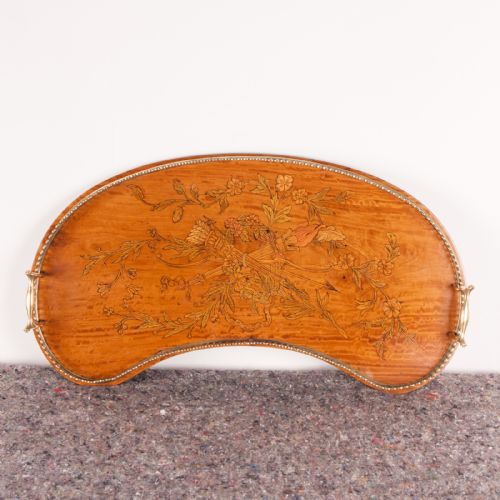
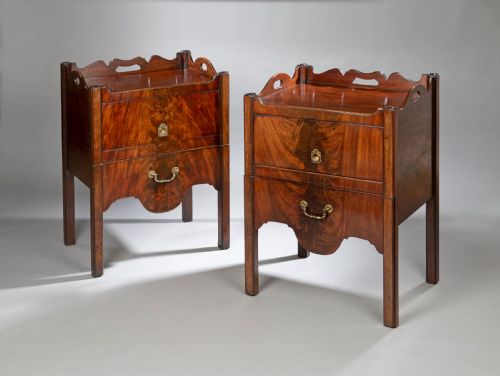
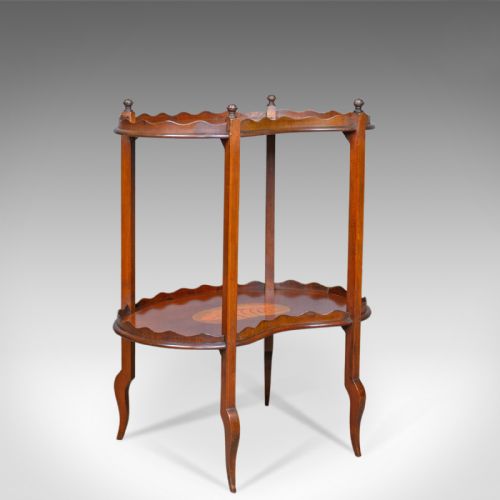
Oval and kidney shapes dominate the tray forms, alongside rectangular serving pieces and related furniture like tray top commodes and side tables. These pieces served functional roles in period drawing rooms and dining rooms, evolving from simple serving gear into decorative items.
Materials and construction methods
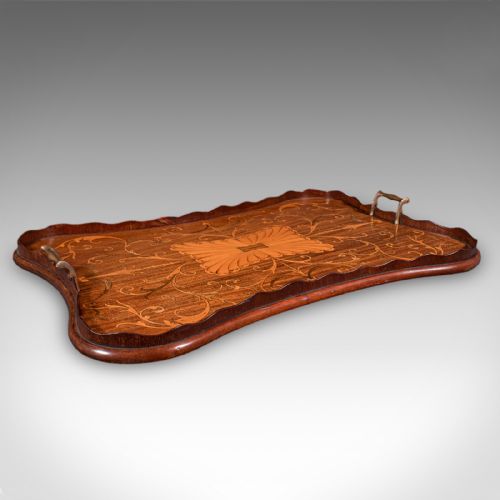
Cabinetmakers utilised solid mahogany and flame mahogany for the main boards, applying wood veneer to achieve rich grain patterns across the base. Inlay work frequently incorporates satinwood and boxwood lines to frame the central panel or decorate the rim.
The characteristic gallery edge is constructed using pierced metal, brass, or shaped timber fastened securely to the perimeter of the base. Silver plating techniques applied to copper or base metals produced durable metallic trays intended for heavy usage during afternoon tea.
Some trays include subtle hand-engraved initials, recording the original household that enjoyed afternoon tea.
Distinguishing quality in these pieces
The refinement of the timber selection dictates much of the value, with highly figured flame mahogany and crisp satinwood inlay marking out superior examples. Plain mahogany surfaces offer utility, whereas detailed stringing and contrasting woods demonstrate greater workshop skill.
The construction of the gallery itself reveals the maker's intent, from simple pierced wooden rails to finely pierced brass or silver-plated metalwork. Joinery at the corners and the integration of handles show whether a tray was built for display or everyday service.
Gillows
The Antique Galleried Tray Glossary
- Galleried tray
- A serving tray featuring a raised railing or border around its perimeter. This edge keeps glassware and china secure during transit.
- Flame mahogany
- A decorative wood veneer showing a distinct torch-like grain pattern. Cabinetmakers selected this cut for the most visible surfaces.
- Satinwood
- A pale, hard wood with a natural sheen used for contrasting inlay and stringing. It brings brightness to darker mahogany fields.
- Silver plate
- A thin layer of silver fused or electroplated onto a base metal or copper body. This technique provided the appearance of solid silver at lower cost.
Antique Galleried Tray: Frequently Asked Questions
What is an antique galleried tray used for?
These trays served primarily for carrying tea, coffee, or spirits between rooms during the Georgian, Victorian, and Edwardian periods. The raised gallery protected delicate porcelain and glassware from sliding off the edge.
Today, they function both as serving accessories and as decorative display pieces on coffee tables, sideboards, or low tables.
How do I date an antique galleried tray?
Dating relies on observing the timber choices, inlay styles, and the construction methods of the gallery rim. Georgian pieces often display restrained mahogany construction with simple pierced handles, while Edwardian versions incorporate satinwood inlay and silver plating.
Examining the underside and the fastening of the gallery reveals the period manufacturing techniques used by the workshop.
What is the difference between wood and metal trays?
Wooden galleried trays generally utilise mahogany bodies with inlaid details in satinwood or boxwood, reflecting traditional cabinetmaking. Metal and silver-plated examples employ brass or plated copper, often featuring pierced galleries and engraved surfaces.
Both types served dining and entertaining needs but suited different formal settings within period households.
How should I care for an antique wooden tray?
Maintain wooden surfaces by dusting gently with a dry cloth and avoiding harsh chemical cleaning products or excessive moisture. Periodic application of suitable furniture wax preserves the finish of the mahogany and veneer.
Keep the tray away from direct sunlight and strong heat sources to prevent the timber and inlay from drying out.