


Georgian Mahogany Serving Tray
A georgian mahogany serving tray combines solid utility with fine cabinetmaking, offering a portable surface built to last centuries.
Georgian Mahogany Serving Tray
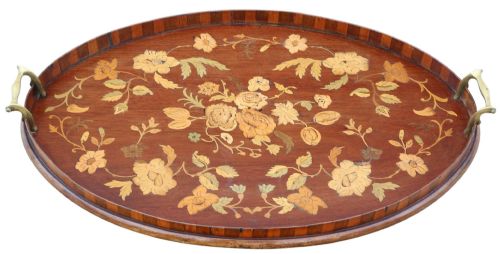
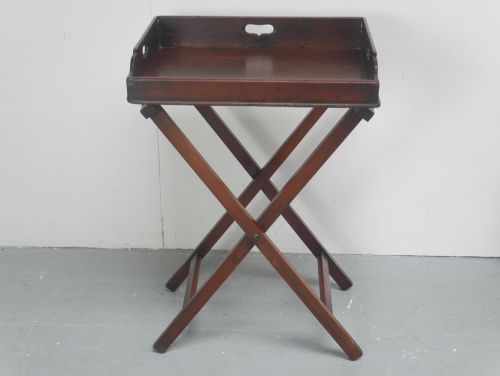
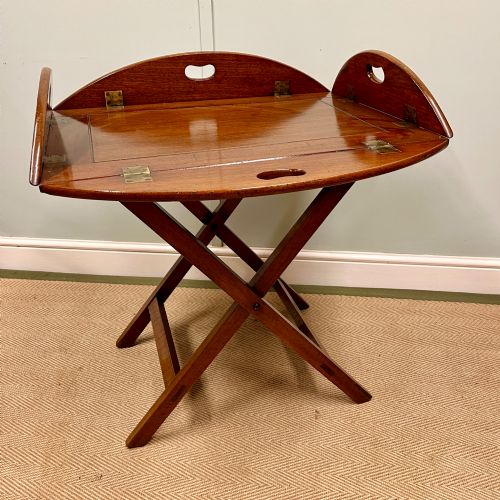
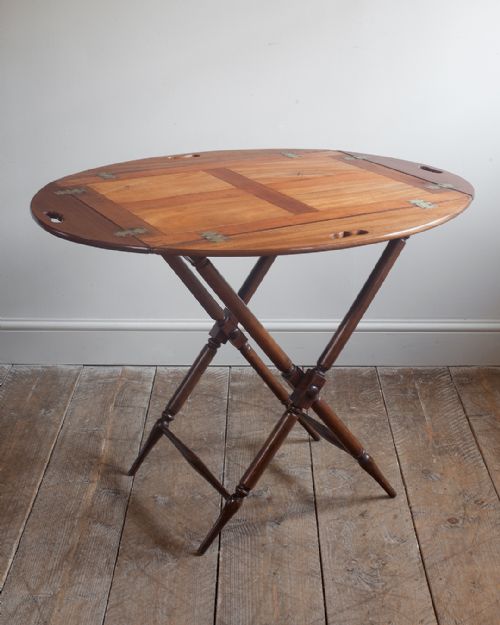
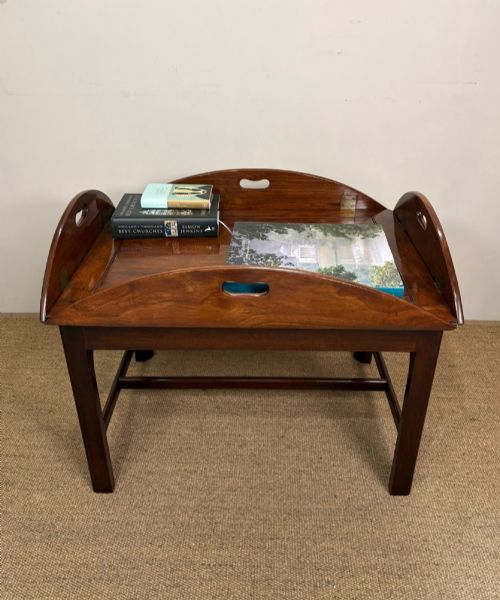
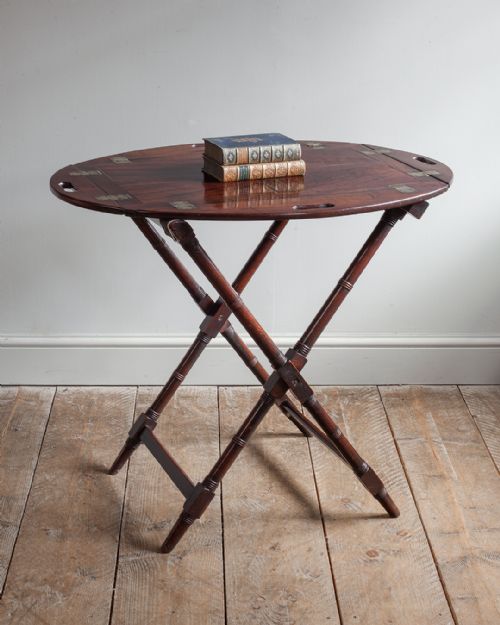
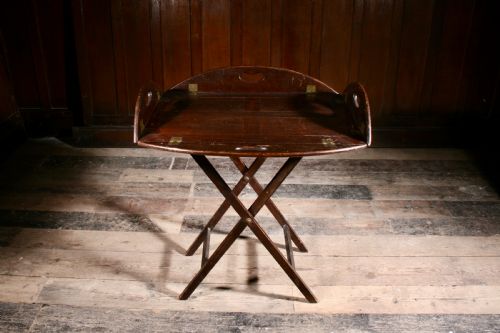
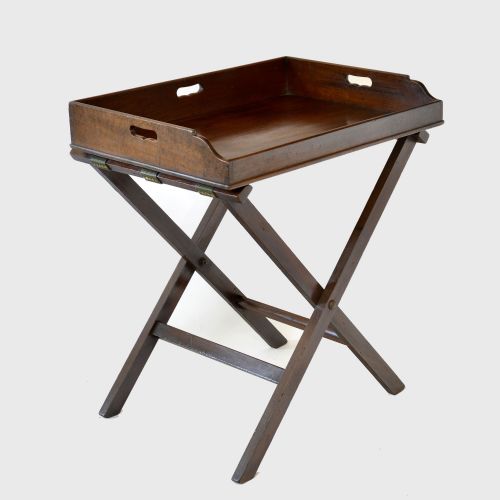
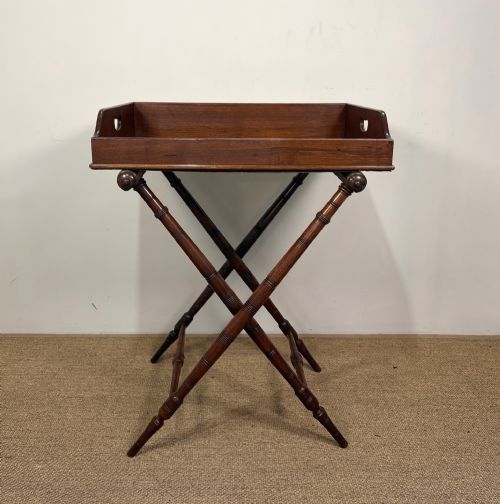
A georgian mahogany serving tray appears in several distinct forms across this selection, including oval galleried trays, folding butler trays on stands, and multi-tiered dumb waiters. The pieces span the eighteenth century, the Regency era, and later revival periods, connecting utilitarian service with domestic display.
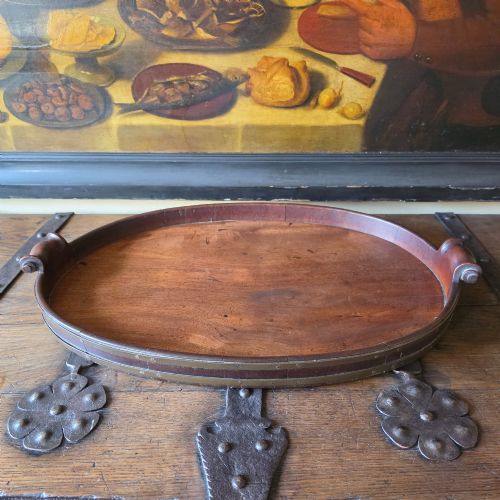
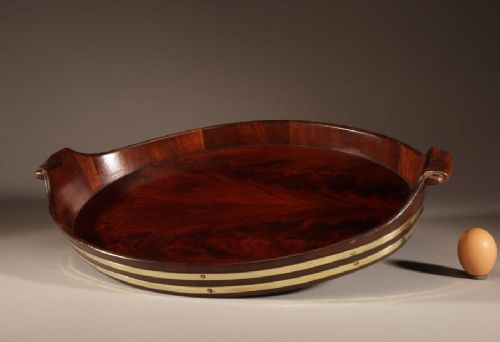
Most examples date from the Georgian era and the nineteenth century, utilising dense timbers shaped for carrying silver, glasses, or wine. Buyers frequently encounter oval trays with raised edges, coopered constructions, or collapsible stands designed for practical dining rooms.
Materials and construction
Makers constructed these pieces primarily from solid mahogany and Cuban mahogany, sometimes incorporating contrasting boxwood and satinwood for marquetry inlay. Brass handles, galleries, and coopered bands provided both structural strength and decorative contrast.
Many items feature raised wooden galleries or shaped rims joined to base boards, while others utilise folding canvas or fabric webbing for support stands. Detail work often includes fine stringing and intricate geometric or floral inlay patterns.
Listings feature mahogany, Cuban mahogany, satinwood, and boxwood alongside brass mounts and fabric webbing.
Craftsmanship and condition
Quality separates standard utilitarian items from exceptional cabinetwork through the crispness of the inlay, the tightness of the dovetails or coopered joints, and the preservation of the original surface patina. Fine examples maintain balanced proportions, uncompromised galleries, and well-fitted original stands without heavy alterations.
The choice of timber significantly impacts the character of the piece, with richly figured Cuban mahogany and delicate stringing marking the upper tier of production. Wear patterns tell the history of use, but intact original brass mounts and crisp edge profiles distinguish superior craftsmanship.
The Georgian Mahogany Serving Tray Glossary
- Galleried tray
- A serving tray featuring a raised wooden edge or rim designed to prevent items from sliding off during transport.
- Butler tray
- A removable tray designed to sit upon a folding or fixed wooden stand, serving meals or drinks in reception rooms.
- Coopered tray
- Constructed using curved wooden staves bound together in the manner of a barrel, creating strong rounded sides.
- Dumb waiter
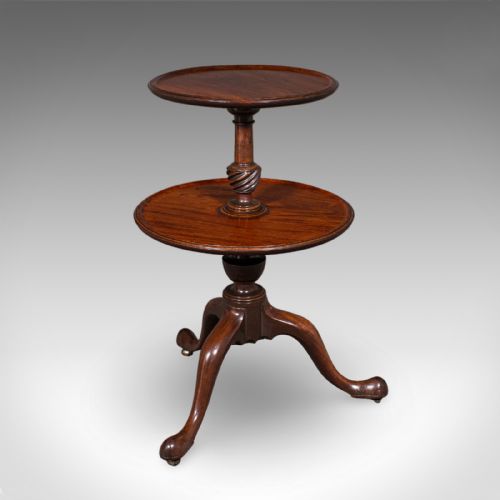
- A multi-tiered serving stand with rotating or stationary shelves used during meals to hold dishes without requiring servants.
- Stringing
- Thin inlay lines of contrasting wood, such as boxwood or satinwood, embedded into the mahogany surface for decoration.
Georgian Mahogany Serving Tray: Frequently Asked Questions
How were butler trays used?
Butler trays served primarily to transport food and drink from kitchens to dining or drawing rooms. The removable top lifted directly off its folding stand to function as a portable serving surface.
Once positioned in the room, the stand held the tray at a convenient height for pouring tea or serving guests. This dual functionality made them essential furniture for period households with limited permanent dining space.
Are stands usually original?
Many trays survive with their period folding stands, though some tables and trays became separated over centuries of use. Matching woods, wear patterns, and period construction methods help identify whether a stand belongs to the tray.
Replacements or later stands remain common because folding legs experienced heavy friction and stress. Buyers examine the joint fixings and timber ageing to determine if the combination is period-correct.
What is a dumb waiter?
A dumb waiter is a tiered freestanding serving stand used during meals to hold extra plates, glasses, and dishes. The graduated shelves allowed diners to help themselves without servants present in the room.
Most examples feature two or three circular tiers supported on a central pillar with tripod legs. They belong to the broader category of dining room furniture associated with serving trays.
How do I care for mahogany?
Mahogany requires minimal maintenance beyond dusting with a soft, dry cloth and avoiding placement near direct heat sources or strong sunlight. Excessive dryness causes timber to shrink, while moisture leaves marks on unprotected polished surfaces.
Applying traditional beeswax occasionally helps nourish the grain and preserve the historic patina. Gentle handling protects delicate boxwood stringing and raised wooden galleries from impact.