



Georgian Oval Tea Tray
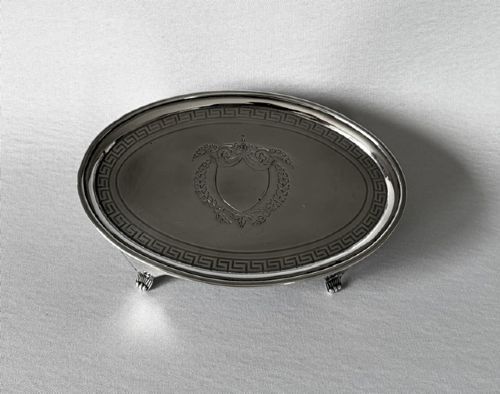
A georgian oval tea tray brings undeniable elegance to a room, offering a functional centrepiece crafted in rich mahogany, gleaming brass, or delicate papier-mache.
Georgian Oval Tea Tray
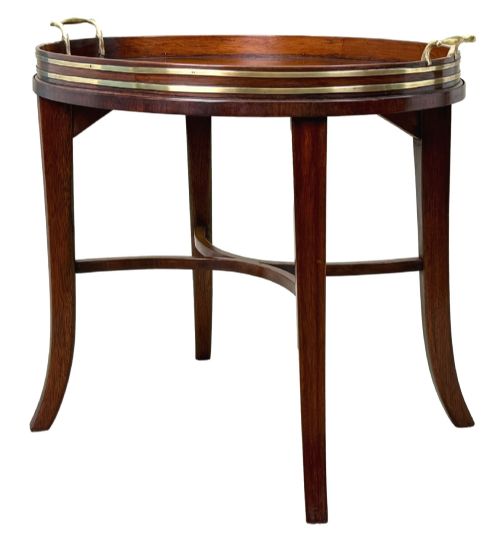
The assortment includes pieces mounted on stands to function as coffee tables and tray tables, as well as hanging lacquered trays and miniature inlaid variants. These items span styles such as George III, Regency, and Sheraton Revival, reflecting the evolving tastes of British homes.
How they were made
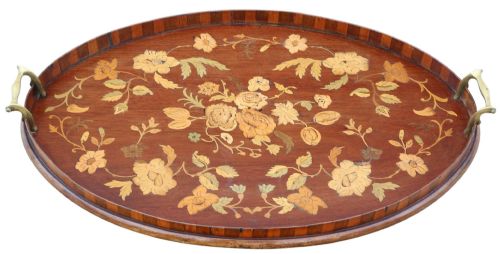
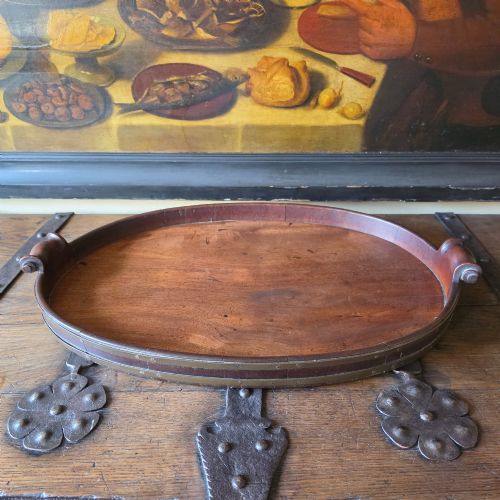
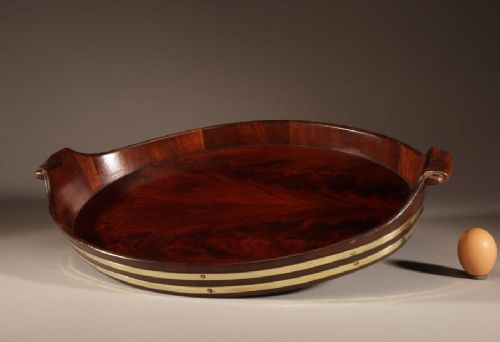
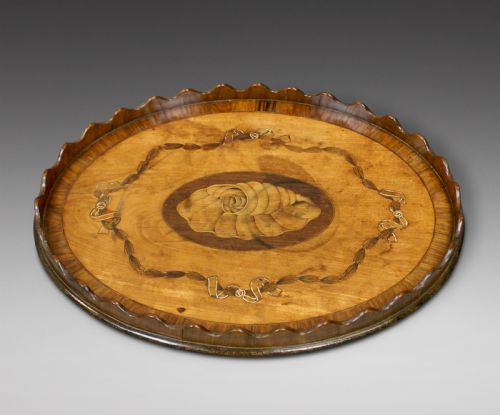
Makers utilised solid mahogany, satinwood, and papier-mache, often embellishing the surfaces with marquetry inlay, gold leaf, and painted neo-classical scenes. Structural integrity was achieved through traditional woodworking methods, including coopered construction for raised edges.
Brass bound decoration and brass handles provided both functional utility and decorative contrast against the dark timber. Lacquer and fine polishing finished the surfaces to withstand the practical demands of serving tea.
Materials across these listings combine traditional hardwoods like mahogany with decorative accents in satinwood, brass, and gold leaf.
What varies in quality
The distinction between standard utility items and finer pieces lies in the precision of the marquetry inlay and the subtlety of the painted neo-classical decoration. Superior examples display tighter grain matching in the mahogany and more refined handling of brass mounts and galleried rims.
Original stands and untouched surface patination elevate a piece significantly above later conversions or heavily restored items. The depth of the lacquer on papier-mache and the crispness of George III period carving separate exceptional workshop output from routine production.
Henry Clay
The Georgian Oval Tea Tray Glossary
- Galleried tray
- A serving tray featuring a raised wooden or brass rim designed to prevent items from sliding off during transport. This edge is often pierced or fret-cut.
- Papier-mache
- A durable composite material made from paper pulp mixed with glue and resin, pressed in moulds and finished with heavy lacquer and paint. It provided a smooth surface for elaborate neo-classical scenes.
- Coopered
- A construction method utilising vertical wooden staves joined together with metal bands, commonly seen in cylindrical or oval vessels such as specialised trays. This technique mimics barrel-making traditions.
- Marquetry inlay
- The art of applying small pieces of different coloured wood veneers onto a structural surface to form decorative patterns. Satinwood and darker timbers were frequently combined for geometric or floral motifs.
Georgian Oval Tea Tray: Frequently Asked Questions
How were these trays used?
Originally, these trays served the daily ritual of pouring and presenting tea in affluent British households, carried from the kitchen or pantry by servants. They were designed to hold porcelain teapots, cups, and silver sugar basins securely.
Over time, many surviving examples transitioned into permanent furniture by being placed upon folding or fixed wooden stands. This adaptation turned a portable serving dish into a low coffee table or occasional table for the drawing room.
Can I use an antique tray for serving?
While structurally sound timber and metal trays can support lightweight items, antique papier-mache and lacquered surfaces require careful handling to avoid moisture damage. Frequent use of older finishes risks staining or crazing the delicate varnish.
Most collectors prefer to display these pieces on stands or tables rather than risking daily wear and tear in the kitchen. Gentle dusting and wax polishing help maintain the historical surface without abrasive cleaning.
How do I spot a later revival piece?
Revival pieces from the Edwardian era or around 1900 often utilise machine-sawn timber and standardised brass fittings that lack the hand-tooled irregularity of 18th century work. The patination on older wood develops a deep, mellow warmth through decades of handling that modern replicas struggle to mimic.
Examining the underside and joinery reveals tool marks consistent with period workshop practices rather than mass production. Stylistic cues like Sheraton Revival motifs also point towards a deliberate late 19th or early 20th century recreation of earlier forms.