




Vintage Oval Tray
When you handle a vintage oval tray, you find a practical domestic piece shaped for service and display across multiple centuries.
Vintage Oval Tray
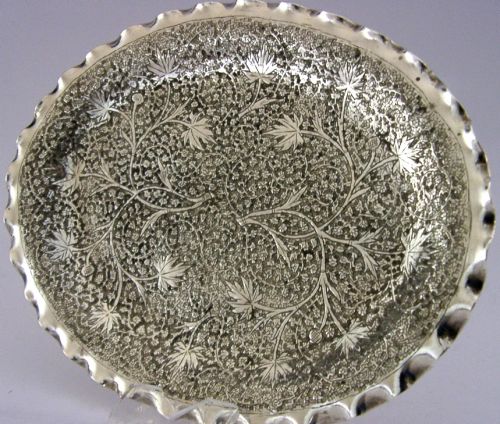
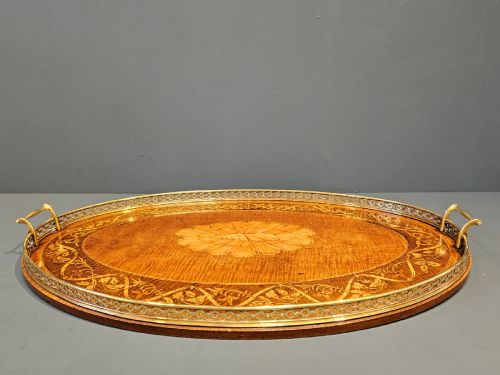
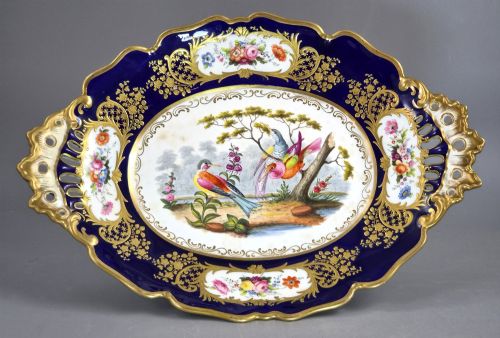
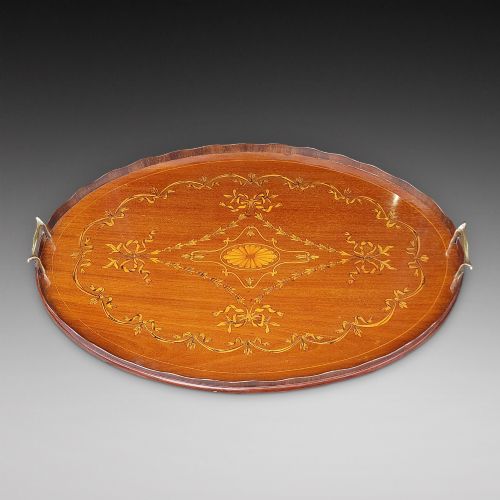
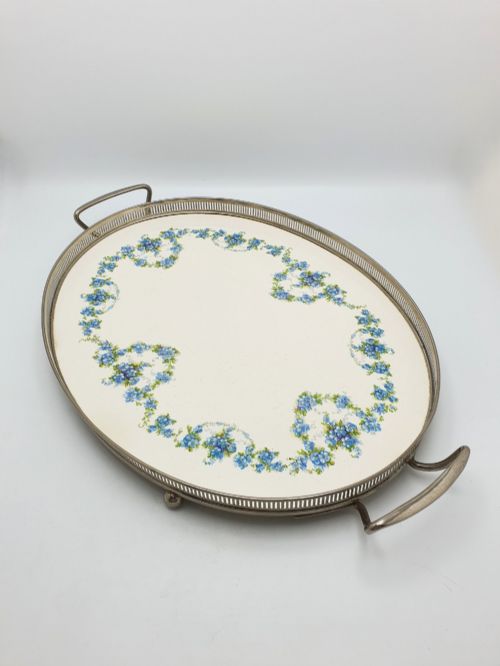
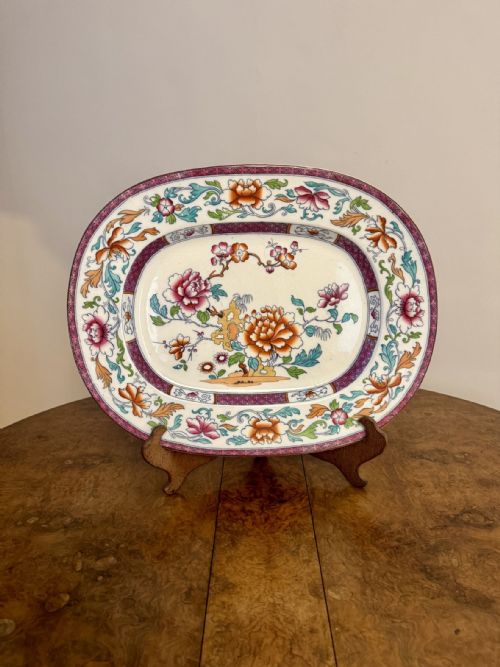
A vintage oval tray spans serving vessels, butlers pieces, and occasional table tops produced from the eighteenth century through the twentieth century. These objects include silver plate tea servers, mahogany marquetry tea trays, copper repousse work, and earthenware platters.
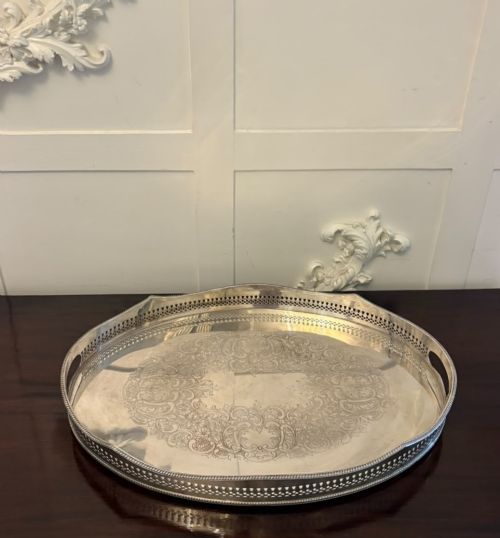
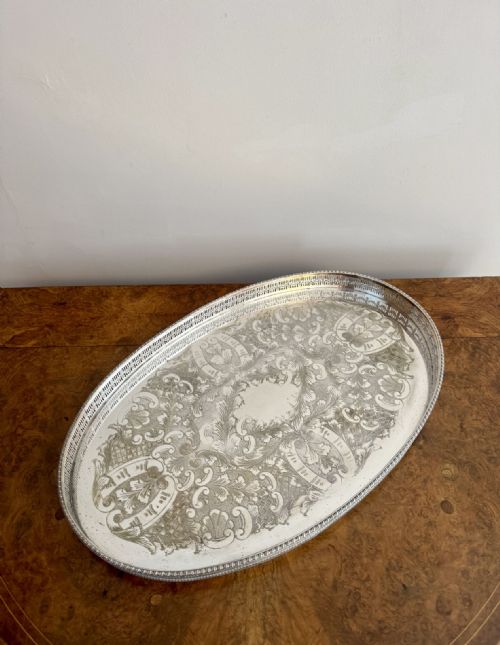
Edwardian and Victorian examples dominate the selection, often featuring raised galleries, inlaid banding, or cast handles intended for drinks and dining service. Simpler nineteenth century butler variations and twentieth century cocktail designs also appear frequently.
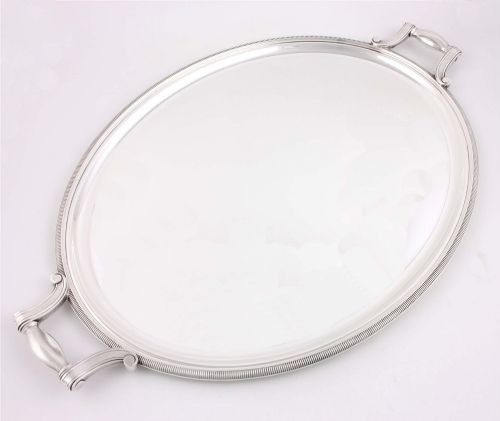
Materials range widely from solid silver and EPNS to coopered oak, walnut, satinwood, and hand-beaten copper associated with the Arts and Crafts movement. Makers and manufacturers utilised these diverse media to create functional items that transition easily into modern interior use.
How They Were Made
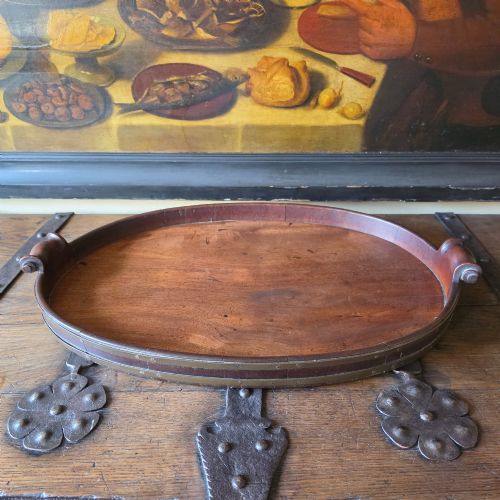
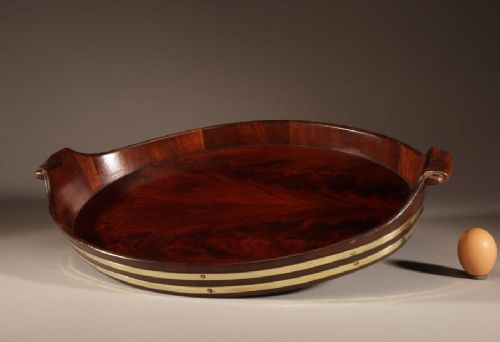
Woodworking construction relies on timber selection such as mahogany, walnut, and oak, frequently enhanced with oyster veneering, marquetry inlay, or coopered staves bound with brass. Cabinetmakers shaped these woods to form rigid bases and raised rims capable of supporting heavy decanters and tea services.
Metal versions employ silver plating over base metals, repousse hammering on copper and pewter, or pierced gallery work soldered to a central plate. Silversmiths and metalworkers engraved intricate scrolls, floral centres, and armorial motifs by hand onto the smooth surfaces.
The inventory encompasses serving dishes, meat platters, etagere tables, and folding tray stands.
What Varies in Quality
The degree of hand craftsmanship separates standard production items from finer workshop pieces, visible in the crispness of chased engraving, the depth of repousse relief, and the precision of inlaid marquetry. Heavier gauge metals and dense, figured hardwoods provide structural rigidity that lighter stamped alternatives lack.
Proportion and balance dictate the aesthetic success of a tray, where handles integrate harmoniously with the rim and galleries maintain uniform symmetry. Well-preserved original surfaces, whether patinated timber or intact silver plating, retain greater visual integrity than heavily restored examples.
Mappin & Webb·Christofle·Hugh Wallis·Coalport·Liberty & Co
The Vintage Oval Tray Glossary
- Gallery
- A raised pierced or solid metal border fitted around the edge of a tray to prevent items from sliding off. This feature is common on Edwardian silver plated tea and cocktail servers.
- Butler's Tray
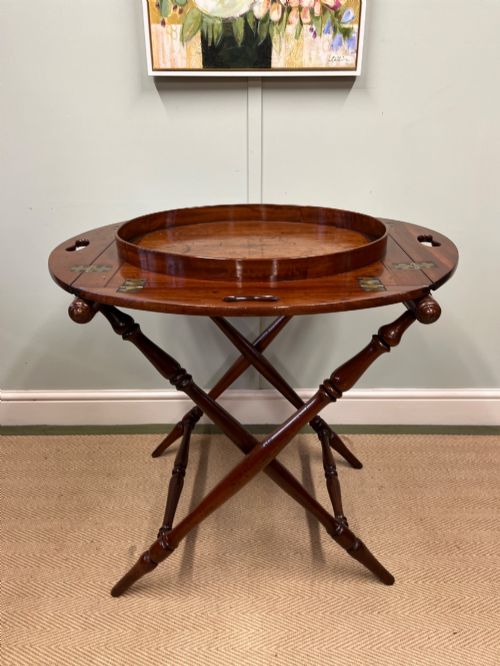
- A portable wooden tray with hinged or fixed sides, frequently manufactured to rest upon a dedicated folding stand. These pieces originated for domestic service in large households.
- Marquetry
- The art of applying decorative veneer pieces in various woods to form geometric or floral patterns on a surface. It appears frequently on mahogany tea trays from the Victorian and Edwardian periods.
- Repousse
- A metalworking technique where the artisan hammers the design from the reverse side to form a raised relief on the front. This method defines Arts and Crafts copper and pewter trays.
- EPNS
- Electroplated Nickel Silver, a composite material formed by depositing a layer of silver onto a nickel silver base. This technique became widespread for nineteenth and twentieth century tableware.
Vintage Oval Tray: Frequently Asked Questions
How were butler trays used?
These trays served to transport food, tea, and beverages from the kitchens to dining areas or drawing rooms. Many featured removable bodies that sat upon folding wooden stands to create temporary serving surfaces.
In modern settings, the combination of tray and stand frequently functions as an occasional table or coffee table. The raised edges keep items secure while adding architectural interest to a room.
How do I clean silver plated trays?
Maintenance requires gentle cleaning with a soft cloth and a specialised silver polish formulated to protect plated surfaces. Avoid abrasive pads or harsh chemical dips that can strip the thin silver layer from the base metal.
Regular dusting and careful handling prevent tarnish accumulation and preserve the original engraved details. Store them in dry environments away from direct heat sources.
Are copper trays heavy?
Arts and Crafts copper trays often possess substantial weight due to the thick gauge of metal used by workshops and individual makers. Hand-beaten examples balance solidity with decorative surface texture.
Their weight makes them durable for daily utility, though larger models require two hands when carrying items. The warm metallic tone complements both traditional and contemporary interiors.