




19th Century Mahogany Tray
When you handle a 19th century mahogany tray, you hold a piece designed for service that now serves for display.
19th Century Mahogany Tray
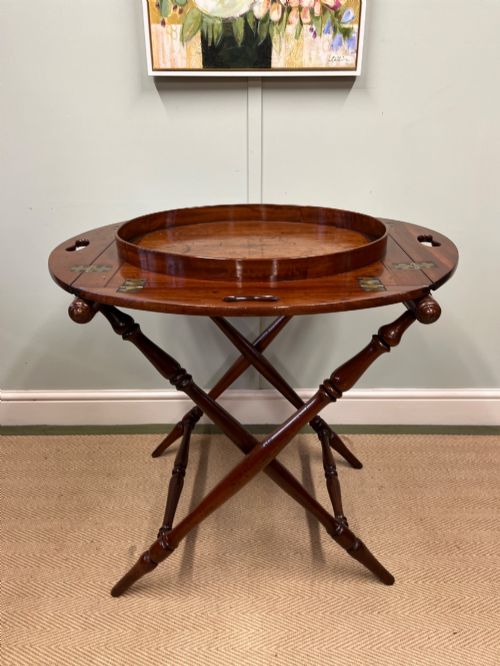
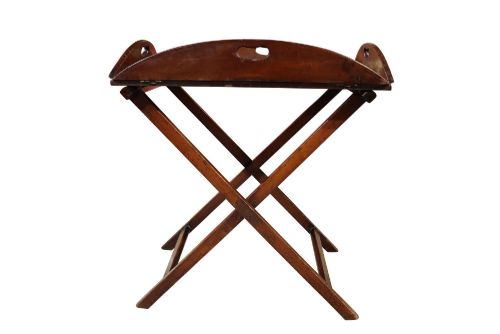
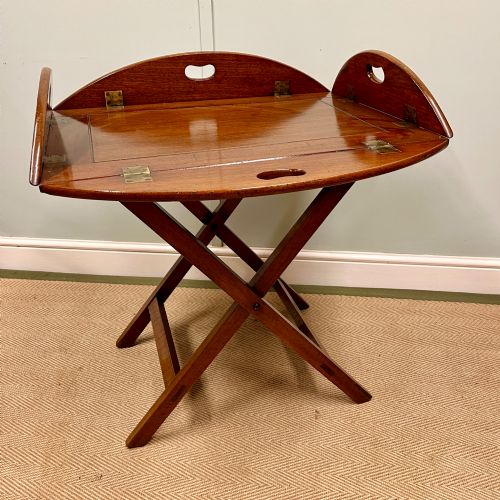
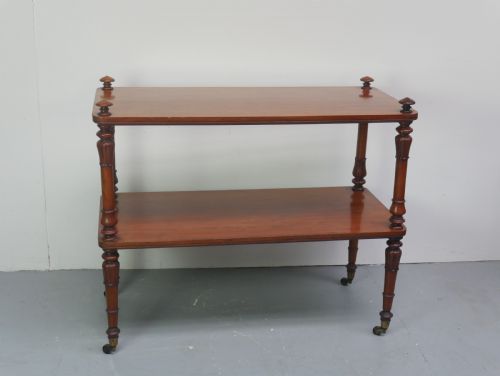
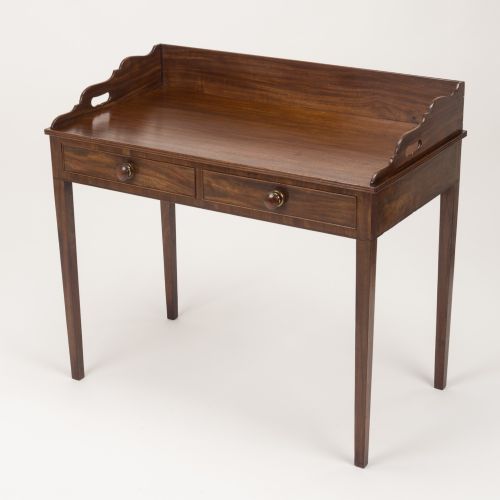
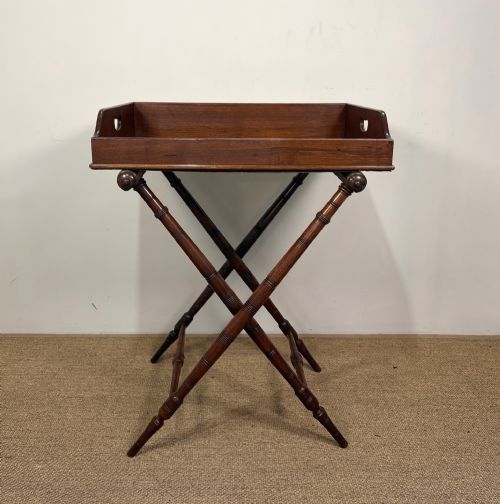
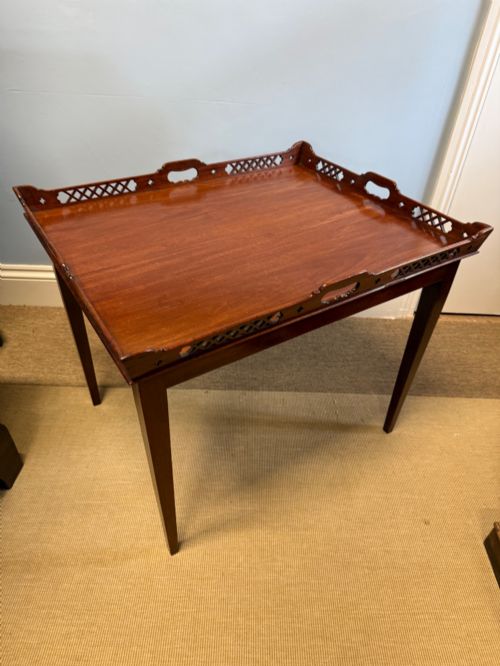
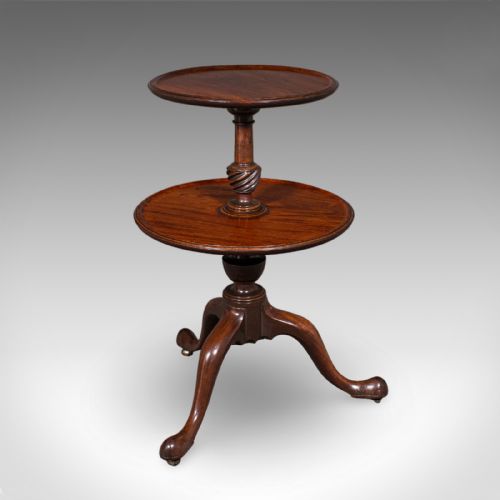
A 19th century mahogany tray encompasses a variety of utilitarian and decorative forms designed for carrying, serving, or display within the home. Buyers encounter portable serving trays, butler's trays mounted on folding stands, and galleried tea trays alongside related furniture such as tray-top tables and bedside cabinets.
The selections span periods from the Georgian and Regency eras through the Victorian and Edwardian periods, reflecting shifting domestic habits. Plain rectangular formats, oval shapes, and kidney-shaped designs appear frequently in the record, sometimes incorporating handles or scalloped edges.
How they were made
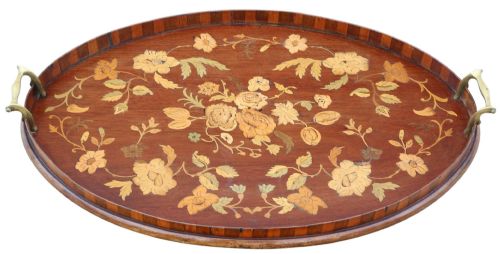
Cabinetmakers utilised solid mahogany, flame mahogany, and burr wood veneers to construct these items, often applying contrasting satinwood for marquetry inlay. Brass fittings, including bound edges and hinged handles, appear on select pieces to reinforce corners and aid lifting.
Surfaces frequently feature raised galleried rims or carved edges attached to the base boards. Stands constructed to hold folding trays utilise matching timber, while tables integrate tray-top surfaces directly into their frames.
Listings feature periods spanning from Georgian and Regency to Victorian and Edwardian.
What varies in quality
The selection of timber grain largely distinguishes simpler items from finer examples, with flame mahogany and detailed marquetry inlay marking superior craftsmanship. Crispness in the carving of edges, such as scalloped or pie-crust rims, indicates the maker's hand.
Structural integrity relies on the retention of original stands, tight joints in the gallery walls, and the quality of brass mounts. Pieces bearing stamps or attributed to documented workshops command distinct attention among collectors.
Gillows·James Mein of Kelso
The 19th Century Mahogany Tray Glossary
- Butler's tray
- A removable portable tray, typically rectangular with hinged or shaped sides, designed to sit upon a folding wooden stand.
- Galleried
- Having a raised border or railing around the edge of the tray to prevent items from sliding off during transport.
- Flame mahogany
- A veneer cut from the fork of the mahogany tree that produces a distinctive, flame-like figure in the grain.
- Marquetry inlay
- Decorative patterns formed by fitting contrasting woods and veneers into carved recesses on the surface.
- Pie crust
- A decorative carved edge shaped with undulating curves and lobes, commonly found on round table and tray tops.
19th Century Mahogany Tray: Frequently Asked Questions
What is a butler's tray?
A butler's tray is a portable wooden serving surface featuring handles or hinged sides designed for carrying food and drink.
These pieces typically rest upon X-frame folding stands so they can be stored away when not in use.
How do I use a tray table?
A tray table combines a removable serving surface with a permanent or folding base to function as an occasional table.
They work well in living spaces for holding lamps, books, or drinks while maintaining portability.
Are these trays waterproof?
Nineteenth-century polished wood surfaces resist minor spills, but standing liquid can damage the antique polish and veneer.
Using coasters and wiping moisture promptly protects the timber finish from staining.
How do I date a mahogany tray?
Dating relies on observing the timber choice, construction methods, and decorative styles characteristic of periods like Georgian or Victorian.
Secondary woods, dovetail joints, and inlay patterns help narrow the decade of manufacture.