





Oval Wooden Tea Tray
An oval wooden tea tray combines practical service with fine cabinetmaking, offering a stable surface framed in rich timber.
Oval Wooden Tea Tray
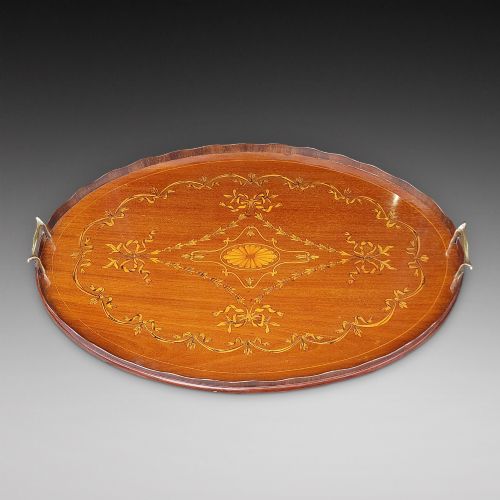
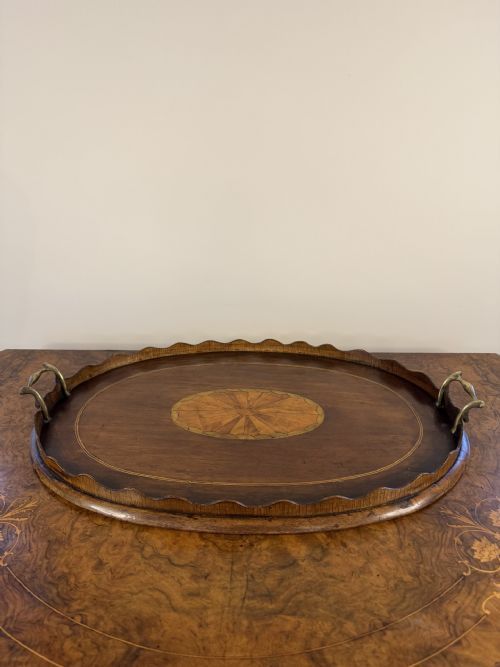
An oval wooden tea tray is a functional serving piece shaped with curved sides and constructed from timbers such as mahogany, satinwood, walnut, and oak. These pieces span the eighteenth century, the Georgian, Victorian, and Edwardian periods, and later revivals, reflecting shifts in domestic hospitality.
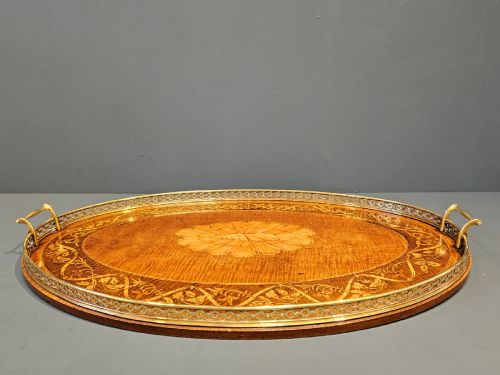
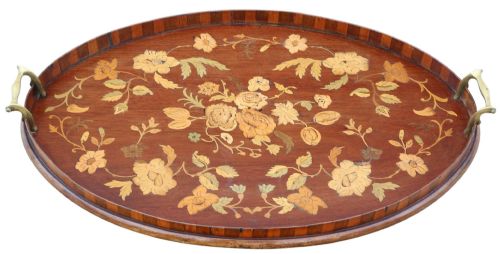
The serving trays encountered on this page frequently exhibit inlaid decoration, marquetry, and brass galleries or handles. Alongside traditional serving pieces, the selection includes occasional tables, coffee tables, and tray top tables where these trays rest upon dedicated stands.
Makers and craftsmen utilised dense hardwoods and decorative veneers to create items intended for drawing rooms and dining parlours. From miniature examples to large butler's trays, each object demonstrates the enduring utility of shaped timber in daily domestic life.
How they were made
Cabinetmakers constructed these trays using solid mahogany, oak, or walnut bases combined with delicate wood veneers and contrasting satinwood inlay. Marquetry techniques introduced intricate floral or geometric patterns into the timber surface, requiring precise hand-cutting and fitting of different wood species.
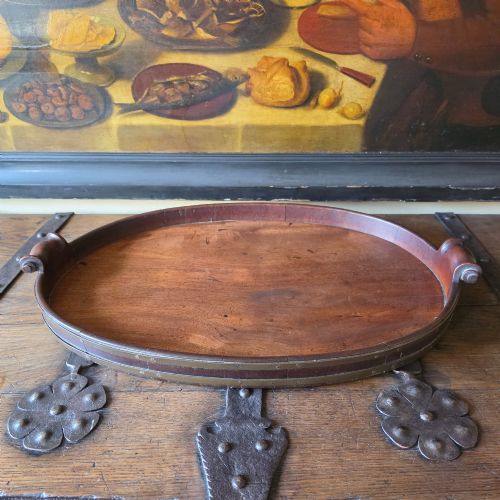
Raised edges, known as galleries, were either carved directly from the solid wood or formed by bending and shaping timber around the curved oval perimeter. Brass fittings, including carrying handles, pierced galleries, and protective feet, were secured to strengthen the structure and accent the warm tones of the wood.
What varies in quality
Quality rests in the selection of the timber grain, the crispness of the marquetry inlay, and the structural integrity of the raised gallery. Superior pieces display carefully matched veneers and seamless joints where the curved sides meet the base.
The refinement of brass hardware and the precision of hand-cut details distinguish finer examples from standard production. A well-balanced weight and a smooth, polished finish indicate skilled execution by the cabinetmaker.
The Oval Wooden Tea Tray Glossary
- Marquetry
- The art of applying decorative pieces of veneer to a structure to form intricate pictures or patterns. Craftsmen use contrasting woods to achieve tonal depth.
- Gallery
- A raised border or railing around the edge of a tray or table top. It prevents items from sliding off during service.
- Butler's tray
- A portable serving tray with hinged or fixed sides, frequently placed upon a folding stand for use in entertaining. These versatile pieces transitioned easily between rooms.
- Satinwood
- A hard, durable timber with a natural golden lustre and satin-like sheen. It is frequently utilised for fine inlay work and decorative borders.
- Coopered
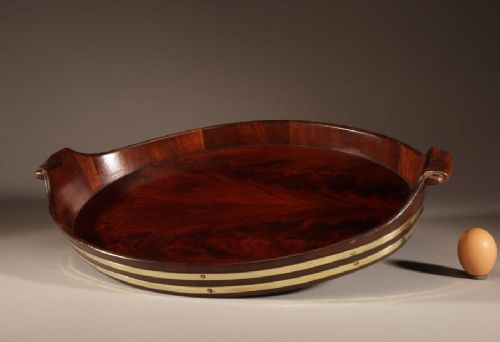
- A construction method utilising staves of wood joined together edge-to-edge, traditionally associated with barrels and rounded vessels. This technique creates sturdy curved walls for specialised trays.
Oval Wooden Tea Tray: Frequently Asked Questions
How were oval wooden tea trays used historically?
These trays served in the transportation of tea services, glassware, and decanters from kitchens to drawing rooms during formal social gatherings.
Servants and hosts utilised them for both carrying refreshments and displaying tableware upon sideboards or tables when not in motion.
How do I distinguish Georgian from Edwardian trays?
Georgian pieces typically feature solid mahogany construction with understated carved galleries or simple brass handles reflecting eighteenth-century restraint.
Edwardian examples often embrace lighter satinwood timbers, elaborate marquetry inlay, and Sheraton Revival influences typical of early twentieth-century design.
Can these trays be used as coffee tables today?
Many trays of this form are adapted to sit upon custom wooden stands, functioning effectively as low occasional tables in contemporary interiors.
Original stands also appear alongside the trays, maintaining their dual capacity for surface display and portable serving.
What maintenance do wood veneer and marquetry require?
Maintenance involves protecting the surface from excessive moisture, direct heat, and prolonged direct sunlight to preserve the delicate veneers.
Occasional application of appropriate wax polish maintains the natural lustre of the timber without building up heavy residues.