



Flame Mahogany Tray
A flame mahogany tray brings rich, figured timber and raised borders to a room, offering both practical surface space and striking grain patterns.
Flame Mahogany Tray
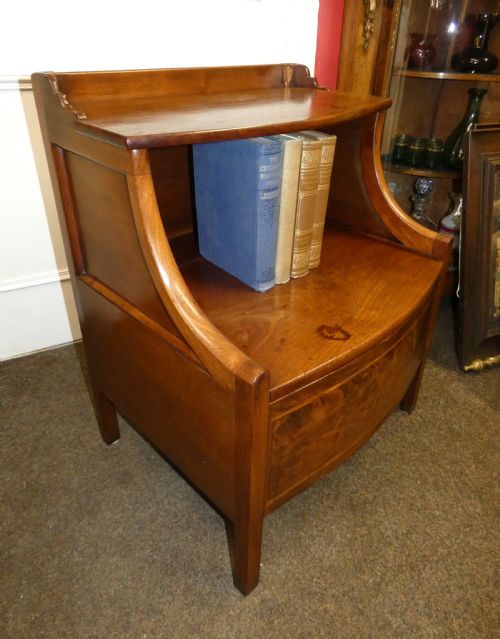
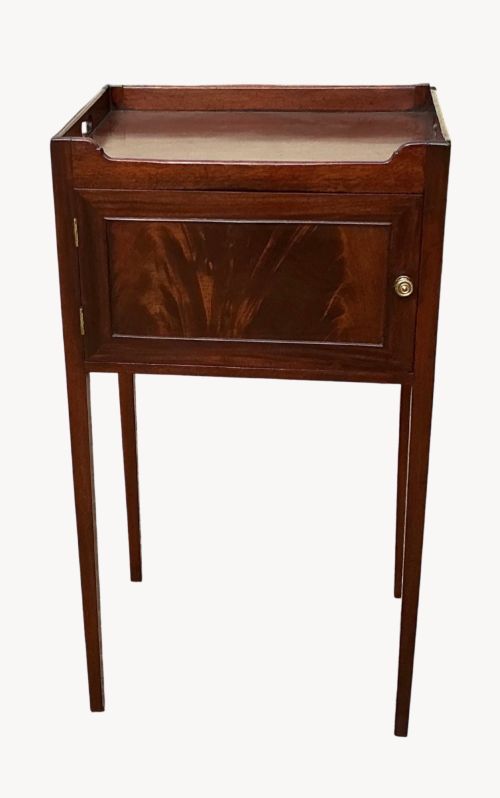
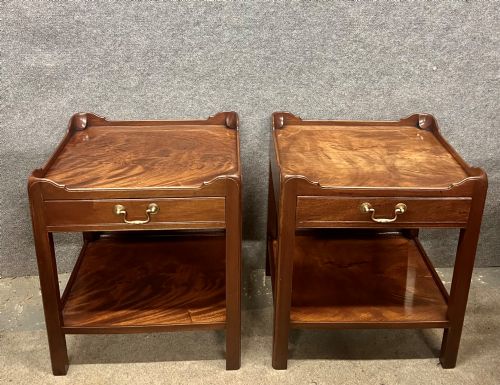
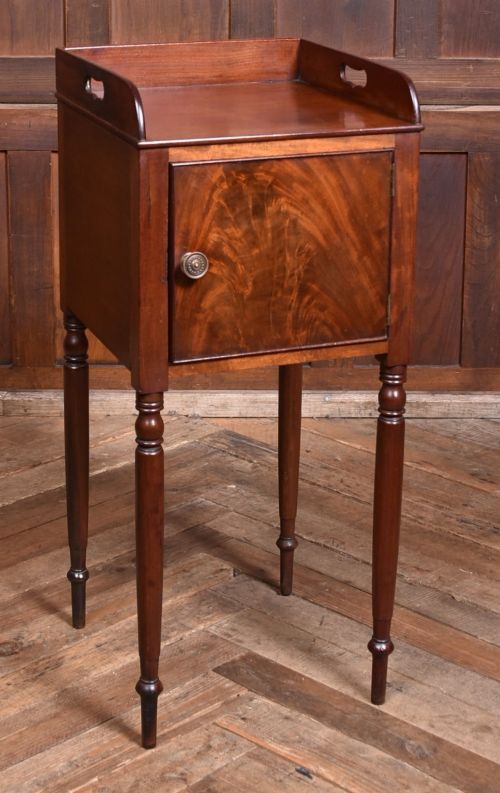
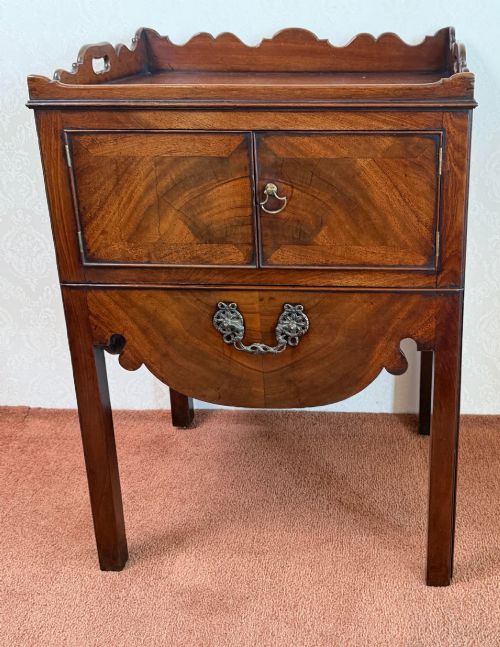
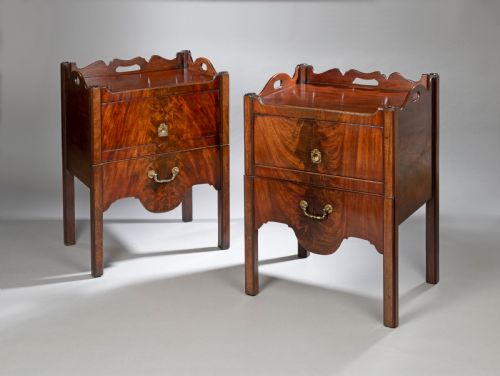
A flame mahogany tray is a refined wooden piece characterised by the distinct, flickering grain pattern of the timber, appearing primarily as serving trays, book trays, and the raised gallery tops of bedside tables and commodes. When buyers search for this phrase, they encounter serving trays as well as Georgian and 19th-century bedside cabinets featuring the characteristic tray top form.
The items seen across current and archive listings span the 18th century, the Georgian period, the Regency era, and the 19th century, with occasional pieces from the 1930s in a Georgian style. These pieces take forms such as bedside cupboards, pot cupboards, side tables, and Butler's trays alongside dedicated serving and book trays.
Makers and craftsmen of the Georgian and Regency periods utilised the timber's natural figure to create decorative surfaces framed by raised edges or brass handles. The most frequent iteration on this page is the bedside cabinet or commode featuring a tray top, alongside flat serving trays banded in contrasting woods.
How they were made
Makers constructed these pieces using solid mahogany and flame mahogany veneer applied to a secondary timber carcase, often incorporating satinwood banding or ebony inlay to define the borders. The distinctive flame figure derives from wood harvested near the fork of the tree, sliced into thin veneers and laid symmetrically to create patterned surfaces.
Raised tray edges and galleries were shaped from solid timber and joined to the base, sometimes complemented by brass carrying handles or silver-plated mounts on Butler's trays. Cabinets and commodes integrate the tray top directly into the upper structure to retain liquids or secure small items.
Flame Mahogany Tray Retail Price Guide 2026
Typical asking prices for flame mahogany tray among the pieces listed under this phrase on Sellingantiques today, from the lower quarter to the upper quarter. They describe what is for sale here now, not the wider market.
Listings feature mahogany, brass, flame mahogany veneer, and silver plate across Georgian, Regency, and 19th-century periods.
What varies in quality
Quality rests in the intensity and book-matching of the flame mahogany veneer, where symmetry and depth of figure elevate a piece above plain timber examples. Finer specimens display crisp inlay work, such as satinwood banding and ebony stringing, executed with precise geometry.
Structural integrity also separates standard items from superior works, particularly in the joinery of the gallery edges and the preservation of original brass or silver-plated hardware. The thinness and stability of the veneer application indicate the standard of workshop execution.
The Flame Mahogany Tray Glossary
- Flame mahogany
- A veneer cut from the branch junction of the mahogany tree, showing a ripple pattern resembling tongues of flame. This highly decorative grain was favoured by cabinet makers for prominent surfaces.
- Tray top
- A furniture top finished with a raised moulded border or gallery on three or four sides. It prevents items from sliding off and appears frequently on bedside commodes and serving tables.
- Satinwood banding
- A narrow strip of pale yellowish satinwood inlaid around the perimeter of a tabletop or tray. It provides a sharp visual contrast to the deeper reddish-brown tones of mahogany.
- Commode
- An enclosed piece of bedroom furniture, during the 18th and 19th centuries designed to house a chamber pot. Many examples incorporate the tray top form to contain everyday items.
- Gallery
- A raised miniature railing or rim surrounding the edge of a tray, table, or desk. It can be pierced, fretted, or constructed from solid moulded timber.
Flame Mahogany Tray: Frequently Asked Questions
What is a flame mahogany tray?
A flame mahogany tray is a wooden serving piece or a furniture top featuring the distinctive ripple grain of figured mahogany. These items range from standalone serving pieces to the raised borders of Georgian bedside commodes.
Cabinet makers used the timber's natural pattern to create decorative surfaces, often enhancing them with contrasting crossbanding or inlaid details.
How were antique flame mahogany trays used?
Serving trays carried glassware, books, or food across rooms, while book trays held volumes on desks or tabletops. Tray top bedside tables served bedrooms by securing small personal items within their raised borders.
The raised rim prevented objects from sliding off during transport or daily use in period homes.
How do I date a flame mahogany piece?
Dating relies on stylistic markers such as Sheraton or Chippendale proportions, construction methods, and the specific type of secondary woods used in the carcase. Georgian and Regency examples often display hand-cut dovetails and distinct patination.
Later 20th-century reproductions or revivals, such as those from the 1930s, generally exhibit more uniform machine-finished timber and modern adhesives.
Are these trays suitable for daily use?
Antique trays and tray-top tables handle normal placement of decorative items and light service when treated with care. Polished wood surfaces benefit from protection against excessive moisture and heat.
Placing felt pads beneath heavy objects prevents scratching on historical veneer surfaces.