
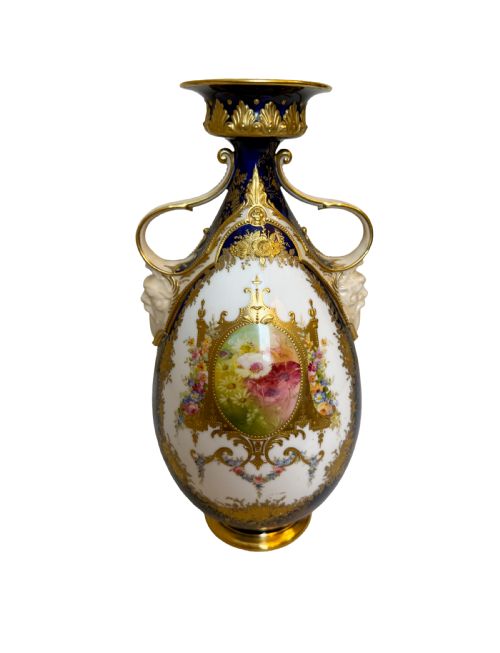


Victorian Doulton Vase
These robust victorian doulton vase examples unite British pottery history with exceptional surface detail, offering collectors distinctive ceramic forms.

Victorian Doulton Vase
A victorian doulton vase brings together utilitarian ceramic traditions and elaborate nineteenth-century decorative arts. Buyers searching this phrase encounter sturdy stoneware vessels, slender ewers and handled jugs originating from renowned English workshops.
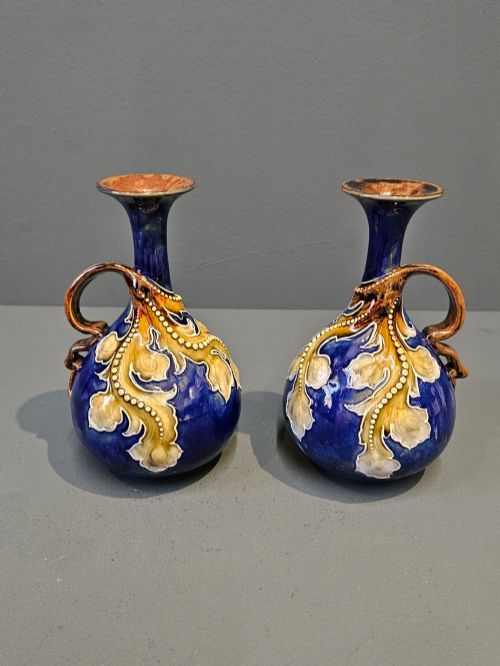
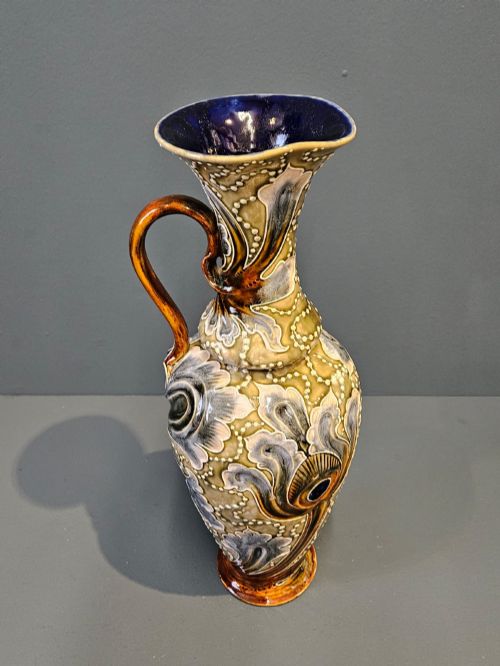
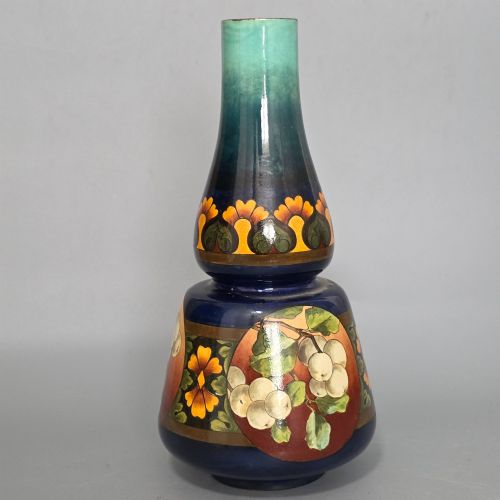
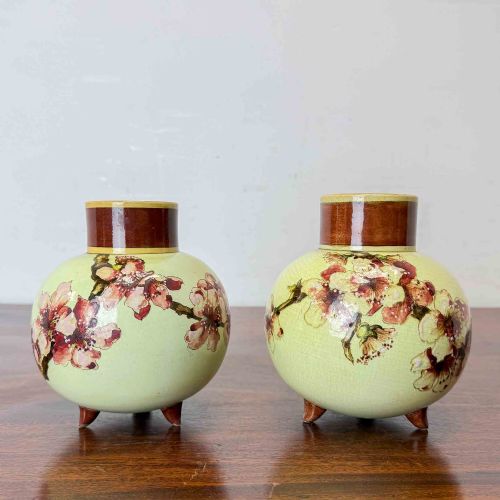
The pieces appearing on this page span several decades of production, heavily concentrating on late nineteenth-century Victorian output. Collectors regularly find pairs and individual items finished in distinct styles ranging from early salt-glazed wares to later hand-painted faience.
Materials and technique
Makers utilised ceramic, heavy stoneware and earthenware as foundational bodies for these vessels. Techniques combined thrown or moulded shapes with applied sprigs, incised patterns and intricate decorative glazes.
Surface enrichment frequently involved enamel, gold leaf and gilt highlights applied over glazed stoneware or earthenware. Patent innovations like Slaters patent introduced textured fabric impressions directly into the clay surface before firing.
Listings demonstrate a strong presence of late nineteenth-century Victorian production alongside notable Art Nouveau and Aesthetic Movement design influences.
Distinguishing quality
Quality rests heavily on the complexity of the surface decoration and the renown of the specific studio artist involved. Named decorator pieces and complex hand-painted floral motifs elevate a vessel above standard production items.
Proportion, form variation and crispness of incised or sprigged details separate standard utilitarian vessels from exhibition-grade pieces. Well-balanced pairs with intact gilding and complex glazes command greater attention from discerning collectors.
Alice Euphemia Thatcher·Eliza Simmance·Emma Shute·Emily Edwards·Emily Stormer·Florence Barlow
The Victorian Doulton Vase Glossary
- Stoneware
- A robust, vitrified ceramic body fired at high temperatures until non-porous. It provides the heavy, durable foundation for much of the Lambeth output.
- Faience
- Tin-glazed earthenware decorated with painted designs before a final kiln firing. This technique allowed artists to produce detailed pictorial and floral compositions.
- Sprigging
- The method of applying moulded clay reliefs onto the wet body of a vessel before firing. It creates raised decorative patterns such as flowers or geometric borders.
- Gilt
- A thin layer of gold applied to the ceramic surface for ornamentation. It accentuates rims, handles and raised motifs.
- Baluster
- A vase shape characterised by a rounded lower body that tapers upward to a narrow neck. This form appears frequently among large decorative nineteenth-century jugs.
Victorian Doulton Vase: Frequently Asked Questions
What defines a victorian doulton vase?
These pieces are ceramic and stoneware vessels produced in English potteries during the nineteenth century. They incorporate various decorative styles from salt-glazing to hand-painted faience.
Buyers encounter distinct forms such as ewers, jugs, and baluster vases reflecting Arts and Crafts or Aesthetic Movement design principles.
How were these vases used originally?
Most items served as decorative mantelpiece ornaments or centrepieces in Victorian parlours. Their intricate patterns were designed to showcase modern ceramic artistry.
Some smaller jugs and ewers also functioned as functional pouring vessels before becoming purely ornamental display pieces.
How do I care for my ceramic vase?
Display the vessel away from direct sunlight and extreme temperature fluctuations to protect delicate enamel and gilt highlights. Dust gently with a dry, soft cloth.
Avoid using liquid cleaners or submerging pieces with gold leaf or painted surfaces in water.
How can I tell different periods apart?
Examine the base for patent marks, workshop stamps, and artist signatures that indicate specific production decades. Early pieces often feature salt-glazed stoneware while later examples utilise refined earthenware.
Stylistic shifts from early Victorian revivalism to later Art Nouveau designs also help date individual vessels accurately.