


Turquoise Floral Vase
These turquoise floral vase examples bring together varied enamel, ceramic, and bronze works spanning the nineteenth and twentieth centuries.

Turquoise Floral Vase
A turquoise floral vase brings together distinct traditions, ranging from nineteenth-century Chinese cloisonne and monochrome porcelain to English faience and earthenware from makers like Minton and Doulton. When you search for a turquoise floral vase, you encounter decorative vessels fashioned as table lamps, jars, and traditional vases.
The pieces appearing on this page stretch across periods including Victorian, Edwardian, and the early twentieth century, alongside Chinoiserie and Arts and Crafts designs. Most items originate from Chinese workshops or European potteries adopting oriental and archaic styles.
Materials and construction methods
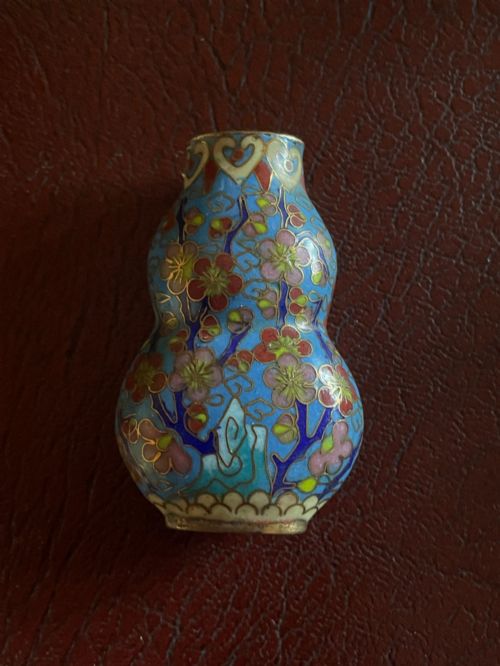
Enamel and bronze work together in cloisonne and champleve pieces, where wire partitions hold coloured vitreous pastes before firing. This technique creates cells of colour that form intricate floral patterns across the metal surface.
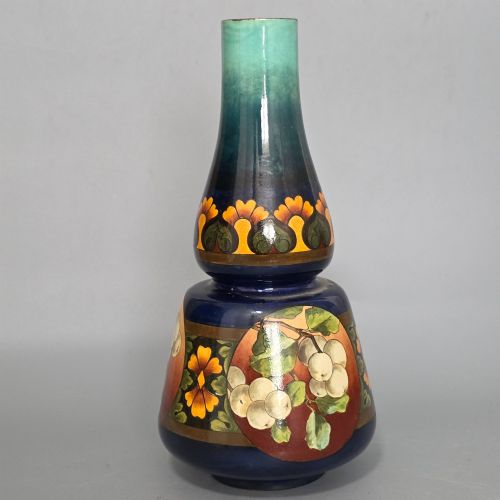
Ceramic pieces rely on porcelain, faience, and heavy glaze applications, sometimes incorporating incised decoration such as stylised peonies. Artisans shaped these clays into baluster forms and shaped vessels before applying turquoise glazes.
Even miniature vessels receive meticulous wire cloisonne cells, proving that tiny floral fields demand as much patience as grand urns.
Distinctions in craftsmanship
Quality rests upon the precision of the enamel work and the sharpness of the incised details on ceramic surfaces. Finer pieces demonstrate careful alignment in metal wire cells and smooth, even glaze distribution.
The depth and nuance of the turquoise coloration together with the complexity of the floral or archaic motifs separate standard decorative items from superior examples.
Alice Euphemia Thatcher·Royal Doulton·Doulton Lambeth·Minton
The Turquoise Floral Vase Glossary
- Cloisonne
- Enamelwork in which enamel is applied to compartments separated by strips of metal welded to the body. This method defines many nineteenth-century oriental vessels.
- Champleve
- An enamelling technique where troughs or cells are sunk in the metal plate and filled with enamel. It provides robust surface patterns on bronze bodies.
- Faience
- Tinned-glazed earthenware of a fine quality, often associated with late nineteenth-century studio pottery. It supports detailed floral painting.
- Baluster
- A form of vase with a rounded body and a narrow neck resembling an architectural baluster. This shape recurs across Chinese export pieces.
- Monochrome
- A piece decorated in tones of a single colour, such as turquoise. Incised peony designs often provide texture underneath the glaze.
Turquoise Floral Vase: Frequently Asked Questions
What defines a turquoise floral vase?
A turquoise floral vase encompasses metal cloisonne, bronze champleve, and ceramic vessels featuring distinct blue-green hues and plant motifs. These objects range from nineteenth-century Chinese export pieces to European studio pottery.
Such items often serve as decorative ornaments or converted table lamps. Their construction combines traditional Asian metalwork with Western ceramic techniques.
How do I date a cloisonne vase?
Dating relies on the weight of the bronze body, the brightness of the enamel colours, and the style of the floral motifs. Nineteenth-century pieces often display heavier bases and intricate wirework.
Later twentieth-century examples tend to show standardised construction and brighter, more uniform turquoise tones. Comparing the base metal helps establish the period of manufacture.
Were these vases used as lamps?
Many vases were adapted into table lamps during the twentieth century, altering their original display context. This conversion often involved drilling the base or mounting hardware to the top.
Collectors encounter both original display vessels and those modified for domestic lighting. The presence of lamp fittings does not diminish the age of the underlying ceramic or cloisonne body.
What is Iznik-style pottery?
Iznik-style pieces draw inspiration from Ottoman ceramics known for vibrant floral designs and rich turquoise glazes. European potteries frequently reinterpreted these aesthetics during the twentieth century.
These works replicate the characteristic colour palettes and botanical patterns of earlier Turkish traditions. They offer an alternative to Chinese export wares found in the same category.