



Victorian Doulton Lambeth Pottery
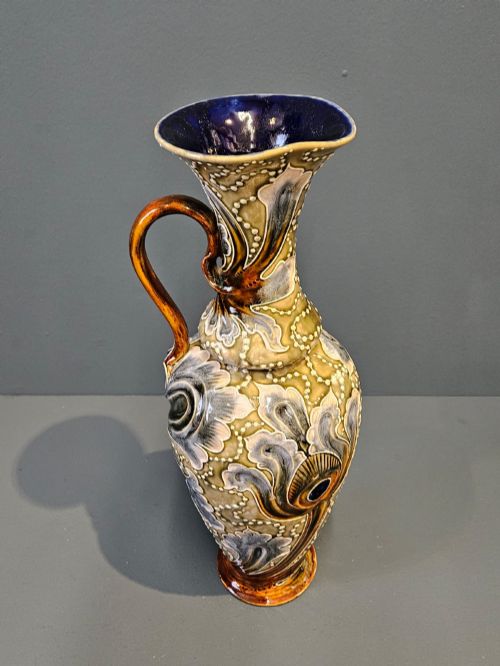
Victorian Doulton Lambeth pottery comprises robust stoneware and decorated faience created in London, prized for intricate incised ornament and distinctive studio handwork.
Victorian Doulton Lambeth Pottery
Victorian Doulton Lambeth pottery encompasses domestic and decorative vessels produced by the famous London works, spanning utilitarian jugs to ornamental vases. Buyers searching for Victorian Doulton Lambeth pottery encounter sturdy salt-glazed stoneware alongside delicate faience and slip-decorated wares.
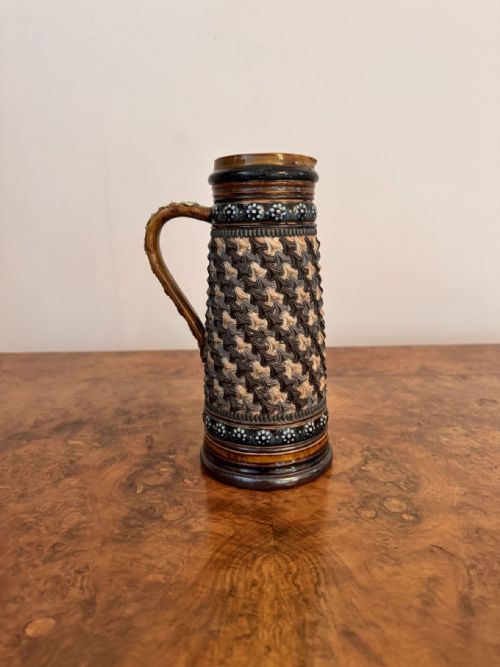
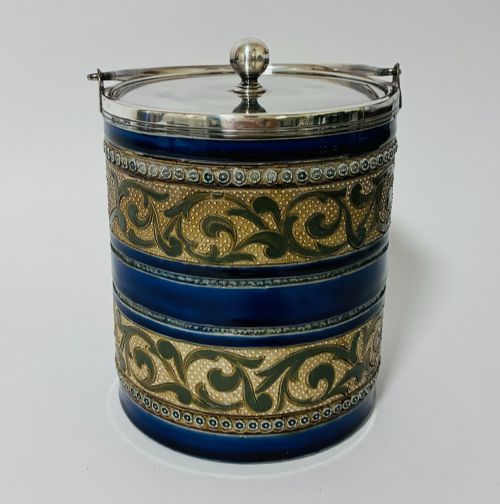
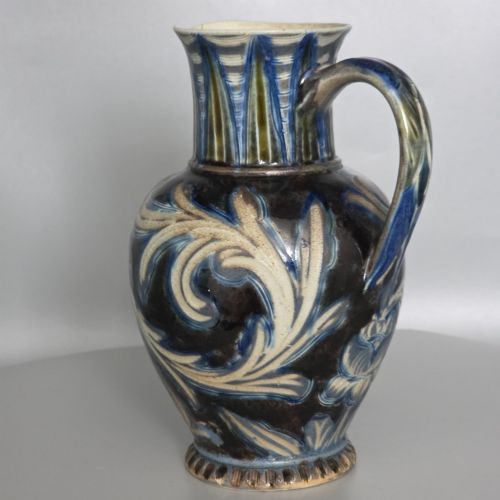
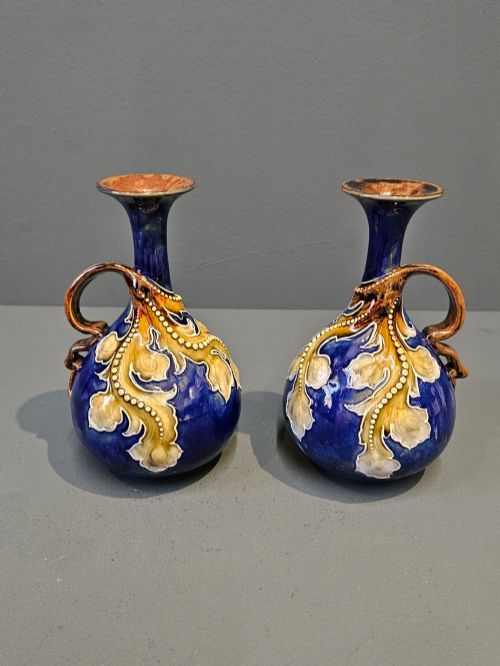
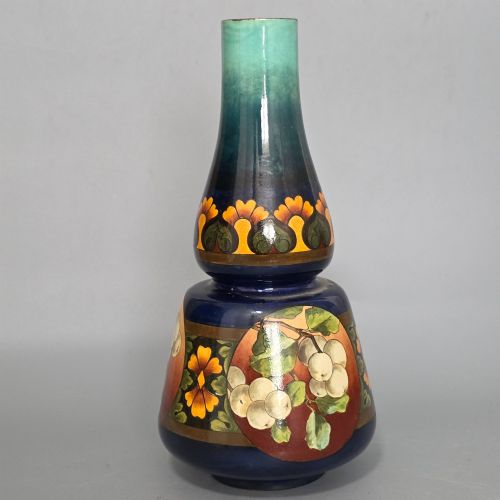
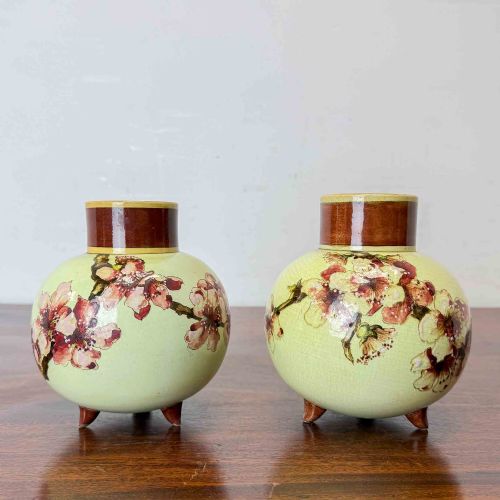
Vessels on this page emerge primarily in forms such as vases, jugs, jardiniere, and biscuit barrels. These pieces reflect late nineteenth-century artistic movements, carrying the hallmarks of distinct studio designers.
How They Were Made
Makers shaped heavy stoneware bodies on the potter's wheel before applying salt glazing or intricate surface incision. Potters incised patterns directly into the damp clay, filling the recesses with coloured slips and glazes.
Certain lines integrate silver plate mounts or silver rims, uniting ceramic forms with metalwork. Faience and Intarsio pieces utilise painted earthenware surfaces fired with detailed floral or figurative motifs.
Listings feature Victorian salt-glazed stoneware alongside colourful faience and specialised Slaters patent surfaces.
What Varies in Quality
Quality rests upon the depth of the incised carving and the crispness of the applied ornament. Pieces attributed to named studio artists demonstrate superior hand-finishing and complex decorative schemes.
The sophistication of the glaze application and the harmony of the palette distinguish standard utility items from exhibition-grade studio pieces. Details like intricate silver mounts elevate the overall design.
Alice Euphemia Thatcher·Florence E. Barlow·Eliza Simmance·Emma Shute·Frank Butler·Emily Edwards·Emily Stormer
The Victorian Doulton Lambeth Pottery Glossary
- Stoneware
- A dense, impermeable ceramic fired at high temperatures until vitrified. This durable material forms the structural base for much of the studio output.
- Salt Glaze
- A glossy, textured finish achieved by throwing common salt into the kiln during high-temperature firing. This process produces a characteristic orange-peel texture on the stoneware surface.
- Faience
- Tin-glazed earthenware decorated with painted designs beneath a clear glaze. It allowed artists to work with a broader palette of colours than traditional salt-glazed stoneware.
- Tyg
- A large drinking vessel featuring multiple handles designed for communal passing around a table. These medieval-inspired forms reappear frequently in late nineteenth-century studio revivals.
- Slaterware
- A patented technique involving lace or woven fabrics pressed directly into damp clay to create textured backgrounds. These textured areas are often highlighted with enamels and gilding.
Victorian Doulton Lambeth Pottery: Frequently Asked Questions
How do I identify a Doulton Lambeth piece?
Look for impressed factory stamps, registration marks, and individual artist monograms inscribed into the base of the vessel. The combination of salt-glazed stoneware bodies and hand-incised decoration typically points towards this London studio.
Studying the specific surface textures and glaze reactions also helps confirm authenticity. Many pieces bear the distinct signatures of the women and men who painted and carved them.
What is the difference between stoneware and faience?
Stoneware is fired at high temperatures until vitrified and hard, frequently featuring salt glazing and incised motifs. Faience uses an earthenware body decorated with painted ceramic colours beneath a smooth glaze.
Stoneware offers a heavy, tactile finish suited to everyday vessels, while faience provides a flat canvas for detailed floral artwork.
How were these items used originally?
Vessels served both utilitarian and decorative roles in Victorian homes, from holding flowers in large jardinieres to serving liquids from harvest jugs. Biscuit barrels and salad bowls functioned as practical dining table accessories.
Many ornamental vases and plaques existed purely to display contemporary artistic skill on mantelpieces and drawing-room tables.