




Green Ceramic Vase Pair
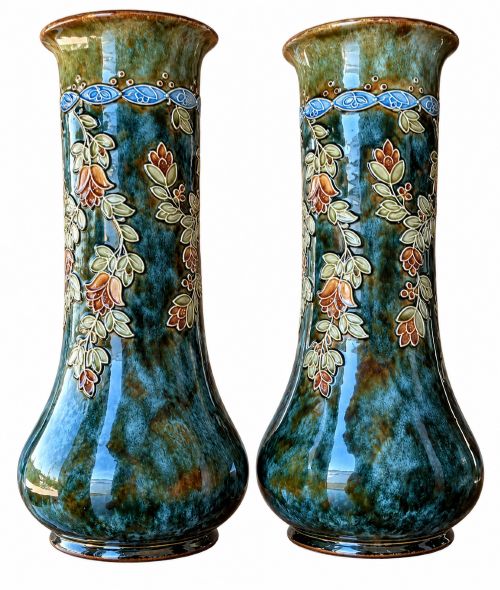
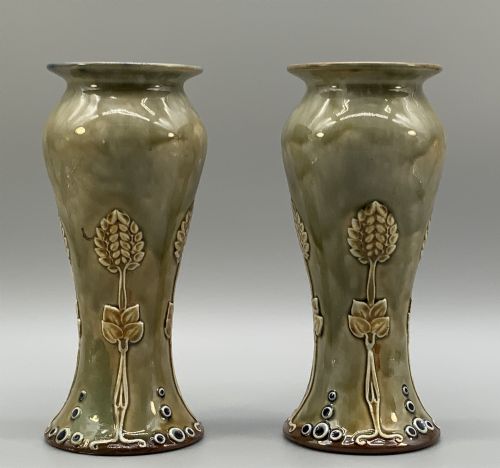
These green ceramic vase pair options bring matching symmetry and striking colour to a room, spanning Victorian production to Art Nouveau design.
Green Ceramic Vase Pair
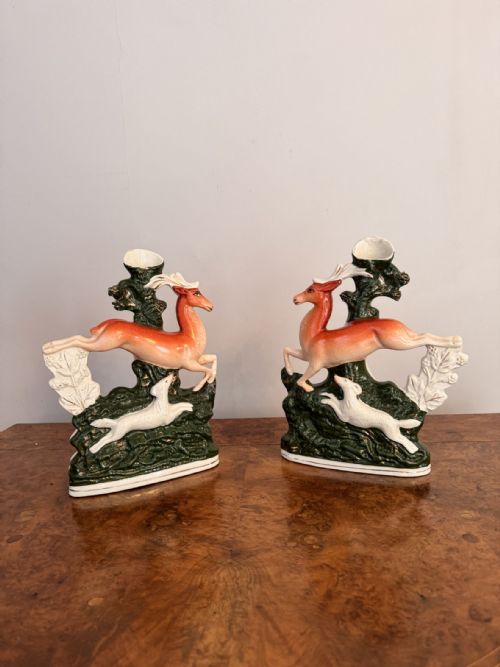
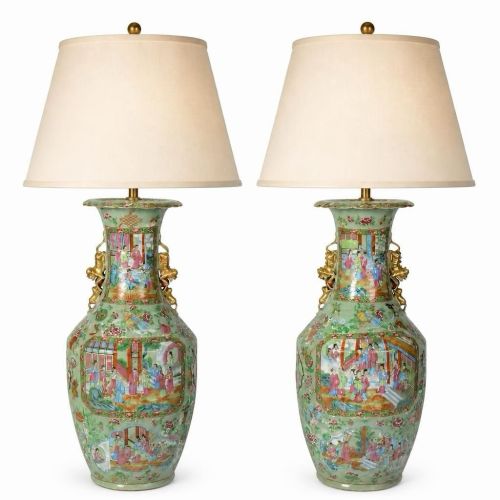
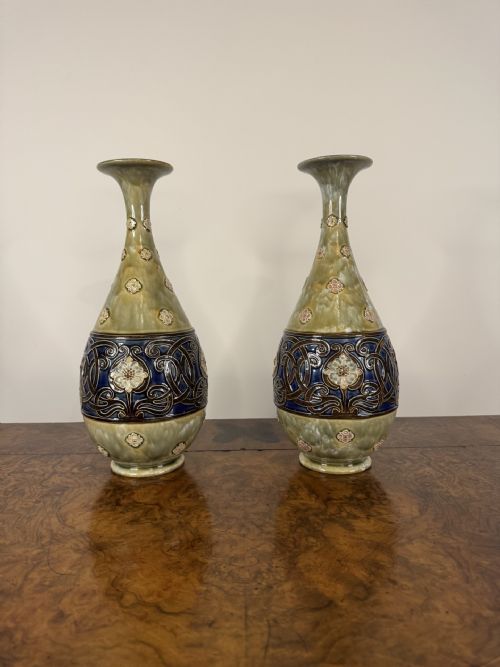
A green ceramic vase pair brings balanced decoration to a mantelpiece or side table, offering matched dual vessels created in European potteries and Chinese export workshops. These decorative objects often double as table lamps or serve as spill vases and ewers.
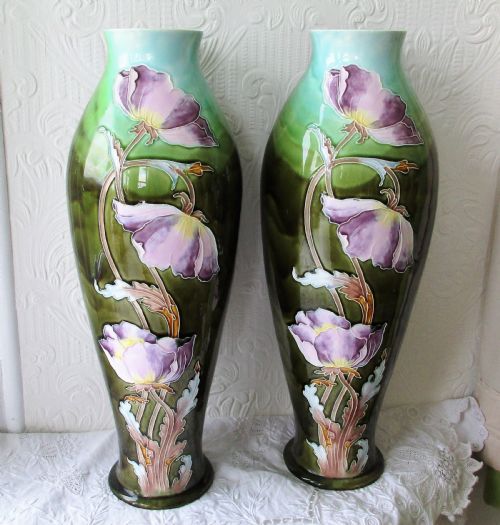
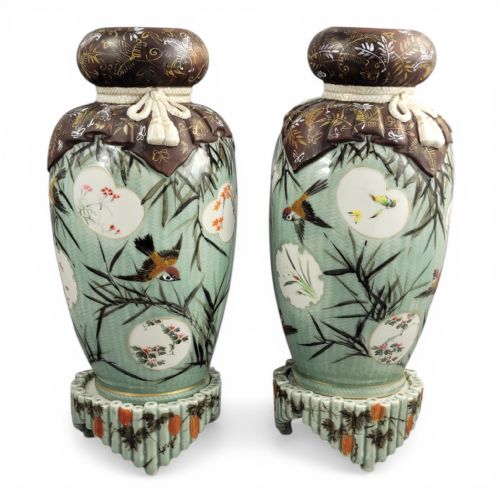
The selections here stretch from Victorian Staffordshire figures and earthenware to British stoneware and continental porcelain. Art Nouveau styling dominates the pottery and ceramic forms, alongside Qing Dynasty Chinese porcelain created in celadon, tea dust glaze, and famille rose.
Makers utilised earthenware, stoneware, and porcelain to form baluster, globular, and bottle shapes. Buyers frequently encounter nineteenth century English pottery alongside French faience and Austrian ceramic ewers.
How They Were Made
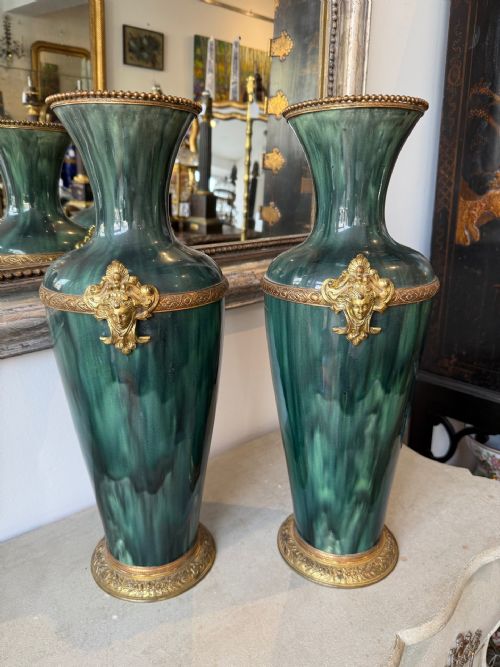
Potters shaped these vessels using earthenware, stoneware, and hard-paste porcelain, applying glazes that include mottled green, tea dust, and celadon finishes. Many pieces incorporate hand-painted enamel decoration, gilt bronze mounts, or raised pâte-sur-pâte details.
Kiln techniques in British and continental factories allowed for complex stoneware and faience bodies, while Chinese export pieces utilised traditional high-firing methods. Workshops such as Doulton Lambeth combined salt-glazed stoneware with slip decoration and floral motifs.
The material selection spans European faience alongside Chinese export ceramics decorated in famille verte and rose enamels.
What Varies in Quality
The distinction between ordinary production and superior work lies in the crispness of the moulding and the depth of the glaze application. Hand-painted enamels executed with fine brushwork elevate a pair above standard factory output.
Original matching sets that retain their corresponding stands, mounts, or lids demonstrate greater integrity than assembled pairs. The confidence of the Art Nouveau lines or the precision of Qing Dynasty detail dictates the artistic success of the objects.
Royal Doulton Lambeth·Burmantofts Faience·Alexandra Porcelain Works·Kato Sanhei
The Green Ceramic Vase Pair Glossary
- Spill vase
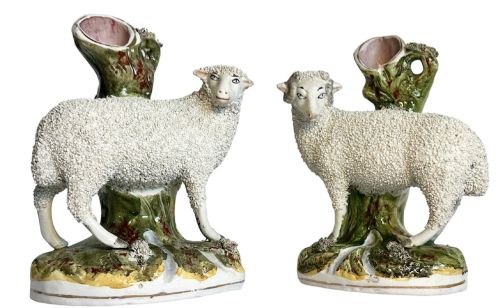
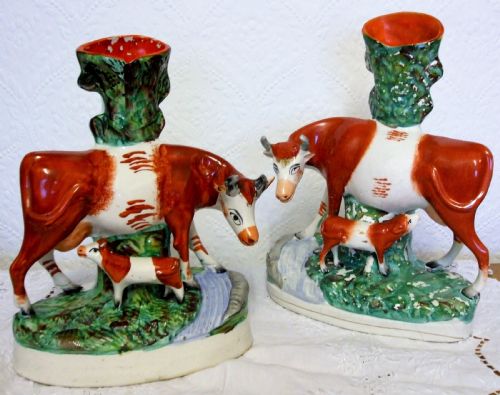
- A small container designed to hold tapered spills of paper used for lighting fires or pipes. These earthenware items often depict animals like sheep and deer.
- Baluster
- A vertical architectural form shaped like a jug or pillar, swelling gently towards the base. This profile appears frequently on nineteenth century ceramic vessels.
- Faience
- Tinned-glazed earthenware produced across Europe, particularly in France and England. It provides an opaque surface suitable for painted ornamentation.
- Celadon
- A pale green jade-like glaze applied to porcelain bodies. The tone results from iron oxide interacting within a reduction kiln.
Green Ceramic Vase Pair: Frequently Asked Questions
How do I clean antique ceramic vases?
Dust gently with a soft, dry brush to protect delicate glazes and enamel work. Avoid submerging antique pottery in water, especially pieces with gilt bronze mounts or added fabric components.
Harsh chemical cleaners will strip nineteenth century finishes. If washing is necessary, consult a professional conservator to prevent moisture damage to porous earthenware.
Were these vases made as lamps?
Many nineteenth century Chinese and European vessels were converted into table lamps during later periods by adding wiring and bronze or brass mounts. Original porcelain bases sometimes accommodated these alterations while retaining their decorative utility.
Buyers should examine the underside and mounts to determine if lamp fittings were added subsequently. Such conversions remain common for large decorative pairs.
What is the difference between earthenware and stoneware?
Earthenware is fired at lower temperatures, producing a porous ceramic body that requires glaze to hold water. Stoneware undergoes high-temperature firing until the material vitrifies into a dense, waterproof substance.
Stoneware potteries like Doulton Lambeth created robust objects with heavy glazes. Earthenware pieces often display softer moulded details and hand-painted enamel colours.
How can I date a nineteenth century ceramic pair?
Dating relies on factory marks, glaze types, and stylistic indicators such as Victorian Gothic revival or Art Nouveau asymmetry. Potters frequently stamped their stoneware and porcelain with registration numbers or specific workshop ciphers.
Stylistic shifts from ornate Victorian moulding to fluid Art Nouveau forms help narrow the decade of production. Comparative examination of glaze palettes also clarifies the era.