
Victorian Dog Ornaments
Victorian dog ornaments bring sculptural character to a room, capturing the loyalty and variety of canine subjects in ceramic, bronze, and terracotta.
Victorian Dog Ornaments
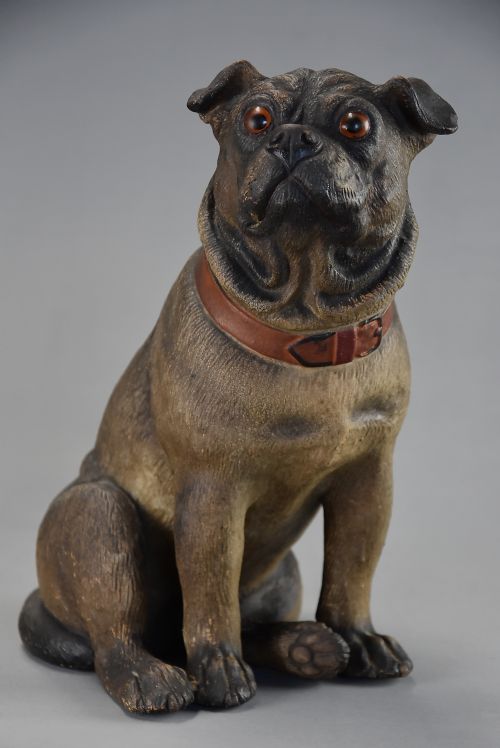
These Victorian dog ornaments span decorative figurines, sculptural groups, and functional pieces such as candlesticks, quill holders, and andirons. Buyers searching for victorian dog ornaments encounter everything from earthenware comforter spaniels and poodles to bronze sighthounds and terracotta pugs.
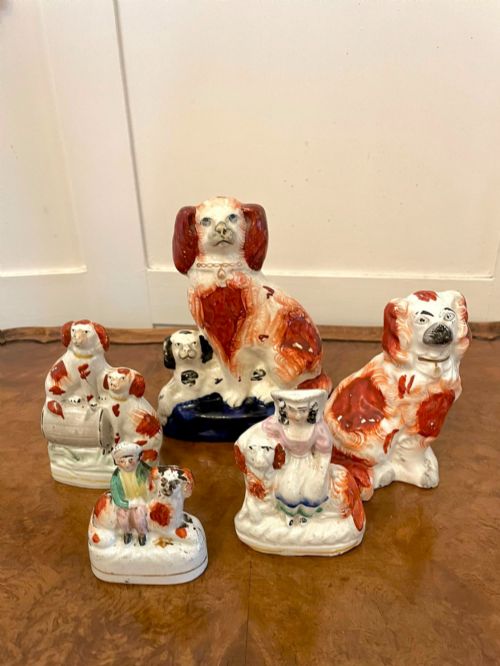
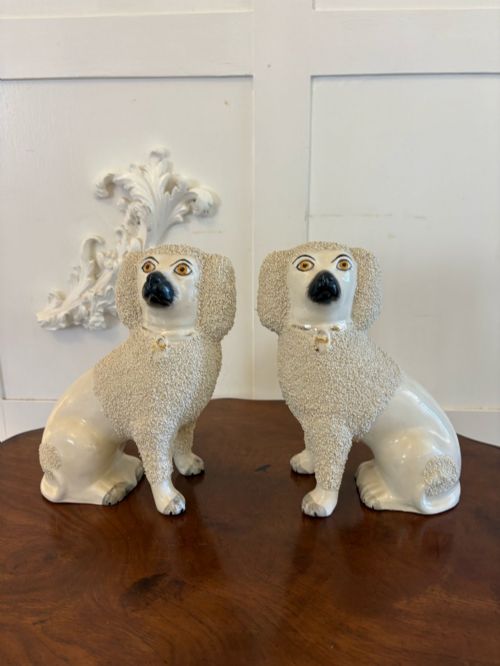
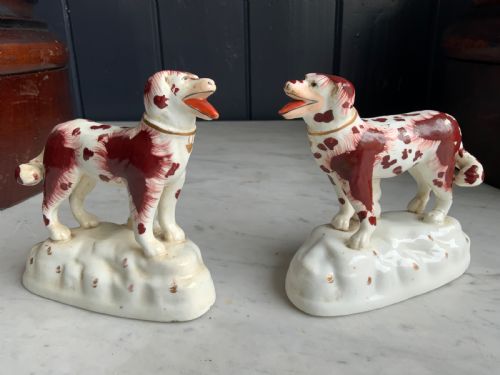
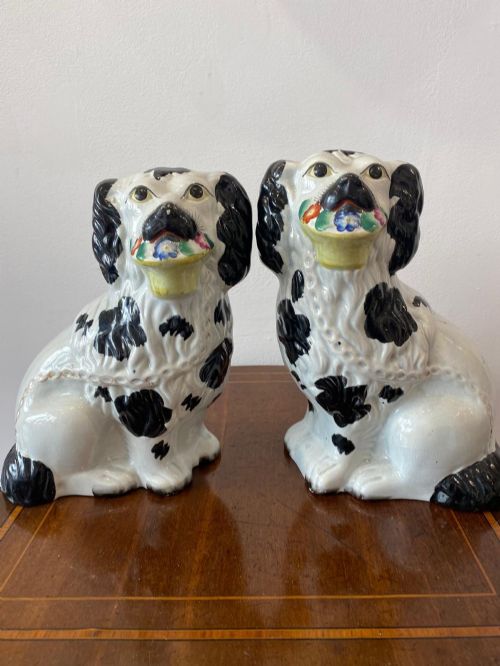
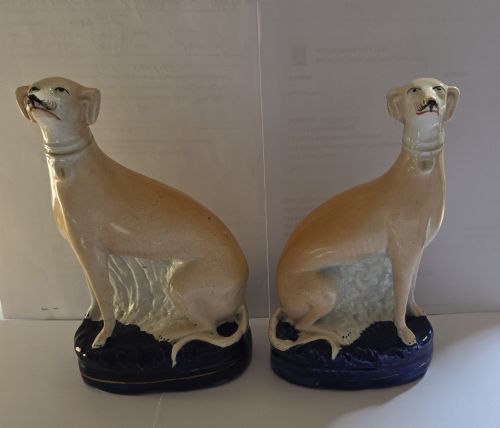
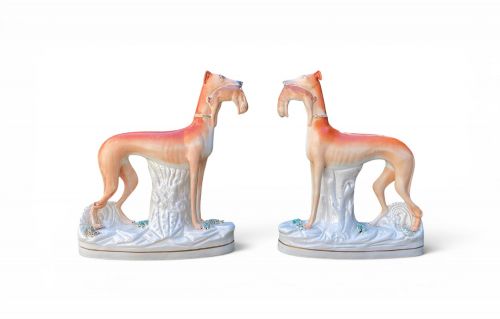
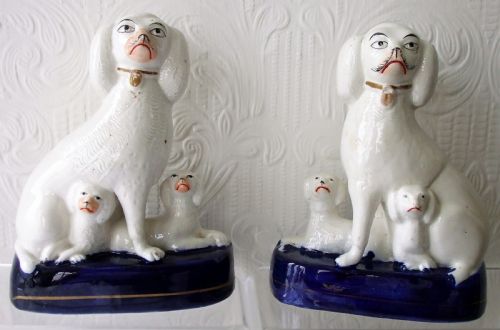
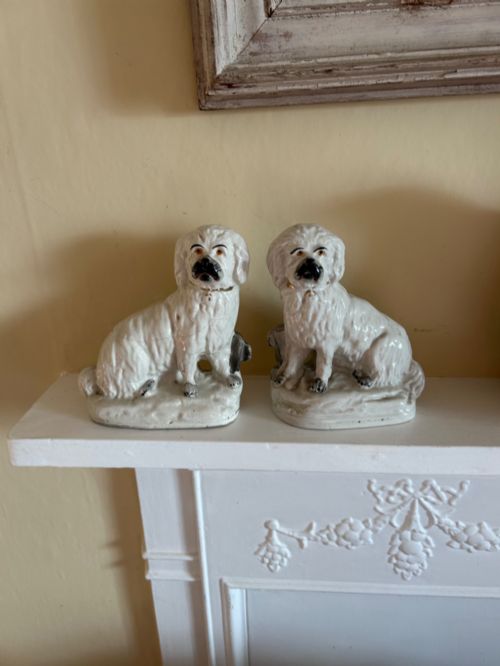
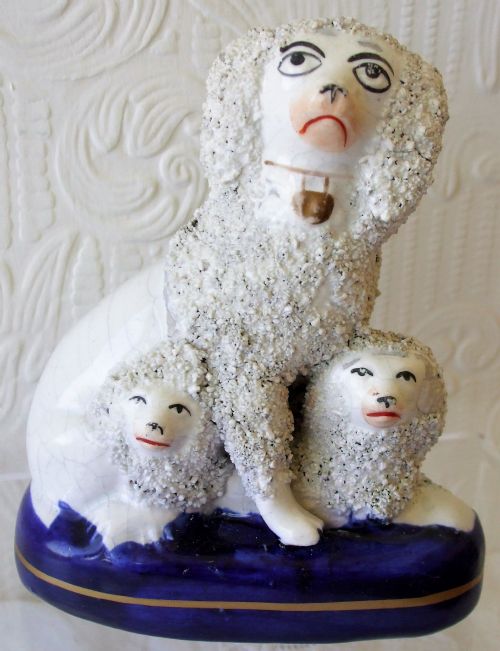
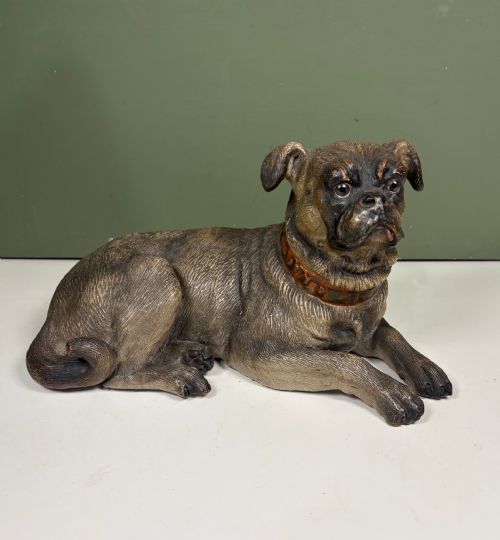
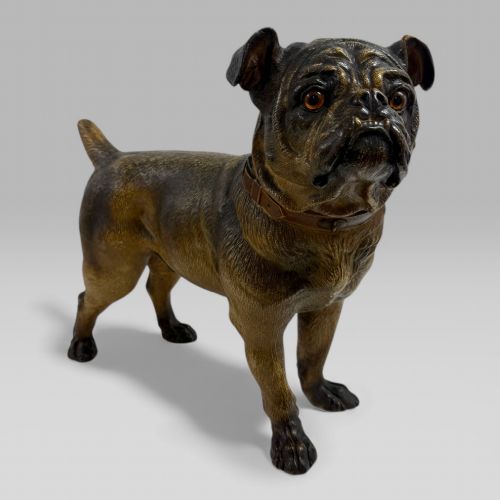
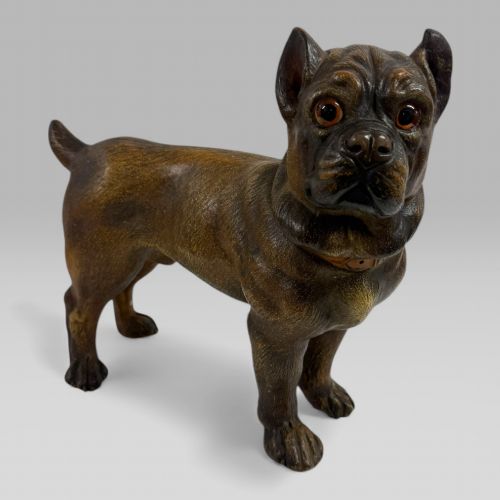
Staffordshire pottery pairs dominate the selection, often modelled as seated spaniels, greyhounds, whippets, and poodles intended for mantelpiece display. Alongside these English ceramic groups, continental workshops contribute terracotta pugs and bronze sculptures capturing precise animalier realism.
Pieces range from modest mantel figures to substantial life-size sculptures and practical items like lamps and ink stands. The variety reflects a nineteenth-century fascination with canine companions, rendered in media from slip-cast earthenware to cast bronze.
Materials and Techniques
Potters and sculptors shaped these pieces using earthenware, stoneware, porcelain, terracotta, and cast bronze. Ceramic figures typically rely on moulded clay bodies finished with glazes, hand-painted enamel details, and occasional touches of gold leaf.
Bronze sculptures and animalier figures utilise the lost-wax casting method, capturing musculature and fur texture before receiving dark patination or gilt finishes. Parian ware pieces employ a fine unglazed porcelain slip that yields a matte, marble-like surface suitable for classical figures and hunting dogs.
Assessing Quality
The crispness of the modelling separates standard production wares from superior sculptural examples, particularly in the rendering of facial expressions, fur, and paws. Hand-painted enamel work shows variation, where precise brushwork on eyes and markings elevates a piece above factory-painted output.
Material choice and finishing influence distinction, from rich lead glazes and fine gold leaf accents on Staffordshire pottery to the refined foundry work found on bronze animalier subjects. Matched pairs with uniform sizing and symmetrical hand-painted details command greater appreciation than mismatched or heavily worn survivors.
Pierre Jules Mene·Jules Moigniez·Thomas Parr
The Victorian Dog Ornaments Glossary
- Animalier
- A nineteenth-century artistic movement and style focused on the realistic depiction of animals, particularly in bronze and terracotta. Sculptors in this tradition studied anatomy closely.
- Staffordshire
- A term for pottery produced in the region of Staffordshire, England, encompassing earthenware figures and comforter spaniels made for domestic display. These pieces were moulded in sections and hand-painted.
- Parian ware
- A fine-grained, unglazed white porcelain developed in the nineteenth century that resembles carved marble. It gained popularity for classical figures and detailed animal sculptures.
- Andirons
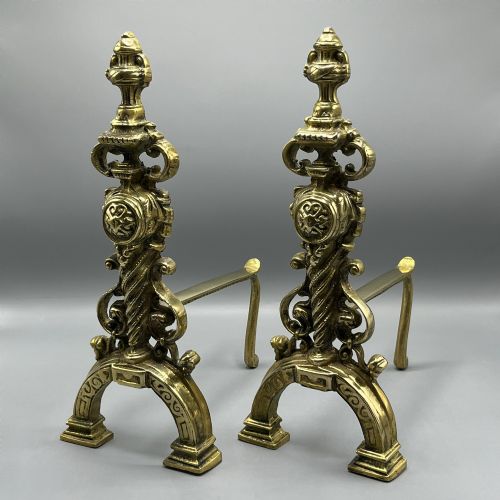
- Metal supports used in an open fireplace to hold logs, often topped with decorative brass or iron figures such as dogs. They served both a practical hearth function and a decorative purpose.
- Terracotta
- Fired, unglazed clay ranging in colour from pale buff to deep reddish-brown. Continental workshops utilised this material for life-size dog sculptures and detailed mantel ornaments.
Victorian Dog Ornaments: Frequently Asked Questions
Where were Staffordshire dog ornaments displayed?
These ceramic pairs traditionally sat on mantelpieces in nineteenth-century parlours, often positioned facing inward toward each other. Households placed them on shelves and sideboards to bring decorative warmth to domestic living spaces.
Over time, collectors transitioned these ornaments to display cabinets, bookcases, and occasional tables where their hand-painted details remain visible up close.
What is a comforter spaniel?
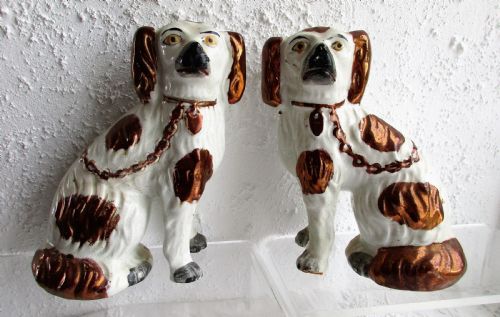
Comforter spaniels represent a specific Staffordshire pottery type modelled after King Charles spaniels and similar lapdogs popular during the Victorian era. Potters typically decorated them with copper lustre patches, black markings, and gilt lockets.
These figures gained their name from their association with the real lapdogs that provided comfort and companionship to their owners in nineteenth-century homes.
How do I distinguish bronze from ceramic pieces?
Bronze animalier sculptures carry significant weight and feature metal patination or gilt surfaces produced through foundry casting. Ceramic and pottery figures show earthenware or porcelain bodies beneath glaze and enamel paint layers.
Examining the underside or base often reveals exposed clay on pottery figures, whereas bronze pieces display metal seams, foundry marks, or felted bottoms.
Were these dogs meant to be functional?
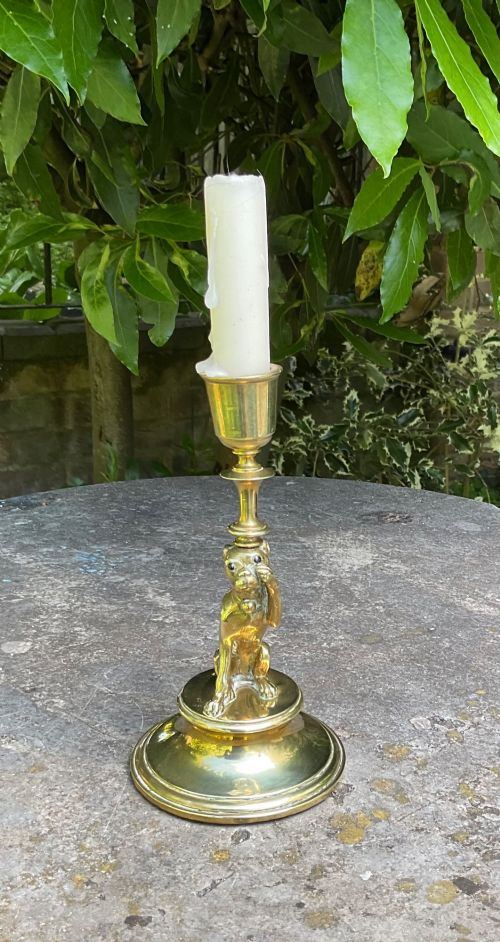
While most Victorian dog ornaments served a purely decorative purpose on mantelpieces, several forms incorporated practical uses. Makers produced whippet figures as quill holders for desks and shaped pugs into candlesticks or lamp bases.
Larger brass figures functioned as fire dogs and andirons on hearths, combining utility with sculptural animal subjects.