




Antique Pottery Poodles
Antique pottery poodles are charming ceramic figures capturing Victorian sentiment, highly sought after by collectors for their distinctive character and decorative appeal.
Antique Pottery Poodles
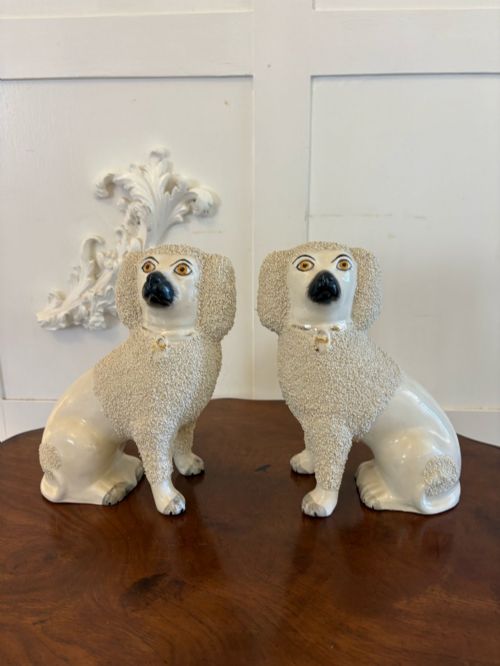
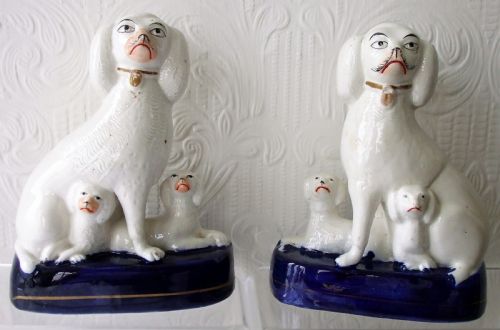
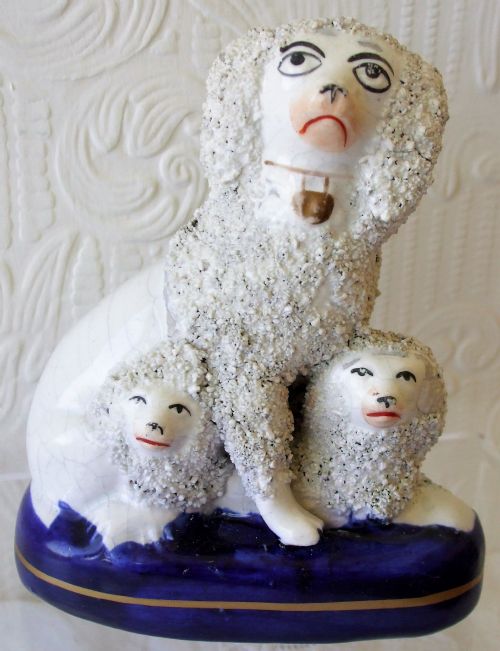
Antique pottery poodles are nineteenth-century ceramic figures depicting the popular breed, often modelled as pairs sitting upright or alongside pups. These decorative objects emerge primarily from the Victorian period, appearing as both standard mantel ornaments and smaller miniature versions.
Buyers encountering this search phrase will find various configurations, including figure groups, clock housings, and quill holders incorporating baskets. Many examples originate from English potteries, capturing the Victorian fondness for canine ornamentation in domestic interiors.
How they were made
The distinct textured fur, often referred to as woolly or encrusted work, was achieved through applied clay details before firing. Artisans meticulously painted facial expressions and added subsidiary elements like pups or cushions prior to the final glazing process.
Object forms span decorative figurines, miniature pairs, quill holders, and clock groups from the Victorian era.
What varies in quality
Proportion and stance distinguish finer pairs from simpler production pieces, particularly in miniature formats or complex figure groups involving multiple pups or clock surrounds.
James Dudson
The Antique Pottery Poodles Glossary
- Earthenware
- A porous pottery body fired at lower temperatures, commonly used for nineteenth-century figures before being glazed. It forms the structural base for the majority of these canine models.
- Bisque
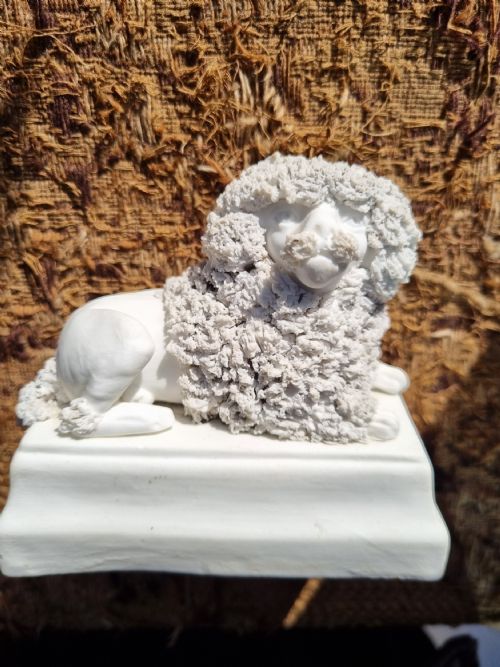
- Unglazed ceramic fired once, leaving a matte, porous surface texture. This finish highlights the pure form of the pottery without reflective gloss.
- Enamel
- Opaque vitreous decoration applied over the glaze and refired to bond colours permanently. It provides the distinct black markings and facial details on the figures.
- Quill Holder
- A utilitarian desk accessory integrated into the ceramic group, designed to hold writing feathers. The basket or hollow section serves this practical function alongside decoration.
- Gilt
- A thin layer of gold or gold-coloured material applied to highlights such as chains and collars. It adds a decorative flourish typical of Victorian mantel ornaments.
Antique Pottery Poodles: Frequently Asked Questions
What are antique pottery poodles?
Antique pottery poodles are nineteenth-century ceramic figures, predominantly of English origin, created to decorate Victorian mantelpieces and living spaces.
They depict the breed in various poses, frequently modelled as pairs, sometimes accompanied by puppies or incorporated into functional objects like quill holders.
How were they displayed in Victorian homes?
These ceramic figures were typically arranged in symmetrical pairs on mantelpieces, chiffoniers, or drawing-room tables.
Their cheerful presence and detailed enamel painting brought warmth and a sense of domestic companionship to period interiors.
How do I identify Victorian period pieces?
Victorian pieces are identified by their characteristic earthenware bodies, lead glazes, and hand-painted enamel details typical of nineteenth-century manufacturing methods.
Stylistic cues include the specific modelling of the curly coat, often described as woolly, and the presence of gilt collars or blue cushion bases.
Why do some poodles have pups or baskets?
Potters introduced pups and baskets to create more elaborate narrative scenes and increase the visual appeal for Victorian buyers.
Figures featuring multiple dogs or integrated quill holders represented more ambitious production work compared to simple single models.