


White Ceramic Poodle Pair
A white ceramic poodle pair brings distinct Victorian character to a room, offering the charm of Staffordshire pottery figures modelled with pups and textured coats.
White Ceramic Poodle Pair
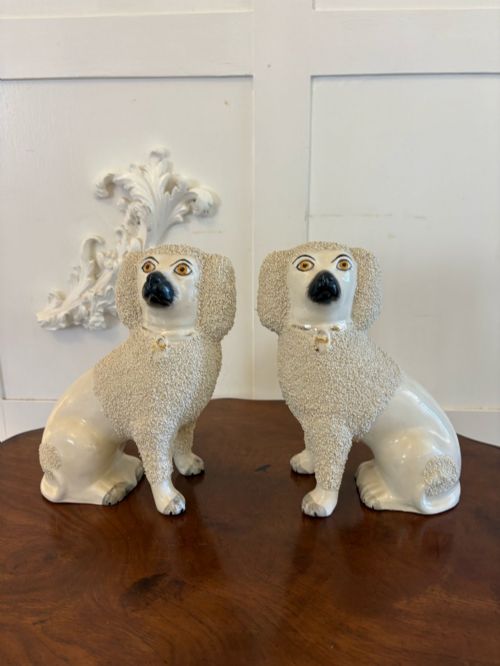
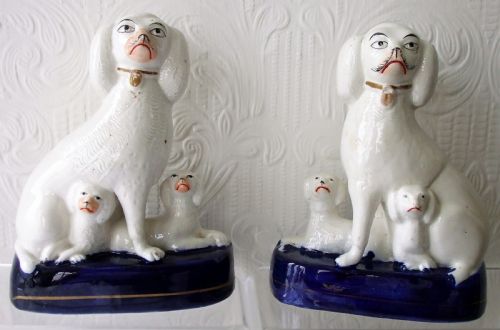
A white ceramic poodle pair consists of decorative figures modelled in earthenware, originating primarily from the Victorian period and the nineteenth century. These ornamental objects often depict adult poodles alongside small pups, resting on bases or cushions.
The versions most commonly met on this page include miniature poodles as well as standard Staffordshire pairs. Certain examples feature textured coats and gilt or gold leaf details applied to the glazed ceramic surface.
Materials and methods
These figures are made from earthenware and glazed pottery, shaped into decorative objects and figurines. Potters utilised lead glaze to create a smooth surface finish over the clay bodies.
Makers applied enamel paints and gold leaf highlights by hand onto the fired ceramic. Some examples incorporate textured clay details to render the characteristic woolly coat of the breed.
Several poodles wear remarkably serious expressions despite their fluffy coats.
Judging the work
Miniature pairs and those complete with pups demand greater skill from the potter, separating standard production pieces from more accomplished Victorian work.
James Dudson
The White Ceramic Poodle Pair Glossary
- Earthenware
- Porous pottery fired at lower temperatures, commonly used for nineteenth-century Staffordshire figures. It forms the standard body material for these glazed ceramic dogs.
- Lead glaze
- A shiny coating applied to pottery before firing to waterproof the clay and provide a smooth finish. This technique creates the characteristic reflective surface on Victorian figures.
- Enamel
- Coloured glass paste fused to the ceramic surface during a secondary firing. It provides the decorative pigment for eyes, collars and bases.
- Gold leaf
- Extremely thin sheets of beaten gold applied to glazed pottery for ornamentation. It highlights collars, cushions and details on better pieces.
- Staffordshire
- A regional designation for pottery produced in the English county of Staffordshire. It represents the origin of the vast majority of these decorative animal figurines.
White Ceramic Poodle Pair: Frequently Asked Questions
What are white ceramic poodle pairs?
These pieces are nineteenth-century decorative earthenware figures produced in England during the Victorian era. They depict pairs of poodles, frequently shown with pups or resting on cushions.
Potters modelled these decorative objects as mantel ornaments for domestic interiors. Their distinct appearance reflects the popular aesthetic of Victorian Staffordshire pottery.
How were these poodle figures used?
Victorian households displayed these ceramic pairs on mantelpieces, side tables and shelves as decorative ornaments. They served as ornamental household displays rather than functional items.
The inclusion of pups and miniature formats added varied decorative appeal for collectors of nineteenth-century pottery.
How do you date a Staffordshire poodle pair?
Dating relies on stylistic markers such as the presence of Victorian clothing details, blue cushions, or gilt accents. The specific type of earthenware body and lead glaze also offer clues to the period of manufacture.
Miniature examples and specific modelling styles align with production eras spanning from the mid-nineteenth century to around nineteen hundred.
Are all Staffordshire poodle pairs the same size?
These figures vary significantly in scale, ranging from standard mantle figures down to miniature poodles. The listings include full-sized pairs alongside smaller decorative variants.
Dimensions depend on the specific Victorian potter and the intended placement of the ornaments within a room.