
Victorian Dining Server
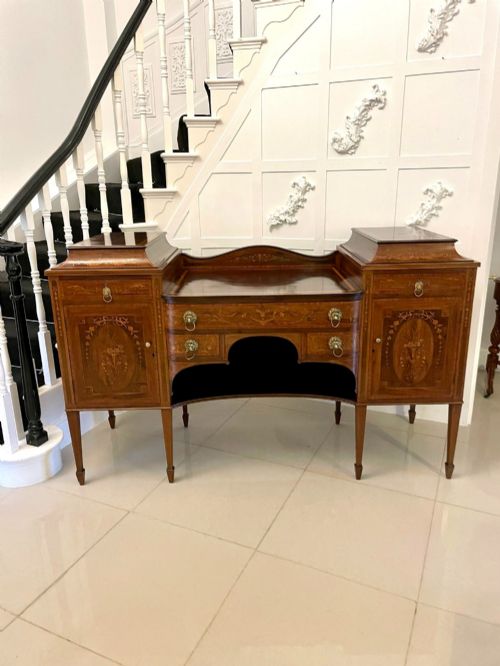
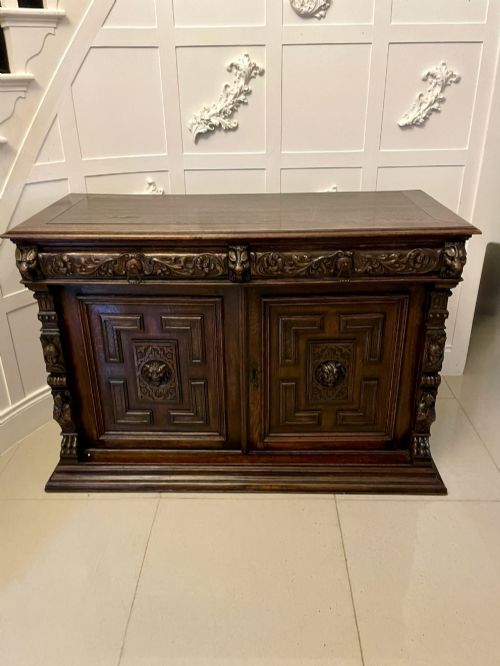
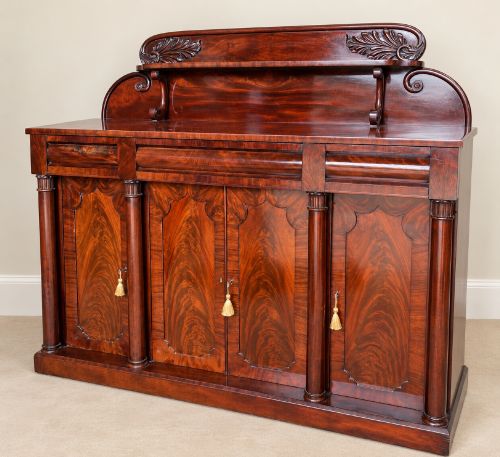
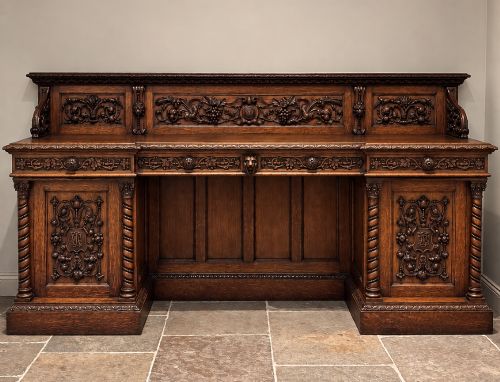
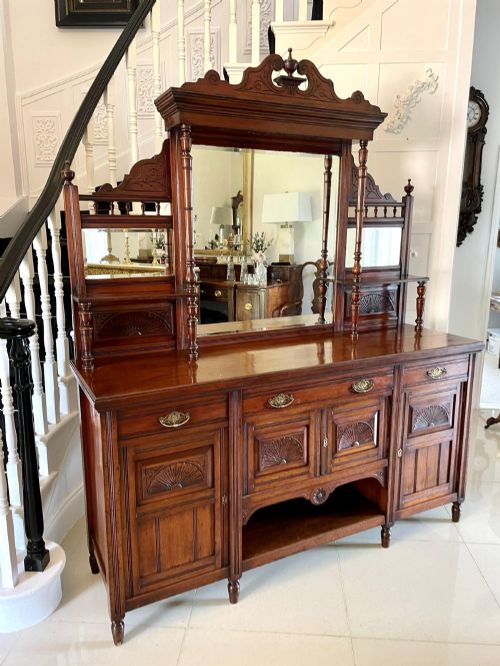
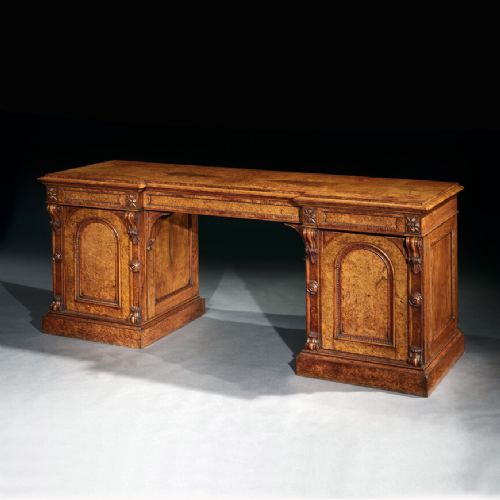
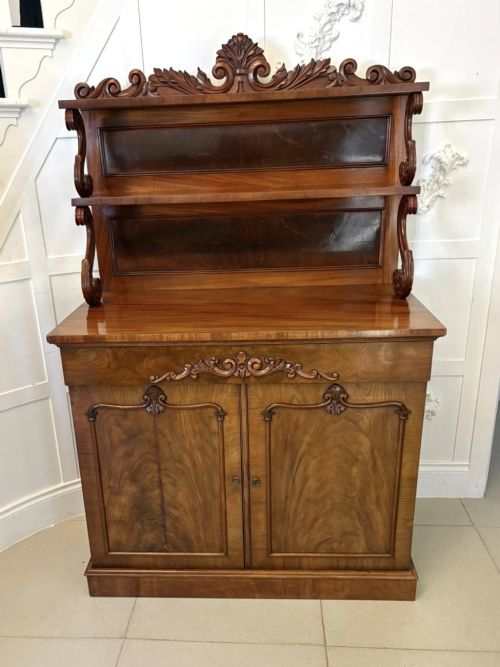
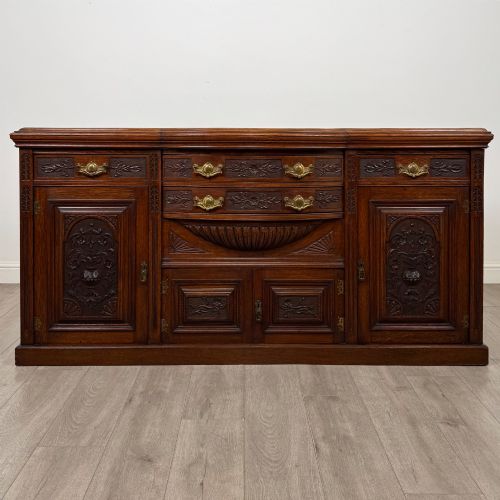
A victorian dining server is a substantial timber piece built for the nineteenth-century dining room, combining practical storage with grand display.
Victorian Dining Server
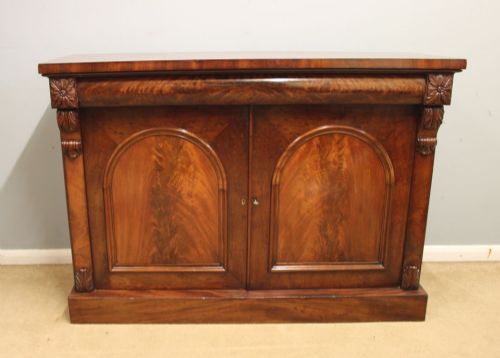
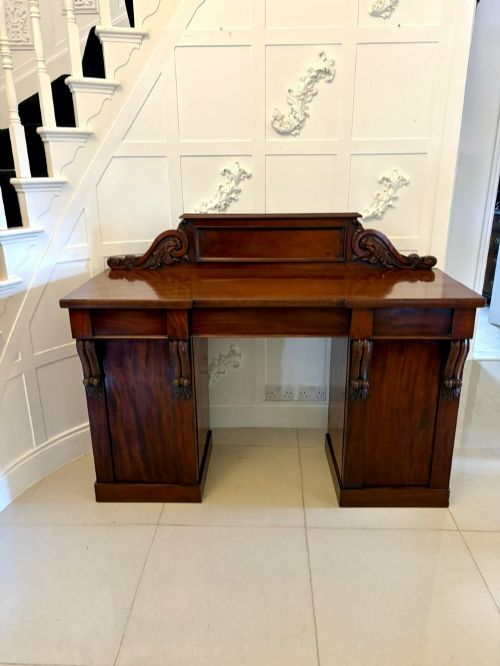
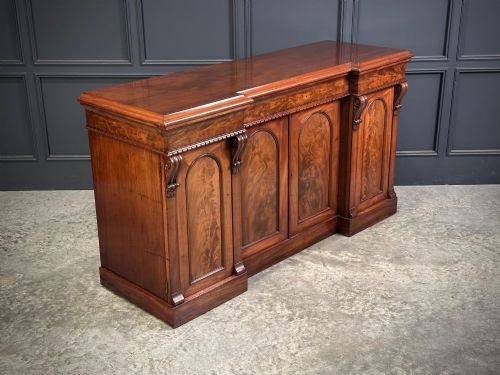
A victorian dining server encompasses large sideboards, credenzas, buffets, and serving tables designed for the formal dining room of the nineteenth century.
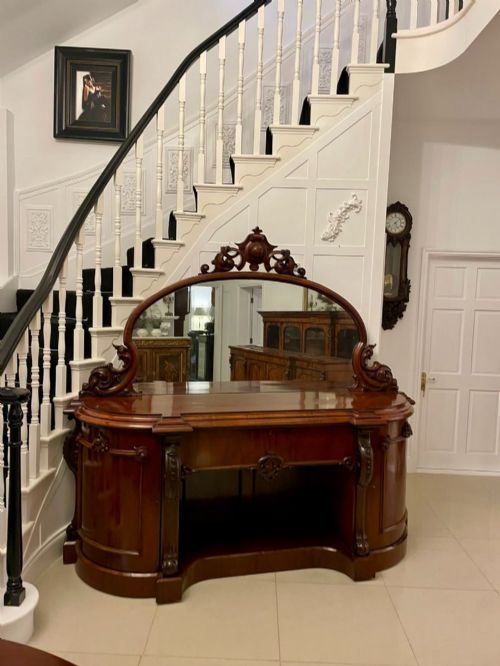
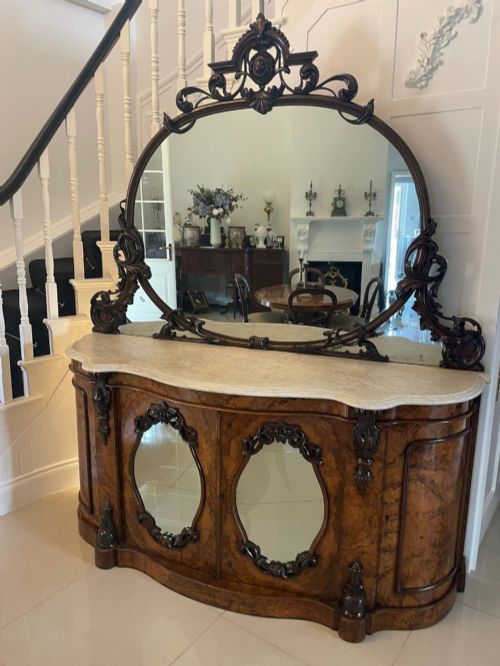
The version most commonly met on this page is constructed from mahogany, walnut, or oak, often featuring heavy carvings, mirrored backs, or marble tops.
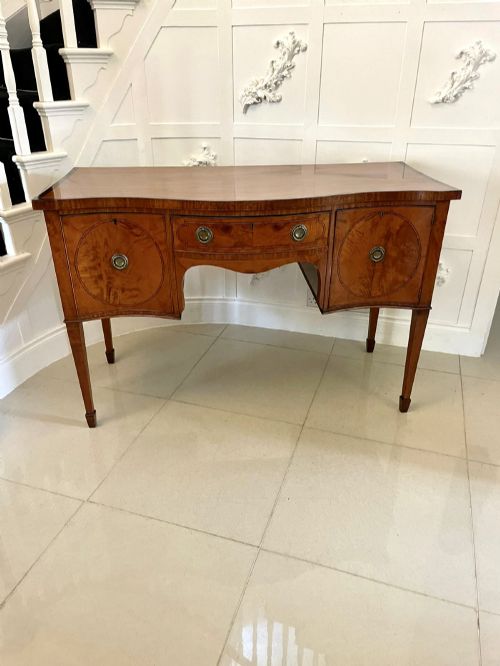
These forms reflect the revival styles of the period, drawing heavily upon Renaissance, Gothic, and Jacobean motifs alongside Sheraton influences.
Materials and Construction
Makers utilised solid timbers such as oak, walnut, and mahogany, frequently applying flame or figured mahogany veneers to create striking surface patterns.
Secondary materials like brass hardware, glass doors, and inset white or grey marble tops provided functional durability and visual contrast to the dark wood.
Carpentry techniques relied on heavy framing, dovetail joinery for drawers, and intricate hand-carved ornamentation applied to mirrors, backsplashes, and cabinet doors.
Listings feature woods spanning mahogany, walnut, pollard oak, and oak, paired with marble and glass.
Judging Quality and Execution
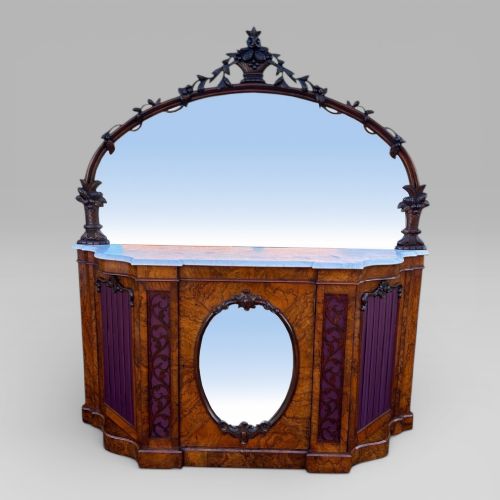
The distinction between standard production and top-tier execution lies in the selection of figured timber, such as pollard oak or flame mahogany, and the depth of the hand-carved detail.
Superior examples demonstrate precision in inlay and marquetry work, superior glass quality in mirrored backs, and integrated architectural elements like serpentine shaping.
Hewetsons London·Gillows
The Victorian Dining Server Glossary
- Credenza
- A sideboard or buffet typically featuring enclosed cupboards and a low profile. This form often incorporates mirrored backs in nineteenth-century iterations.
- Chiffonier
- A compact sideboard or cabinet featuring a raised shelf or superstructure on top. These pieces frequently utilise mahogany or walnut timber.
- Dumbwaiter
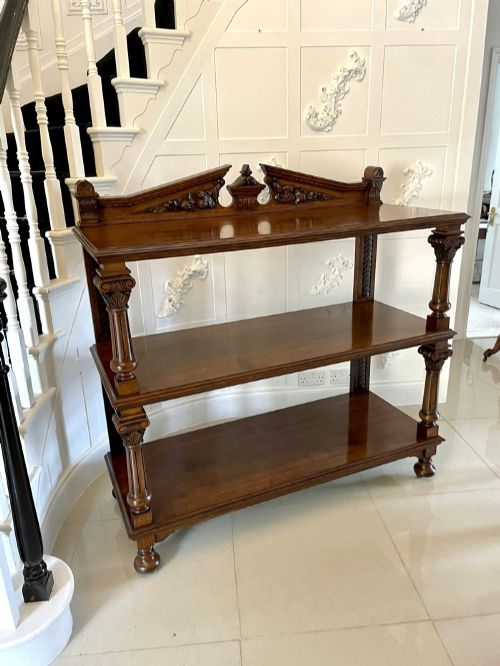
- A multi-tiered serving stand utilised for holding dishes during a meal. Examples appear in walnut and carved oak.
- Marquetry
- Decorative veneer work arranged in pictorial or geometric patterns using various coloured woods. This technique adorns select nineteenth-century mahogany surfaces.
- Pollard Oak
- Timber taken from trees pollarded to produce dense, gnarled growth rings. It creates a highly figured surface grain on specific nineteenth-century buffets.
Victorian Dining Server: Frequently Asked Questions
What is a victorian dining server used for?
These pieces served as practical storage units in nineteenth-century dining rooms, holding heavy silver, porcelain, and table linen.
Their upper surfaces and tiers also provided space for carving meats or displaying serving dishes during large family meals.
Where should I place a large buffet?
These substantial timber items require a dining room or spacious hallway with adequate wall space to accommodate their depth and height.
Ensure the floor can support heavy hardwood construction, especially for marble-topped variants.
What is the difference between a sideboard and a credenza?
Sideboards generally feature a longer rectangular format with a combination of drawers and cupboards designed explicitly for dining room storage.
Credenzas typically emphasise enclosed central cabinets flanked by curved ends, frequently including decorative mirrored superstructures.