


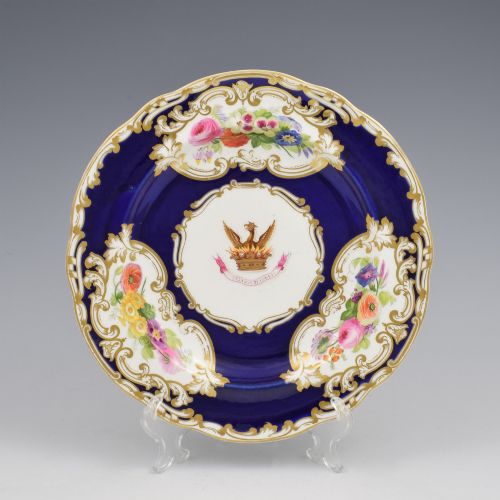


Victorian Decorative Wall Plate
A victorian decorative wall plate brings nineteenth-century craftsmanship into a room, offering painted porcelain or hammered metal designed to hang openly on a wall.
Victorian Decorative Wall Plate
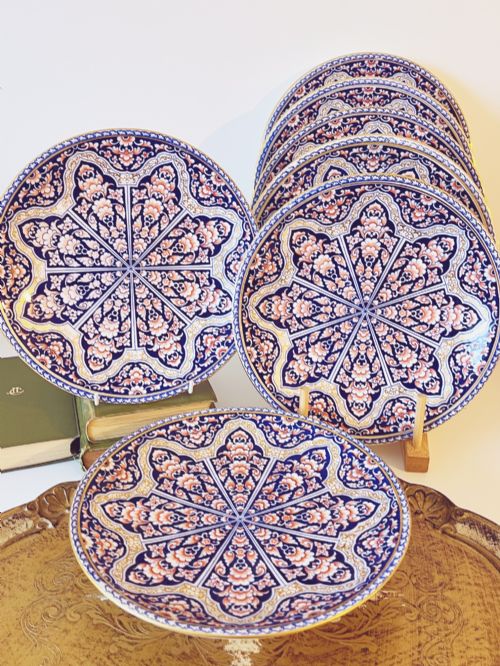
A victorian decorative wall plate encompasses large ceramic chargers, porcelain cabinet plates, and metal wall plaques produced during the nineteenth century. These items were designed primarily for display in domestic interiors rather than dining use, appearing in forms ranging from hand-painted porcelain to repoussé copper.
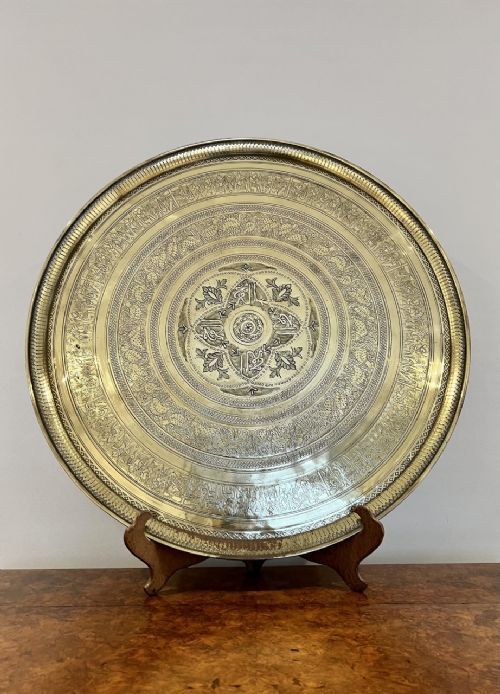
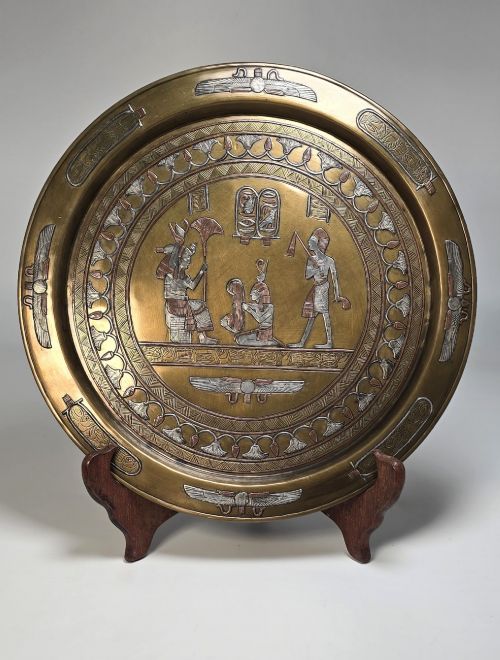
The pieces on this page lean heavily toward nineteenth-century ceramic and metallic work, including English earthenware, French porcelain, and Middle Eastern or Asian-influenced metalware. Collectors frequently encounter large Imari chargers, brass wall trays, and portrait plaques originating from English factories and continental workshops.
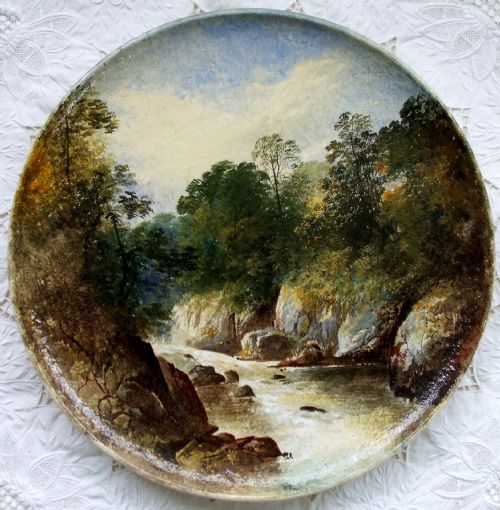
Makers and manufacturers of the period utilised diverse stylistic vocabularies, drawing on Renaissance Revival, Neoclassical, and Japanese motifs. This variety means a display piece might take the form of an earthenware plaque painted with a Welsh landscape or a silver-plated copper tray decorated with chased animals.
How they were made
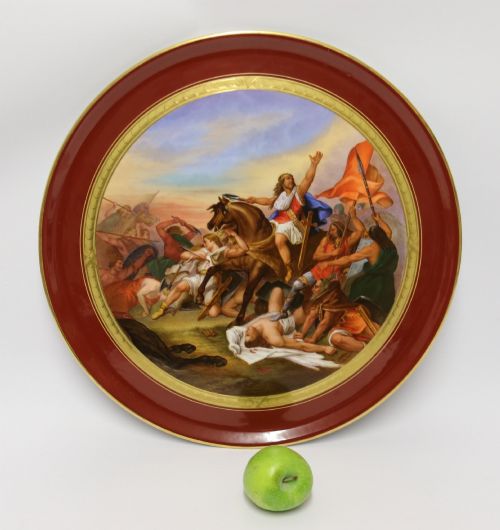
Makers combined traditional ceramic bodies such as porcelain, earthenware, and stoneware with hand-applied glazes, enamel colours, and gilding. Porcelain pieces often received detailed hand-painted figurative scenes or botanical studies before undergoing high-temperature kiln firing.
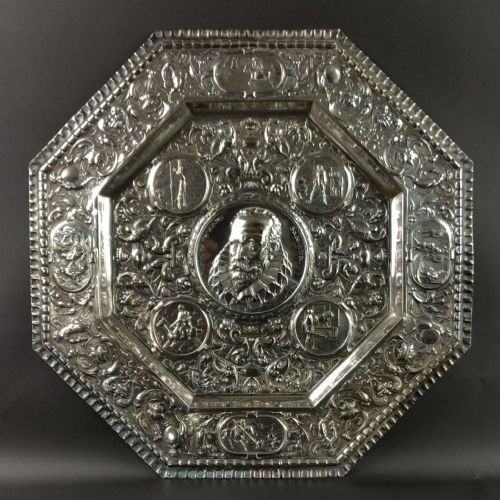
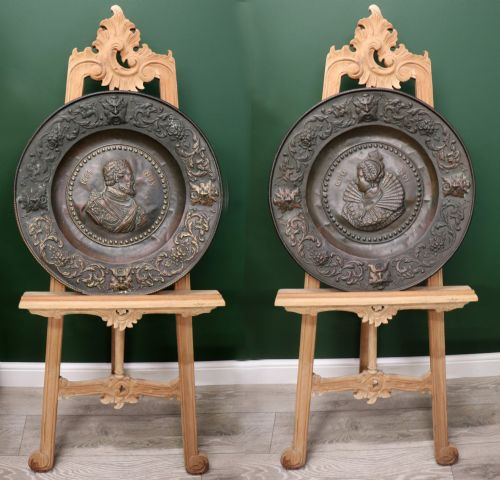
Metal items relied on techniques like repoussé, chasing, and silver plating over copper, brass, or mixed metal bases. Artisans hammered sheets from the reverse to raise portraits, battles, or floral motifs in relief, sometimes adding silver inlay or piercing the edges for suspension.
Several Victorian plates depict Miguel de Cervantes and French battles, proving that nineteenth-century dining rooms doubled as history classrooms.
What varies in quality
Quality rests upon the execution of the hand-painted detail or the depth and precision of the metalwork. Superior porcelain plates display finely brushed miniature portraits and secure gilding, whereas finer metal chargers show crisp, undercut relief rather than shallow pressing.
The prestige of the producing pottery or the individual artist elevates a piece significantly. Factory marks from names like Royal Crown Derby, Copeland, Minton, or Meissen, alongside signed artisan plaques, distinguish standard domestic production from exceptional studio and factory output.
Royal Crown Derby·Copeland Pottery·Coalport·John Ridgway·Minton·Elkington and Co·Royal Worcester
The Victorian Decorative Wall Plate Glossary
- Charger
- A large decorative plate or dish, typically exceeding standard dinnerware dimensions, intended for display on a sideboard or wall. These items provide a broader surface for elaborate painted scenes or heavy repoussé work.
- Repoussé
- A metalworking technique where the artisan hammers the reverse of a sheet to form raised designs on the front. This method creates tactile portraits, battle scenes, and floral borders on copper and brass vessels.
- Cabinet plate
- A high-quality ceramic plate produced for display within a glass-fronted cabinet rather than everyday dining use. They frequently feature hand-painted mythological subjects, landscapes, or armorial crests.
- Imari
- A style of ceramic decoration characterised by iron red, underglaze blue, and gilt highlights, originally inspired by Japanese export porcelain. Victorian potteries adopted these vibrant palettes for large decorative chargers and plates.
- Cloisonné
- Enamel work where coloured pastes are applied within wire partitions soldered to a metal base before firing. The technique produces intricate, bounded patterns across trays and wall plaques.
Victorian Decorative Wall Plate: Frequently Asked Questions
How were these wall plates hung originally?
Many nineteenth-century chargers and metal plaques were fitted with integrated rear loops or wire attachments specifically for wall display. Others relied on adjustable brass or spring-loaded wire hangers designed to grip the rim securely without damaging the ceramic body.
Today, modern adjustable hangers or specialist plate wires serve the same purpose, allowing heavy porcelain and metal pieces to be mounted safely on domestic walls.
What is the difference between a charger and a plate?
A charger is substantially larger than a standard dining plate, generally measuring well over thirty centimetres in diameter. These oversized pieces were intended to dominate a sideboard or hang centrally on a wall.
Plates, while still decorative, conform to standard table dimensions and often appeared in matching dessert services or individual cabinet displays rather than as standalone focal points.
How do I identify nineteenth century porcelain?
Examination of the unglazed foot ring and factory backstamps provides the primary means of identification. Nineteenth-century porcelain often displays impressed marks, painted pattern numbers, or cipher codes specific to the pottery.
Stylistic cues, such as the weight of the paste, the composition of the glaze, and the specific hand-painted palette, help confirm the period when marks are absent or rubbed.
Can these metal trays be cleaned safely?
Dusting with a dry, soft cloth is normally sufficient for routine maintenance of antique copper, brass, and silver-plated chargers. Aggressive metal polishes should be avoided because they can strip original patination or damage delicate plated surfaces.
Specialist conservation waxes can protect exposed metal from atmospheric oxidation if applied sparingly by an experienced hand.