


Victorian Circular Dining Table
A victorian circular dining table brings people together around a single central pillar, combining practical dining space with nineteenth-century craftsmanship.
Victorian Circular Dining Table
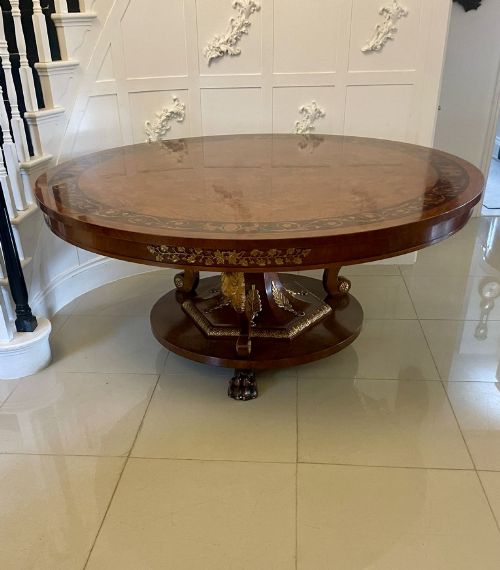
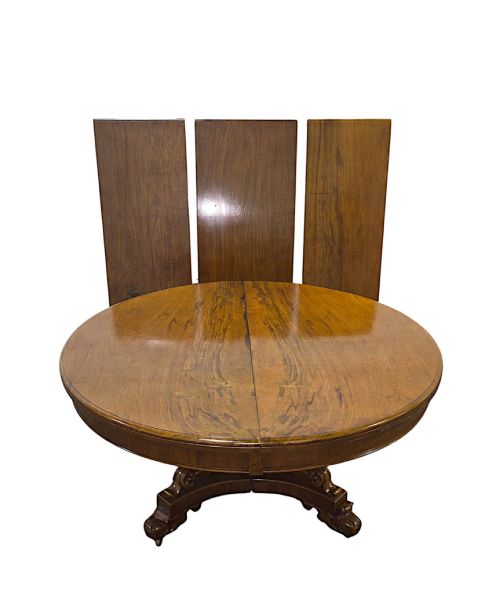
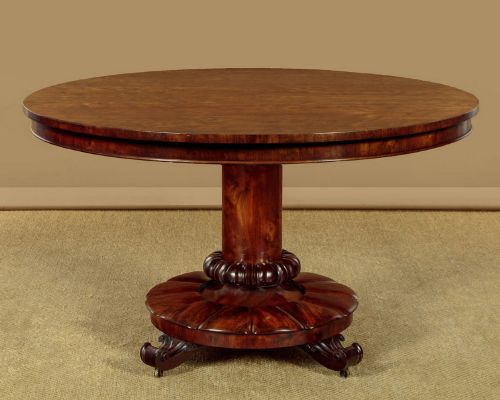
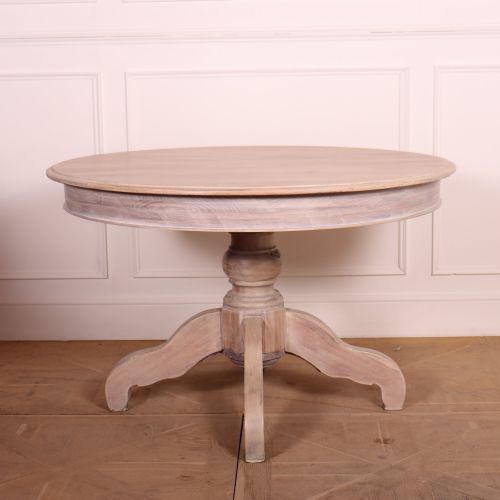
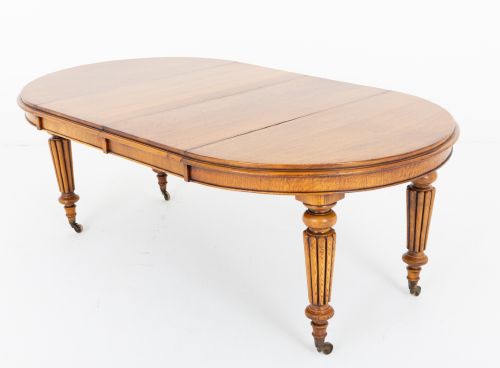
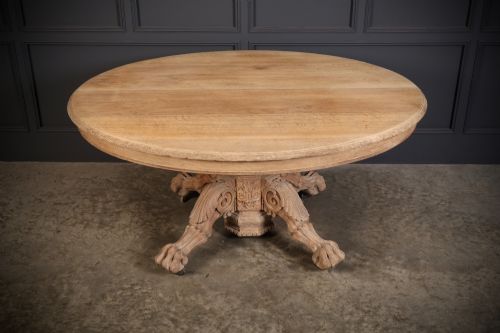
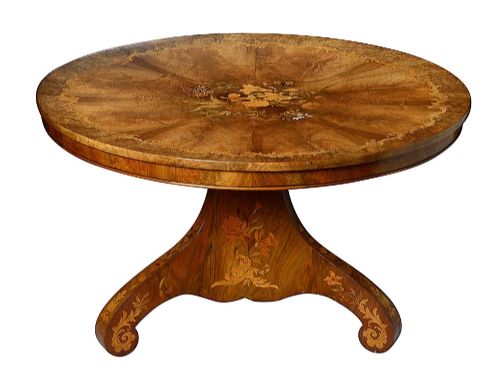
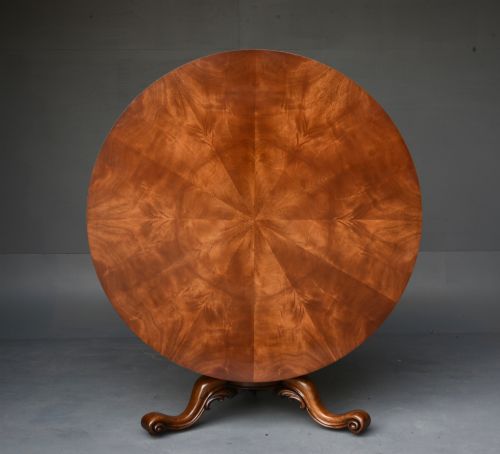
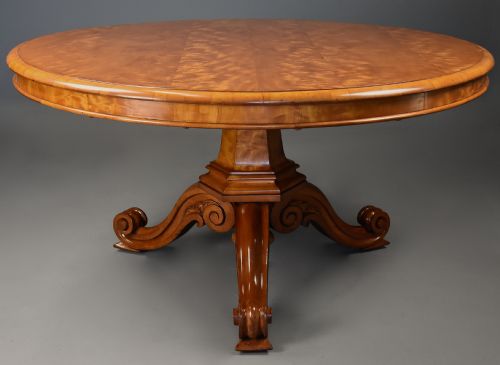
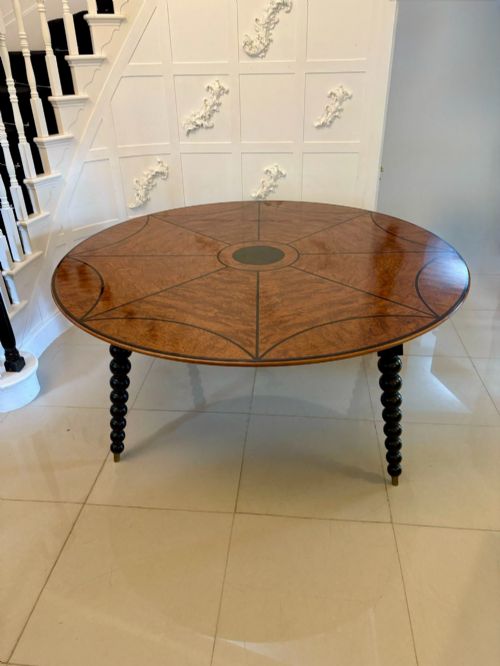
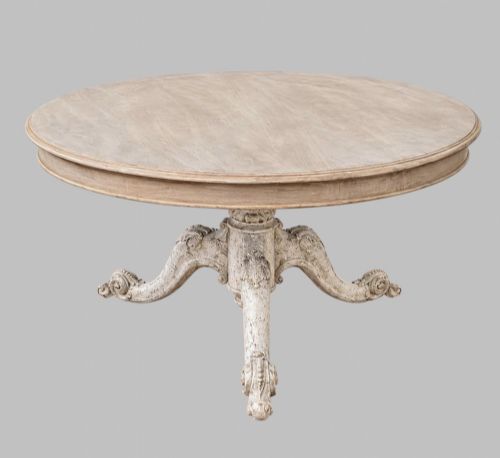
A victorian circular dining table is typically built as a pedestal base supporting a round timber top, often seen in nineteenth-century styles such as William IV, Regency, and Early Victorian. These pieces function equally well as centre tables, breakfast tables, or extending dining tables depending on their mechanism and scale.
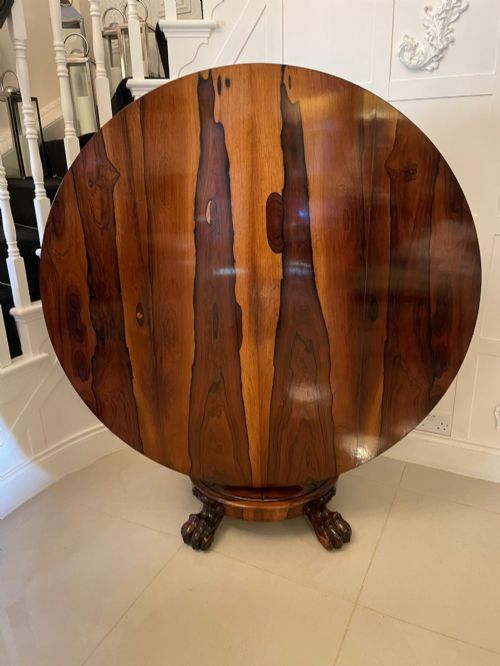
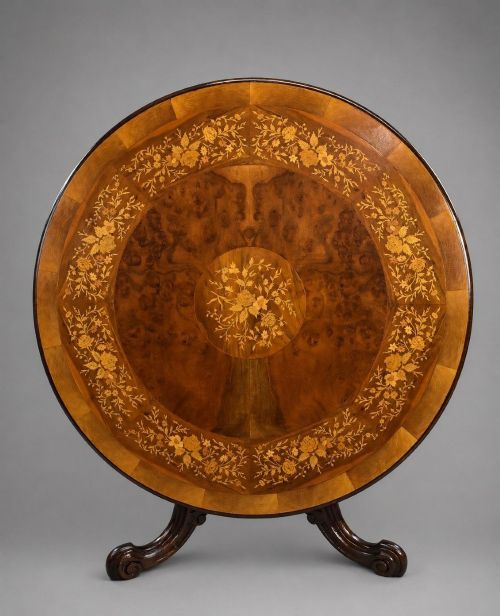
The materials span mahogany, rosewood, walnut, and oak, frequently enhanced by tilt-top mechanisms, segmental designs, or marquetry inlay. Pieces range from compact tripod tables to large country house dining tables suitable for central placement in a room.
Materials and Technique
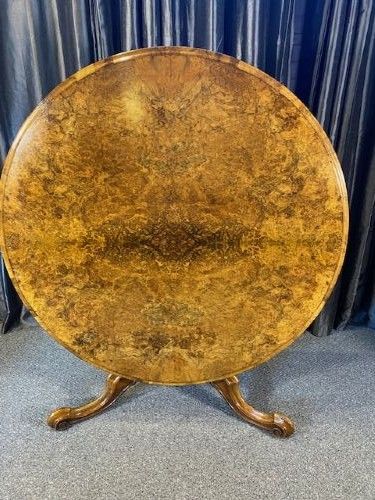
Makers utilised dense cabinet timbers such as mahogany, rosewood, and walnut, often selecting figured veneers, burr walnut, burr oak, or satin birch for the primary surfaces. These woods were chosen for their rich grain patterns and durability under daily use.
Construction methods involved heavy central pedestals, frequently resting on tripod or quadrapod scroll feet, sometimes fitted with brass castors. Extending variants incorporated internal wind-out mechanisms, while breakfast and centre tables utilised tilt-top or snap-top hinges.
Victorian Circular Dining Table Retail Price Guide 2026
Typical asking prices for victorian circular dining table among the pieces listed under this phrase on Sellingantiques today, from the lower quarter to the upper quarter. They describe what is for sale here now, not the wider market.
Country house breakfast tables were often built heavy enough to survive an impromptu waltz on the polished floorboards after the morning tea was cleared.
Craftsmanship and Proportion
The distinction between standard production and top-tier work rests on the selection of timber and the precision of the carving. Finely figured veneers, elaborate marquetry inlay, and substantial burr walnut or pollard oak elevate a piece significantly.
Structural integrity and proportion also separate examples, where a heavy timber top balances securely upon its pedestal base without wobble. Hand-carved details, ebony stringing, and smooth mechanical action for extending leaves or tilting tops indicate superior workshop output.
Gillows·Holmes Baldock
The Victorian Circular Dining Table Glossary
- Tilt top table
- A table with a hinged top that pivots vertically to save space when not in use. This mechanism is frequently found on nineteenth-century breakfast and centre tables.
- Centre table
- A freestanding table designed to be viewed from all sides rather than pushed against a wall. These occupy the middle of a room, often serving multiple domestic purposes.
- Wind-out mechanism
- An internal screw gearing system operated by a crank handle to separate table leaves. It allows a circular table to expand safely with the addition of extra sections.
- Marquetry inlay
- Decorative patterns formed by fitting contrasting veneers into a prepared wooden surface. Makers utilised this technique to create geometric or floral motifs on tabletop borders.
- Snap-top table
- A table featuring a catch or spring mechanism that locks the pivoting top securely into the horizontal position. It prevents accidental tipping during daily use.
Victorian Circular Dining Table: Frequently Asked Questions
How do I use a circular dining table every day?
A circular dining table encourages conversation because every guest shares a direct line of sight across the centre. Placing one in the middle of a room creates natural walkways around the perimeter.
For daily meals, the central pedestal leaves ample legroom without table legs obstructing chairs. Pairing the table with a set of matching nineteenth-century chairs completes the layout.
What is the difference between a dining table and a centre table?
Dining tables are specifically proportioned for seated meals, often featuring extending mechanisms to accommodate guests. Centre tables are generally smaller or designed as decorative focal points for a hallway or drawing room.
Many nineteenth-century examples overlap in function, serving as breakfast tables or occasional dining surfaces depending on their size and height.
How do I identify a William IV style table?
William IV furniture typically displays robust proportions with heavy pedestal bases, carved scroll feet, and dark timbers like rosewood or mahogany. The ornamentation is bold yet restrained compared to later Victorian excess.
Looking beneath the top often reveals sturdy framing and traditional joinery characteristic of the 1830s and 1840s.