






Carved Paw Foot Dining Table
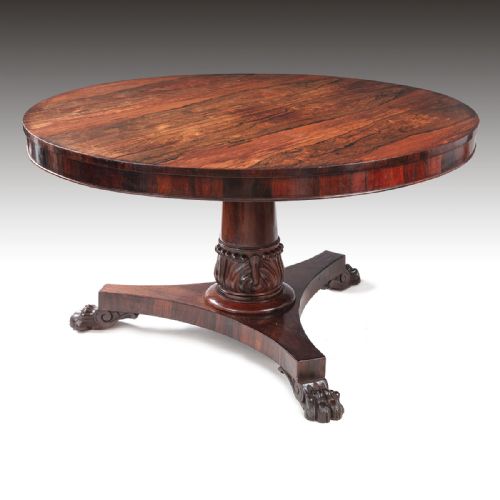
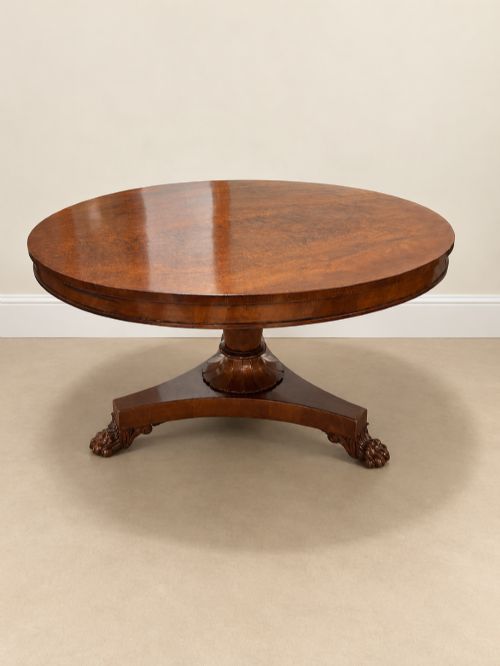
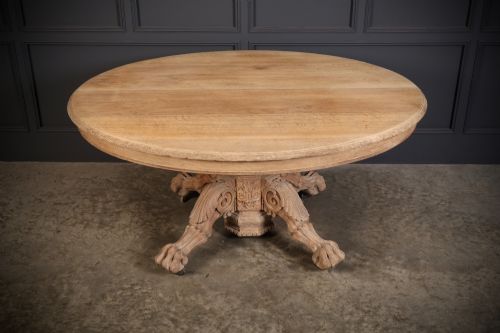
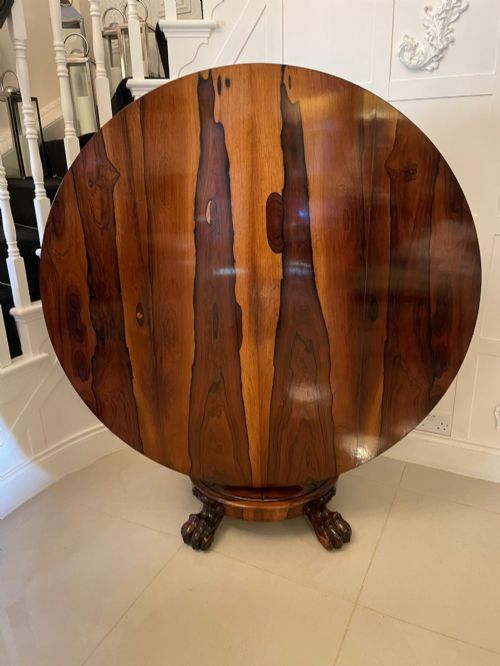
A carved paw foot dining table brings substance and historic character to a room, uniting rich timber with bold animalistic supports.
Carved Paw Foot Dining Table
When searching for a carved paw foot dining table, you encounter substantial dining tables, centre tables, and breakfast tables shaped by the tastes of the nineteenth century. These forms span the Regency, William IV, and Victorian periods, alongside Edwardian revivals of earlier designs.
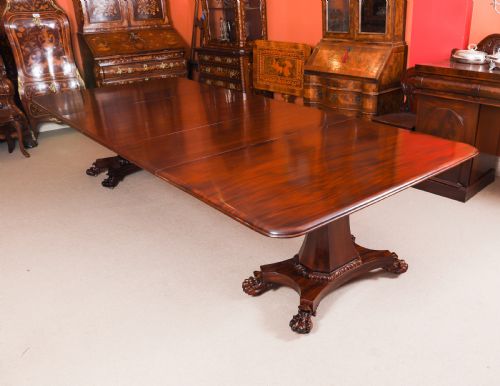
The pieces you meet most frequently on this page are circular breakfast tables and extending dining formats built during the nineteenth century. Makers of these eras favoured sturdy timbers like mahogany and rosewood, anchoring heavy tops upon carved pedestals and bold feet.
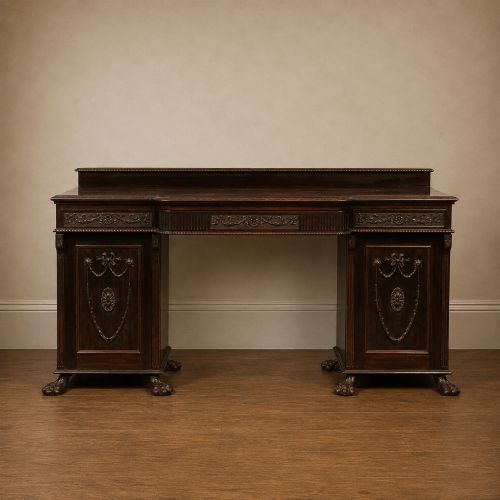
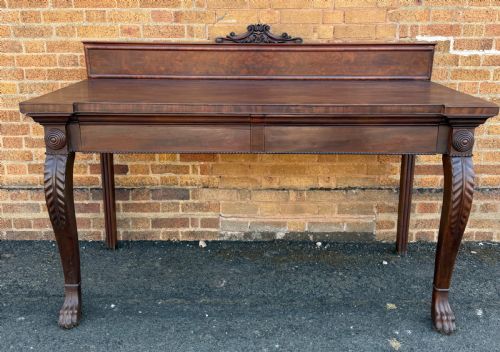
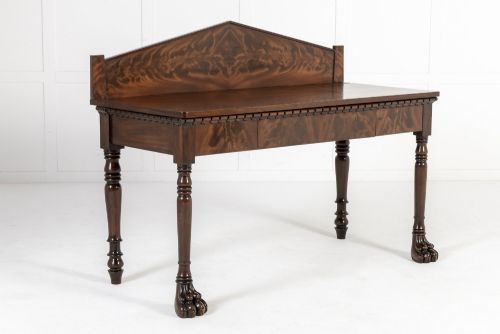
Alongside primary dining surfaces, related forms such as serving tables and sideboards appear within the selection, often echoing the same sculptural foot detailing. Each piece reflects the architectural ambitions of its period, prioritising solid presence and rich timber figuring.
Markers of Quality
Quality reveals itself through the depth and crispness of the carving on the feet and pedestals, where sharp detail distinguishes superior work from softer, mechanical execution. The selection of timber also dictates standing, with rich flame figuring and well-matched veneers marking out the finer examples.
Construction methods further separate the tiers, evident in the smooth operation of extending mechanisms and the rigid stability of central pillars. Original brass castors, solid secondary timbers, and well-preserved joints indicate careful workshop production.
Carved Paw Foot Dining Table Retail Price Guide 2026
Typical asking prices for carved paw foot dining table among the pieces listed under this phrase on Sellingantiques today, from the lower quarter to the upper quarter. They describe what is for sale here now, not the wider market.
Listings feature nineteenth-century periods including Regency, William IV, and Victorian eras, constructed from mahogany, rosewood, and satinwood.
Peters of Genoa
The Carved Paw Foot Dining Table Glossary
- Triform base
- A three-sided platform or pedestal support frequently utilised on nineteenth-century circular tables to distribute weight evenly.
- Flame mahogany veneer
- A sliced timber sheet displaying a flickering, flame-like grain pattern prized for its decorative visual impact.
- Breakfront
- A cabinet or sideboard facade where the central section projects forward from the flanking outer sections.
- Breakfast table
- A pedestal table originating in the Georgian and Regency periods, traditionally used for morning meals or as a centre table.
- Macassar ebony
- A dense exotic hardwood featuring distinctive dark brown and warm golden stripes.
Carved Paw Foot Dining Table: Frequently Asked Questions
How do I care for a rosewood table?
Maintain nineteenth-century rosewood surfaces by keeping them away from direct sunlight and sudden temperature shifts. Apply a quality beeswax periodically to nourish the timber and preserve its deep natural lustre.
Avoid placing damp items directly onto the polished wood to prevent staining the historic finish. Gentle dusting with a soft, dry cloth is sufficient for daily upkeep.
What defines a William IV table?
William IV furniture is characterised by heavy proportions, architectural authority, and robust classical detailing. Tables from this era often feature massive circular tops resting on faceted pillars and strong carved plinths.
Designers of this period leaned into bold, solid forms rather than delicate neoclassical restraint. The timber selection typically showcases dark, heavily figured mahogany or rosewood.
Are these tables suitable for daily dining?
These historic tables were built for heavy domestic use and remain robust enough for daily meals. Solid timber construction and sturdy pedestal bases provide the durability required for modern living.
Using heat-resistant pads and protective cloths helps shield the antique polish from everyday wear. Regular use allows the timber to acquire further character over time.