
Victorian Church Bench
A victorian church bench brings solid timber architecture and ecclesiastical presence directly into domestic hallways and kitchens.
Victorian Church Bench
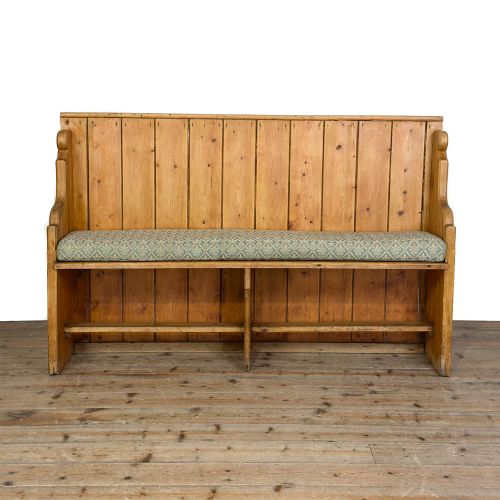
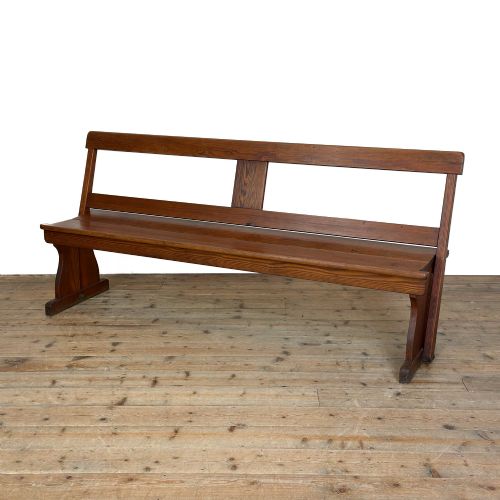
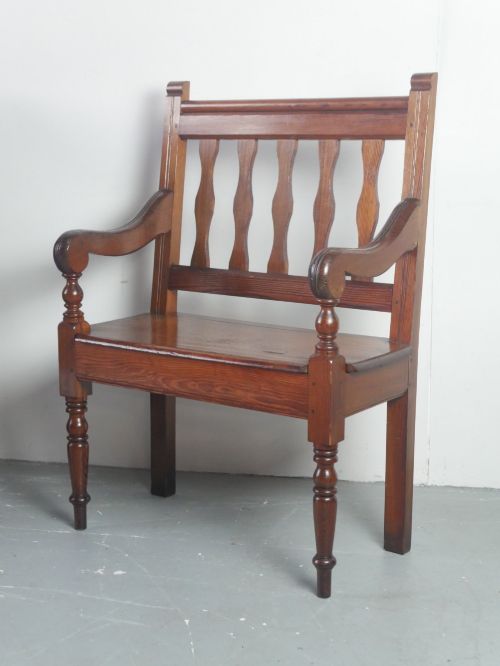
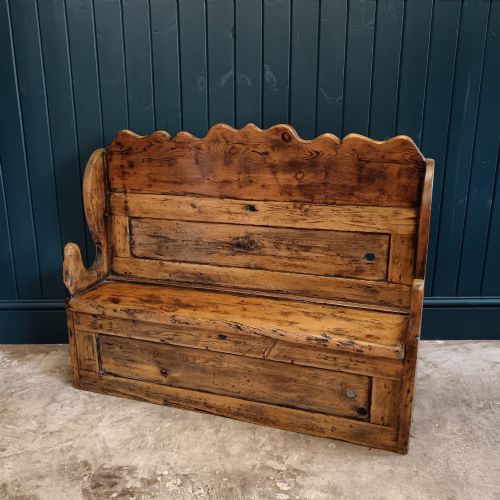
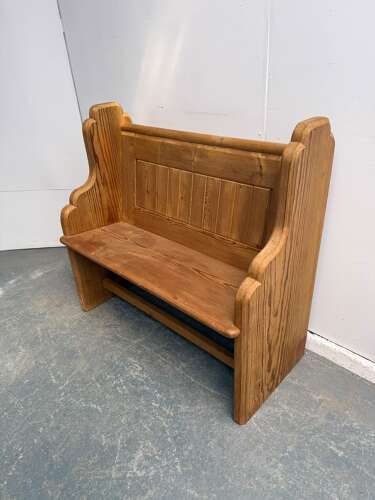
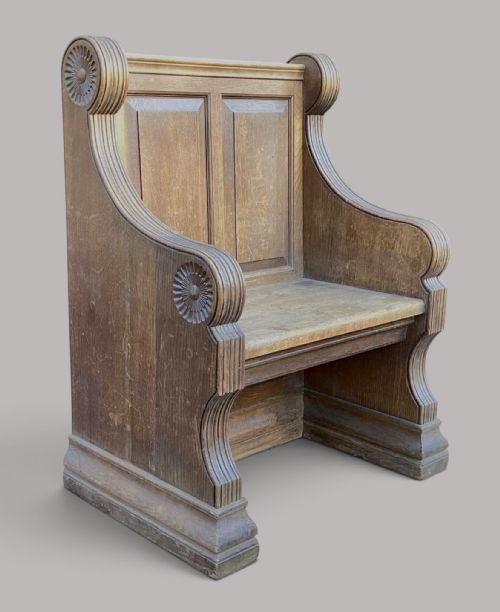
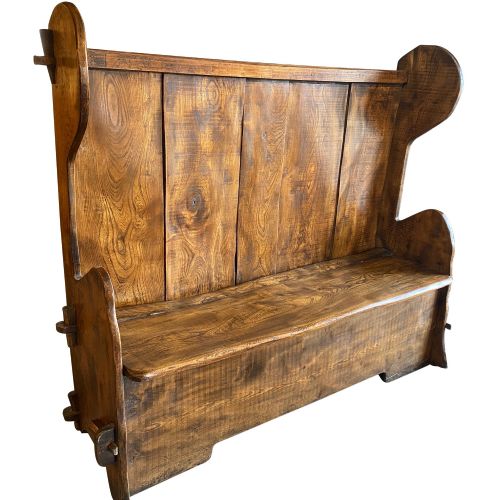
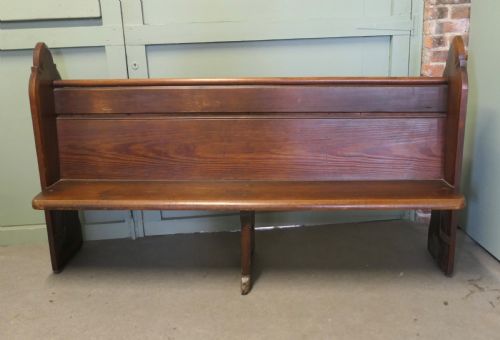
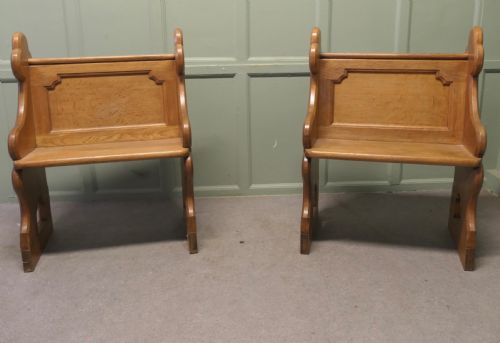
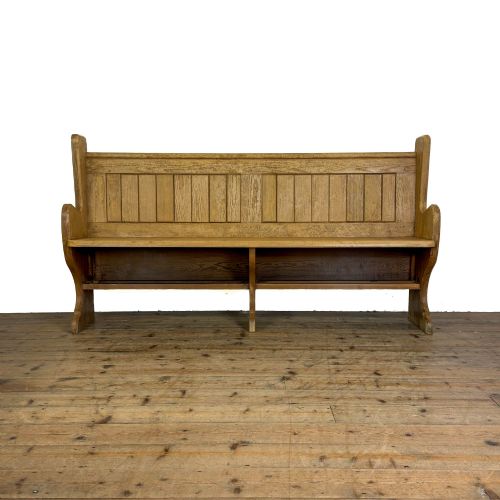
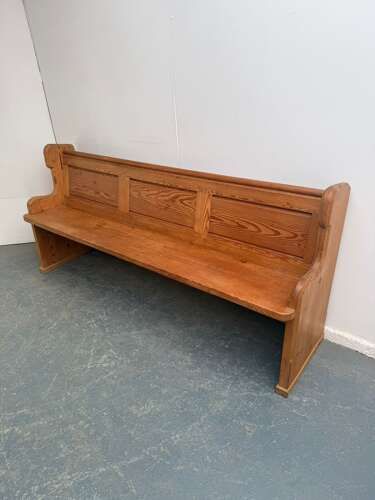
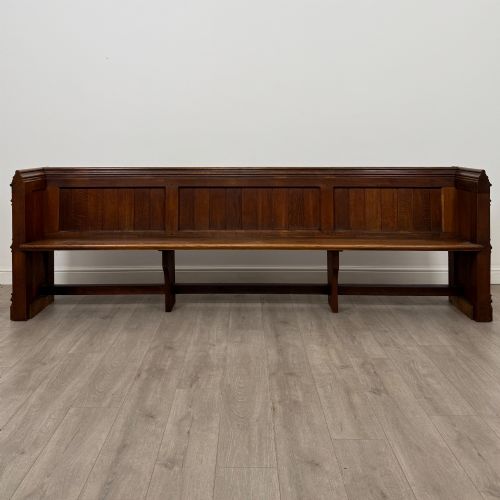
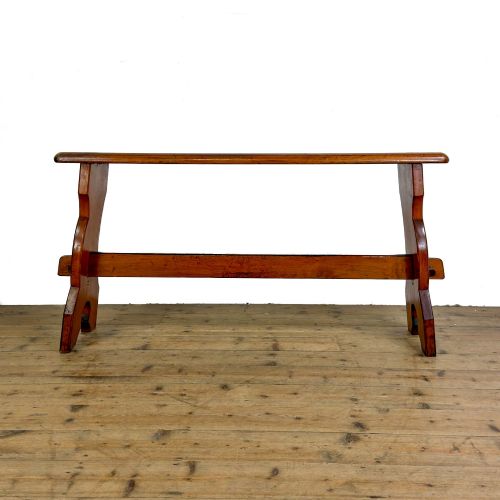
Buyers regularly encounter pine, pitch pine, and oak variants spanning the Victorian era alongside related Edwardian examples. Forms range from simple straight chapel pews to architectural hall seats with high backs and integrated storage boxes.
How they were made
Joiners built these benches using heavy solid timbers including pine, oak, pitch pine, and elm, often securing the heavy frames with traditional housing joints and pegged tenons. Many examples retain waxed surfaces, whilst others show traces of early paint or utilitarian finishes applied for institutional use.
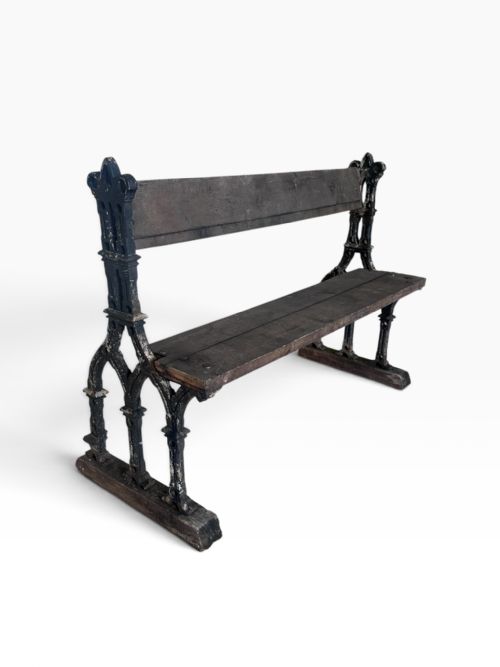
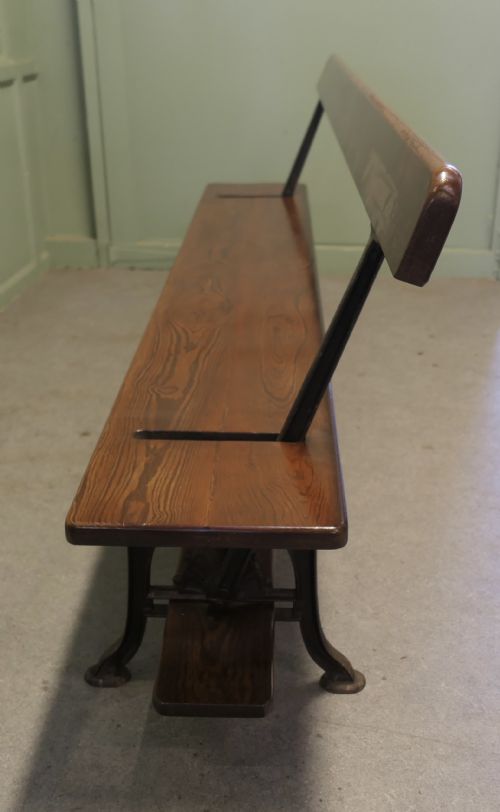
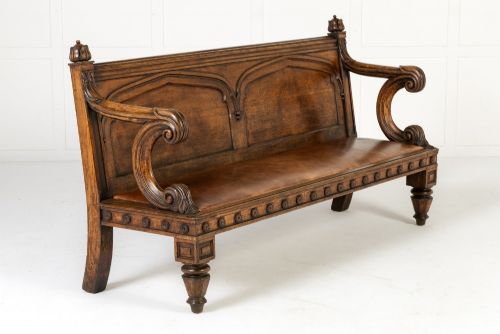
Structural elements frequently incorporate cast iron supports or brass hardware, particularly on garden benches and reversible tram or chapel seats. Gothic revival details emerge through pointed arches, linenfold panelling, and architectural mouldings carved directly into the dense wood.
Certain nineteenth-century transport and chapel benches feature clever reversible mechanisms allowing passengers to swing their seating direction instantly.
What varies in quality
The distinction between ordinary utility seating and superior examples lies in the selection of timber and the ambition of the carpentry. Denser woods like quarter-sawn oak and heavy pitch pine retain their structural integrity better than soft domestic pine subjected to heavy institutional wear.
Proportion and architectural detailing elevate certain pieces above standard vernacular furniture. Pieces retaining original ecclesiastical provenance, sophisticated Gothic tracery, or uncommon functional mechanisms command greater appreciation among collectors.
The Victorian Church Bench Glossary
- Pew
- A long wooden bench with a back, traditionally fixed in churches but frequently adapted for domestic hallways and kitchens.
- Settle
- A wooden bench with a high back, solid arms, and often an enclosed box seat beneath for storage against draughts.
- Pitch pine
- A hard, resinous softwood sourced mainly from North America and favoured during the nineteenth century for heavy church seating.
- Prie-dieu
- A small devotional desk or prayer chair equipped with a sloping shelf for books and a kneeling platform.
- Gothic revival
- An architectural and decorative style popular in the nineteenth century characterised by pointed arches and medieval motifs.
Victorian Church Bench: Frequently Asked Questions
Where did these benches originate?
These benches originate primarily from nineteenth-century churches, chapels, schools, and institutional buildings across Britain. Many were commissioned specifically for local parishes before finding their way into domestic circulation.
Over time, changing ecclesiastical interiors released surplus pews and chapel seating into the hands of antique dealers and home furnishers.
How do I use one at home?
A long wooden pew fits naturally along a dining table, providing robust communal seating for family meals. Slimmer examples function effectively in narrow hallways as practical places to sit when removing shoes.
Settees with enclosed box storage also offer hidden space for blankets and boots in boot rooms or living areas.
How do I care for the wood?
Maintain the timber surfaces by applying traditional beeswax sparingly to nourish dry grain and preserve the historic patina. Avoid placing solid wood benches directly beside intense heat sources to prevent timber splitting.
Clean surfaces gently with a dry or barely damp cloth without using harsh chemical polishes.
How can I tell the period?
Dating relies on timber selection, tool marks, construction methods, and stylistic cues such as Victorian Gothic mouldings. Pitch pine became widely utilised from the mid-nineteenth century onward, whereas earlier vernacular pieces often rely on local elm or oak.
Documentation, church markings, or known design motifs like those associated with Pugin provide further chronological clues.