


Victorian Cased Cutlery
Victorian cased cutlery gathers fitted presentation sets of knives, spoons and servers designed to survive intact.

Victorian Cased Cutlery
When you search for victorian cased cutlery, you encounter fitted presentation sets built for specific dining tasks, spanning christenings, fruit courses and fish services. These collections arrive in purpose-built boxes lined to cradle each specific utensil securely.
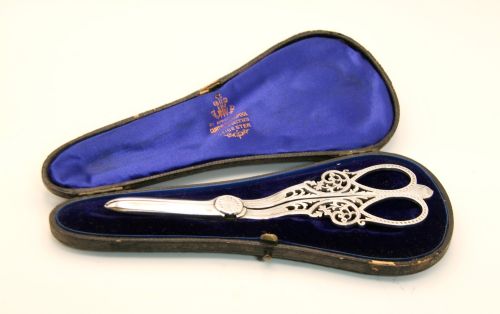
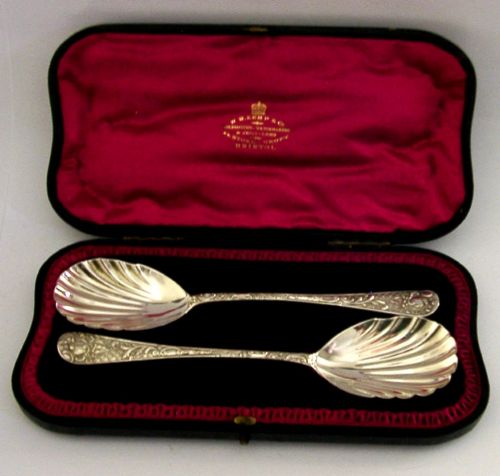
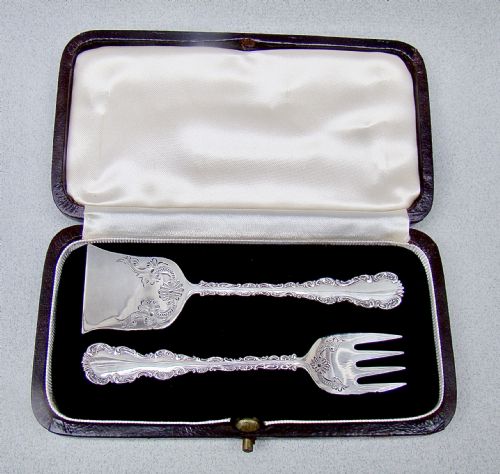
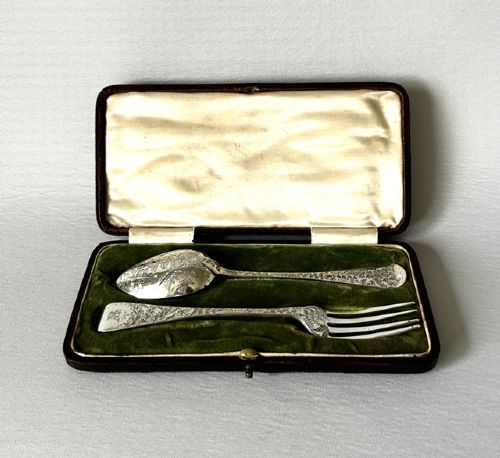
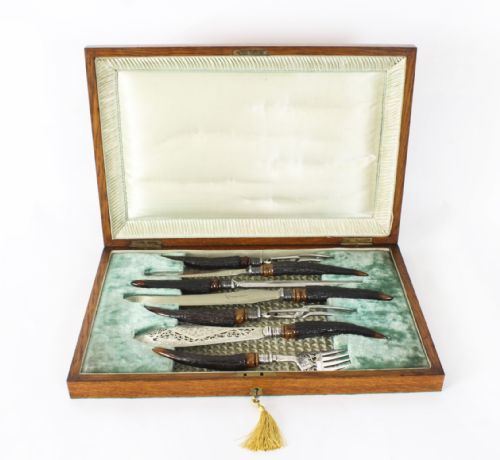
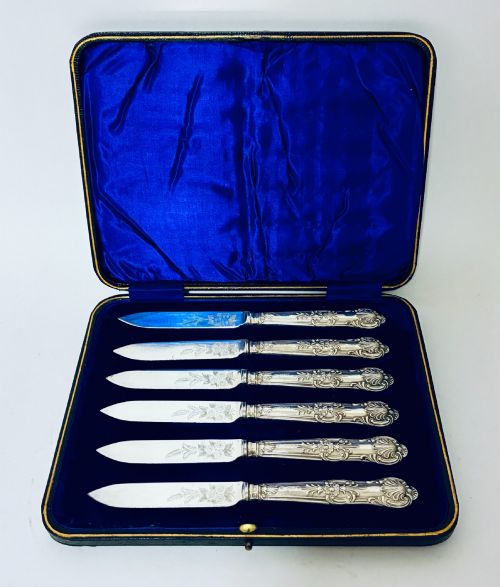
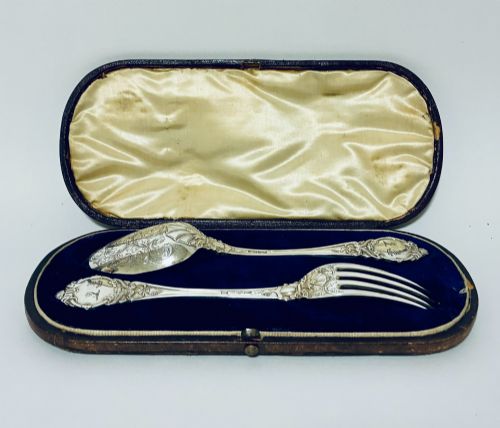
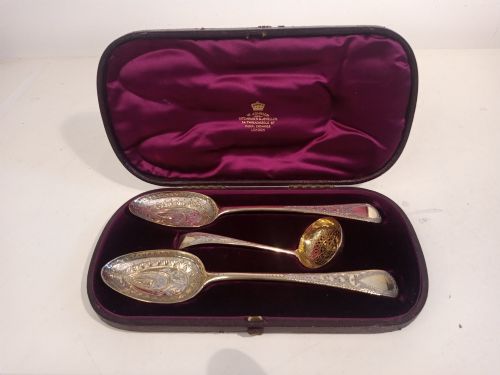
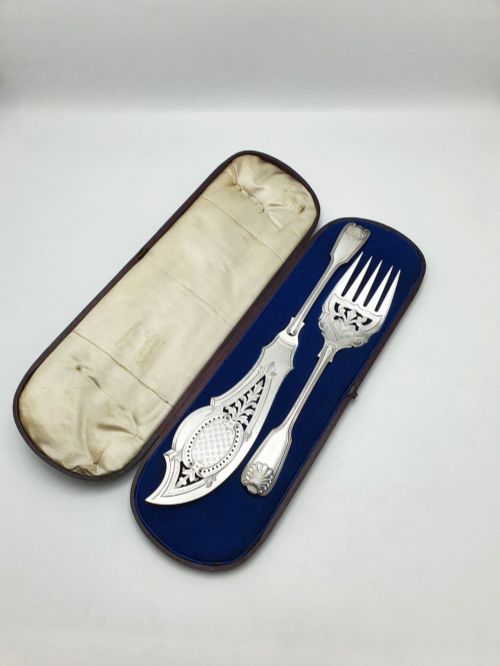
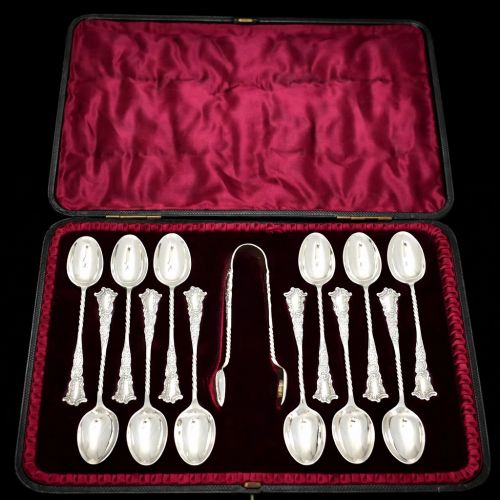
The objects on this page include serving spoons, fruit knives, fish servers and christening sets originating from the nineteenth and early twentieth centuries. Pieces range from single pairs of grape shears to multi-piece dessert and canteen sets.
Materials and construction
Utensils utilise sterling silver, silver plate and steel, paired with organic handles fashioned from mother-of-pearl, antler horn and porcelain. Blades and bowls frequently feature detailed hand engraving or cast elements.
Outer cases employ wood or rigid frames covered in leatherette, housing fitted interiors lined with velvet, silk or satin to protect the metalwork and organic materials within.
Victorian Cased Cutlery Retail Price Guide 2026
Typical asking prices for victorian cased cutlery among the pieces listed under this phrase on Sellingantiques today, from the lower quarter to the upper quarter. They describe what is for sale here now, not the wider market.
Listings feature sterling silver and silver plate items accompanied by velvet, silk, satin and leatherette fitted cases.
Gradations of quality
Differentiation lies in the integrity of the fitted case and the preservation of the original lining materials. Complete sets retaining every matching piece outrank assembled configurations.
Execution of the metalwork, from crisp blade engraving to heavy gauge sterling silver construction, separates standard production from finer workshop output.
Henry Wilkinson·Carrington·D&A·Hukin & Heath
The Victorian Cased Cutlery Glossary
- Sterling silver
- A silver alloy containing 92.5 percent pure silver by mass, widely utilised for Victorian flatware and serving pieces.
- Silver plate
- A base metal coated with a layer of silver, offering an alternative finish seen across numerous serving sets.
- Gilt
- A thin layer of gold applied to the surface of silver items, often seen on berry spoons and interior bowls.
- Grape shears
- Specialised scissors designed specifically for cutting clusters of grapes at the dining table without crushing the fruit.
- Knife rests
- Small supports placed upon the tablecloth to keep the blade and handle elevated between courses.
Victorian Cased Cutlery: Frequently Asked Questions
What is cased cutlery?
Cased cutlery consists of matching dining utensils housed in a dedicated, fitted presentation box designed for safekeeping and gifting.
These sets typically contain specialised tools for specific courses, such as fish, fruit or dessert.
How were christening sets used?
Christening sets served as traditional presentation gifts given to infants to mark their naming ceremony, often comprising a knife, fork and spoon.
Children kept these personal silver sets for use as they grew into older childhood dining.
Why use fruit knives?
Victorian fruit knives prevented acidic fruit juices from tarnishing standard steel dining blades and altering the taste.
Silver blades and mother-of-pearl handles provided a clean cut that did not react chemically with citrus or soft fruits.
How to date these sets?
Dating relies heavily upon hallmarks stamped into the silver components, indicating assay offices and specific active years.
Case construction styles and interior lining fabrics also offer clues to the precise manufacturing era.