
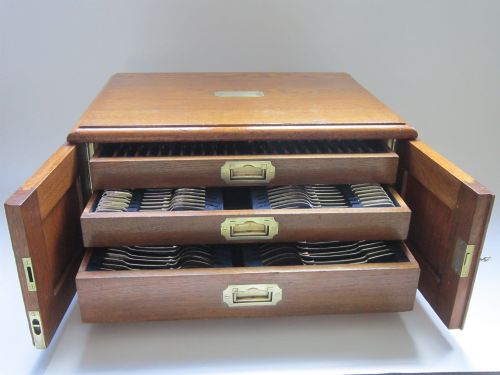
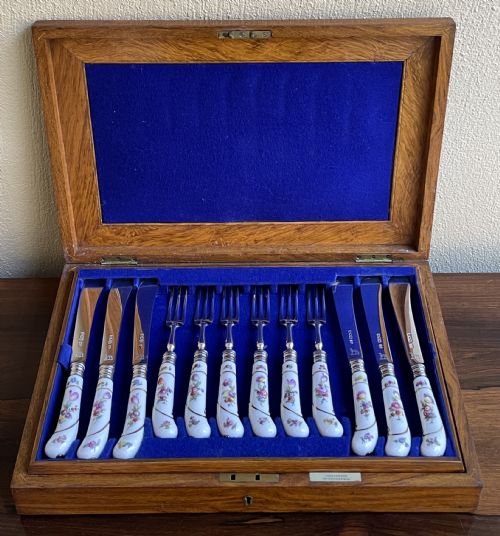


Oak Cutlery Box
These oak cutlery box pieces organise and protect tableware, offering robust storage in traditional English timber.
Oak Cutlery Box
When you search for an oak cutlery box, you look at fitted storage pieces designed to keep flatware and serving utensils orderly. These items range from wall-mounted hanging boxes and portable trays to substantial floor-standing canteens on stands.
The versions most likely to meet you on this page date from the Georgian, Victorian, and Edwardian eras, reflecting both country domestic use and formal household management. Many include internal dividers, velvet linings, or brass furniture.
Regional work appears alongside refined urban pieces, including Welsh country examples and campaign trunks. Their forms serve practical kitchen, dining room, and housekeeping roles.
Assessing quality
Quality depends upon the selection of timber grain, the precision of the dovetail joinery, and the integrity of the brass hardware. Superior examples retain their original internal fittings and compartment dividers without alteration.
The refinement of the surface finish and the balance of proportion separate standard utility containers from bespoke maker pieces. Retaining fitted silver or porcelain contents elevates the completeness of a canteen.
Available forms range from compact hanging wall boxes and garden trugs to extensive multi-tier canteens on stands.
Carrington·Walker & Hall·Mappin & Webb
The Oak Cutlery Box Glossary
- Canteen
- A fitted box or cabinet designed specifically to hold a matched set of cutlery. These interiors often feature slotted tiers and baize linings to protect each piece.
- Campaign trunk
- A portable storage chest constructed for travel, typically fitted with robust brass corners and recessed carrying handles. These pieces handle rigorous movement while keeping contents secure.
- Escutcheon
- A protective plate surrounding a keyhole, usually fashioned from brass in these storage boxes. This element prevents the wood around the lock from splitting during regular use.
- Housekeeper's carry
- A portable compartmentalised tray or box utilised for moving utensils and implements around large residences. These practical objects prioritise utility and accessible storage.
Oak Cutlery Box: Frequently Asked Questions
What fits inside an oak cutlery box?
These boxes accommodate various tableware, from complete silver flatware services to dessert sets and kitchen knives. Many contain specific slots or trays designed for forks, spoons, and serving pieces.
Larger canteens hold extensive table services, while smaller hanging boxes and trays suit everyday kitchen utensils or specific cutlery ranges.
How do I date an oak box?
Dating relies upon construction methods, hardware style, and timber characteristics. Georgian pieces often display hand-cut dovetails and simpler brass pulls, whereas Edwardian and Victorian examples frequently incorporate fitted internal trays and maker plaques.
Cabinetry details, such as the type of lock and the presence of mahogany accents or wood inlay, provide further chronological clues.
Where were these boxes used?
Households utilised these containers in dining rooms, kitchens, and pantries to keep silver and steel implements organised and tarnished surfaces minimised. Portable trays and carry boxes moved between rooms during meal service and house cleaning.
Campaign versions travelled with owners on journeys, ensuring that proper dining implements remained available away from permanent residences.
How do I clean oak storage boxes?
Maintain the timber surfaces with appropriate wax polish applied sparingly to nourish the grain. Avoid excessive moisture on both the wood and any internal velvet or brass fittings.
Gentle dusting preserves the patina built up over decades of domestic use without harming the original finish.