




Antique Dessert Knives Forks
These antique dessert knives forks combine silver, mother of pearl, and steel to grace a formal table with period elegance.
Antique Dessert Knives Forks
When you search for antique dessert knives forks, you are looking at specialised dining implements designed for the final course of a formal meal. These sets often include matching knives and forks tailored for fruit, cheese, or pastry.
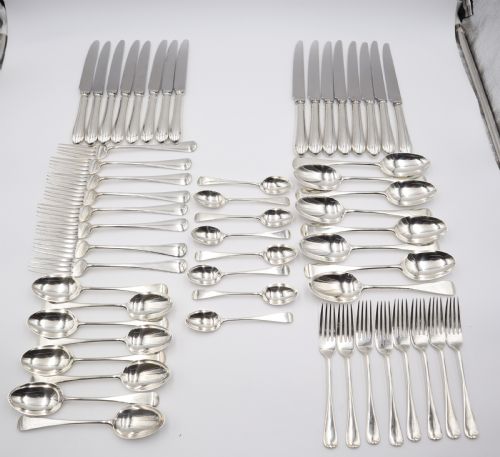
The pieces on this page span several distinct eras, stretching from the Georgian period through the Victorian and Edwardian decades up to the 1930s. You will encounter boxed canteens, serving cutlery, and smaller sets intended for individual settings.
Many examples combine precious metals with organic handles, creating a tactile balance that modern tableware seldom replicates. They represent a specific ritual of domestic hospitality from the nineteenth and early twentieth centuries.
How they were made
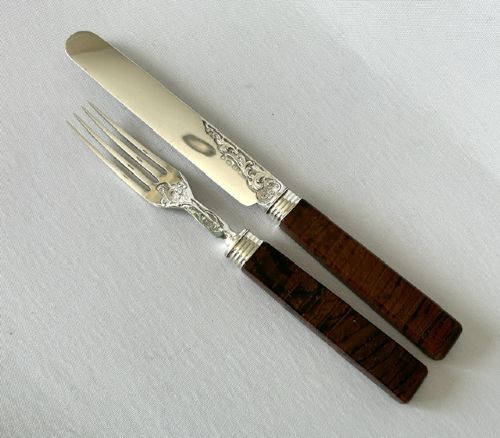
Makers shaped sterling silver and silver plate for the blades and tines, frequently engraving them with floral motifs or armorial crests. Steel also appears on knife blades, offering a durable cutting edge paired with precious metal ferrules.
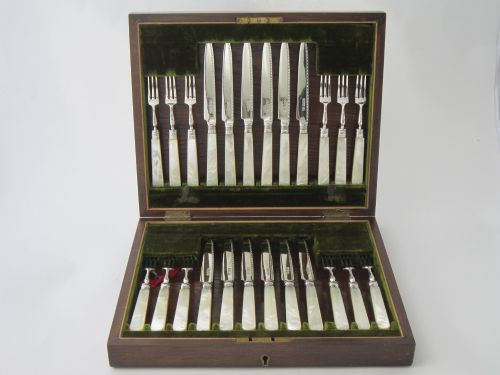
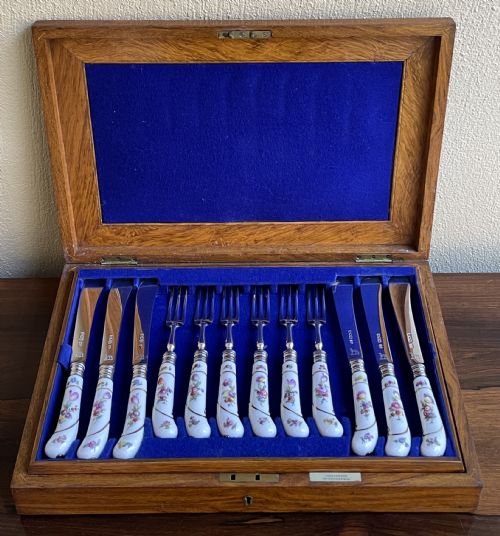
Handles require careful shaping from natural materials such as mother of pearl, agate, and occasionally wood or porcelain housed in oak cases. Artisans pinned or cemented these grips securely to the tangs to ensure lasting stability during use.
The listings on this page span the Georgian, Victorian, Edwardian, and George V eras, incorporating materials like mother of pearl, velvet, oak, and sterling silver.
What varies in quality
The distinction between standard sets and finer examples lies in the harmony of the materials and the crispness of the metalwork. Hand-engraved detail on silver blades and the uniformity of mother of pearl scales elevate an assembly beyond ordinary production.
Original fitted cases, particularly those lined in velvet and constructed from solid oak, contribute significantly to the integrity of a set. Completeness across a service of twelve rather than a partial pairing also defines the upper tier of these dining implements.
Carrington·Aaron Hadfield
The Antique Dessert Knives Forks Glossary
- Sterling silver
- A silver alloy containing 92.5 percent pure silver by mass, widely utilised for British cutlery. It carries hallmarks to denote the assay office and year of production.
- Mother of pearl
- The iridescent inner layer of certain mollusc shells, shaped into smooth handle scales for dessert cutlery. This material provides a lustrous, tactile grip.
- Sheffield
- A South Yorkshire city renowned for metalworking and the production of steel and plated cutlery. Many English blades bear marks originating from this manufacturing hub.
- Canteen
- A fitted box or chest designed to store a set of cutlery securely. These wooden containers often feature velvet or silk linings to protect the individual pieces.
- Ferrules
- The small metal collars joining the handle to the blade or tine of a knife and fork. They distribute pressure and conceal the join for a neat finish.
Antique Dessert Knives Forks: Frequently Asked Questions
What are antique dessert knives forks used for?
These implements were specifically created for eating fruit, cheese, or sweet courses at the conclusion of a formal dinner party. Their smaller scale distinguished them from heavy savoury cutlery used earlier in the meal.
Hosts deployed them to maintain dining etiquette when serving sticky or delicate foods that required refined handling.
Can I use them for daily dining?
While sturdy enough for occasional use, vintage cutlery demands careful handling to preserve delicate handles and engraved blades. Modern detergents and heavy daily wear can degrade the historic materials over time.
Many collectors prefer to reserve them for special dinner parties to keep the antique metal and organic scales intact.
How do I identify the manufacturing date?
Look for British hallmarks stamped onto the silver components, which include symbols for the assay office, standard marks, and a date letter. Researching these specific punch marks reveals the exact year the metal was tested and certified.
Stylistic clues such as handle shape, case construction, and engraving styles also help narrow down the decade of production.