




Wooden Cutlery Case
These wooden cutlery case examples range from Georgian knife boxes to Edwardian canteens, offering practical storage and period character for the home.
Wooden Cutlery Case
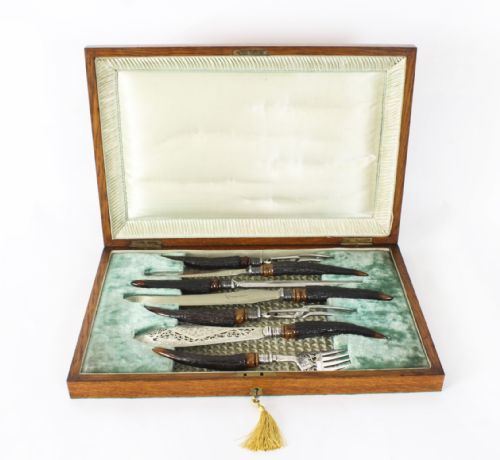
A wooden cutlery case typically takes the form of a Georgian knife box, a canteens, or a fitted box designed to hold flatware, carving sets, or fruit utensils securely. The listings on this page span the 17th century through the Edwardian period, with Georgian mahogany knife boxes appearing most frequently among the current stock.
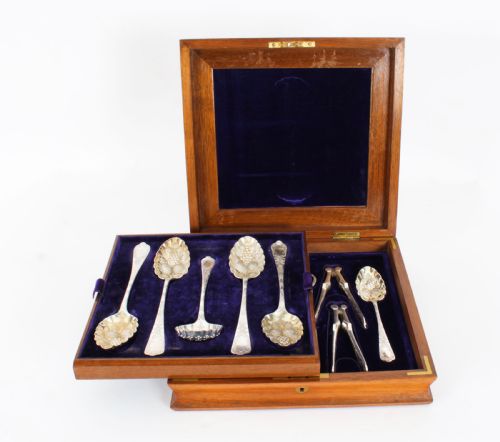
Makers shaped these pieces in mahogany, satinwood, oak, and walnut, frequently incorporating brass fittings, velvet linings, and boxwood stringing. Beyond knife boxes and canteens, the selection extends to related serveware such as fish sets and boxed fruit sets featuring silver-plated or metal components.
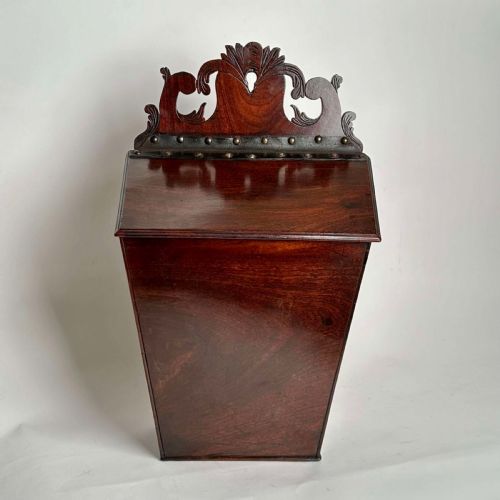
Buyers encounter both matched pairs and individual boxes, some adapted over time to serve as stationery cabinets while retaining their original slope-front or serpentine profiles. The diverse range reflects centuries of dining traditions, uniting utilitarian kitchen storage with fine cabinet making.
How they were made
Cabinet makers constructed these cases primarily from dense hardwoods like mahogany and walnut, frequently applying satinwood veneers and fine boxwood stringing to create decorative surface patterns. Timber selection focused on durability and grain figure, ensuring the structural integrity of hinged lids and slope-front compartments.
Interiors were lined with materials such as velvet to protect delicate silver-plated cutlery, carving sets, and fruit utensils from scratching during storage. Metalwork components, including brass carrying handles, escutcheons, and hinges, were securely fastened to withstand regular handling.
One remarkably spacious Georgian cabinet evidently proved too large for ordinary knives, surviving instead with a second career as a stationery box.
Judging quality
Quality rests upon the crispness of the cabinet work, the choice of timber figure, and the preservation of original internal fittings. Superior examples display refined proportions, precise dovetail joinery, and well-figured mahogany or walnut veneers that have matured with an even surface depth.
The integration of original hardware, such as brass side handles and escutcheons, distinguishes pieces that retain their character from those altered or rebuilt over successive generations.
Waring & Gillows·Hukin & Heath
The Wooden Cutlery Case Glossary
- Knife box
- A specialised container designed to hold dining knives upright, typically featuring a sloping lid and a serpentine or sloping front. These receptacles became popular during the Georgian period.
- Canteen
- A fitted box or cabinet built to hold a complete set of cutlery in dedicated slots or compartments. These items emerged strongly in the Edwardian era.
- Stringing
- A narrow inlay of contrasting timber, such as boxwood, used to outline the edges of panels and drawers on mahogany furniture. It adds subtle linear decoration.
- Escutcheon
- A protective plate surrounding a keyhole, usually cast from brass on these wooden cases. It prevents the timber from wearing around the lock.
Wooden Cutlery Case: Frequently Asked Questions
What is a wooden cutlery case used for?
These cases were originally built to store dining knives, flatware sets, carving tools, or fruit utensils safely when not in use on the dining table. Today, collectors utilise them to organise modern cutlery or adapt them to hold stationery and small household items.
Many examples feature fitted interiors lined with velvet to keep metal blades and silver-plated handles from colliding or tarnishing during storage.
How do I identify a Georgian knife box?
Georgian knife boxes typically feature a distinctive sloping lid, a serpentine or curved front, and fine mahogany timber construction. Many incorporate delicate boxwood stringing and original brass hardware.
Interior compartments are often shaped to hold upright handled knives in fan-like arrangements.
Are Edwardian canteens different from Georgian boxes?
Edwardian canteens generally take the form of substantial oak or walnut boxes designed to house extensive, uniform cutlery sets rather than the vertical knife blades found in earlier Georgian boxes. These later pieces reflect changing dining habits and larger table service requirements at the turn of the twentieth century.
The construction techniques also shifted towards factory-standardised production while retaining quality timber veneering.
How should I care for an antique wooden box?
Keep wooden cutlery cases away from direct heat sources and strong sunlight to prevent the timber and veneers from drying out or splitting over time. Regular gentle dusting with a dry cloth maintains the surface sheen without damaging the polished finish.
Avoid using modern liquid polishes containing silicone, which can penetrate porous antique wood and ruin the patina.