


Silver Christening Spoon
A silver christening spoon marks a lifelong milestone, pairing traditional flatware forms with commemorative presentation boxes and fitted cases.
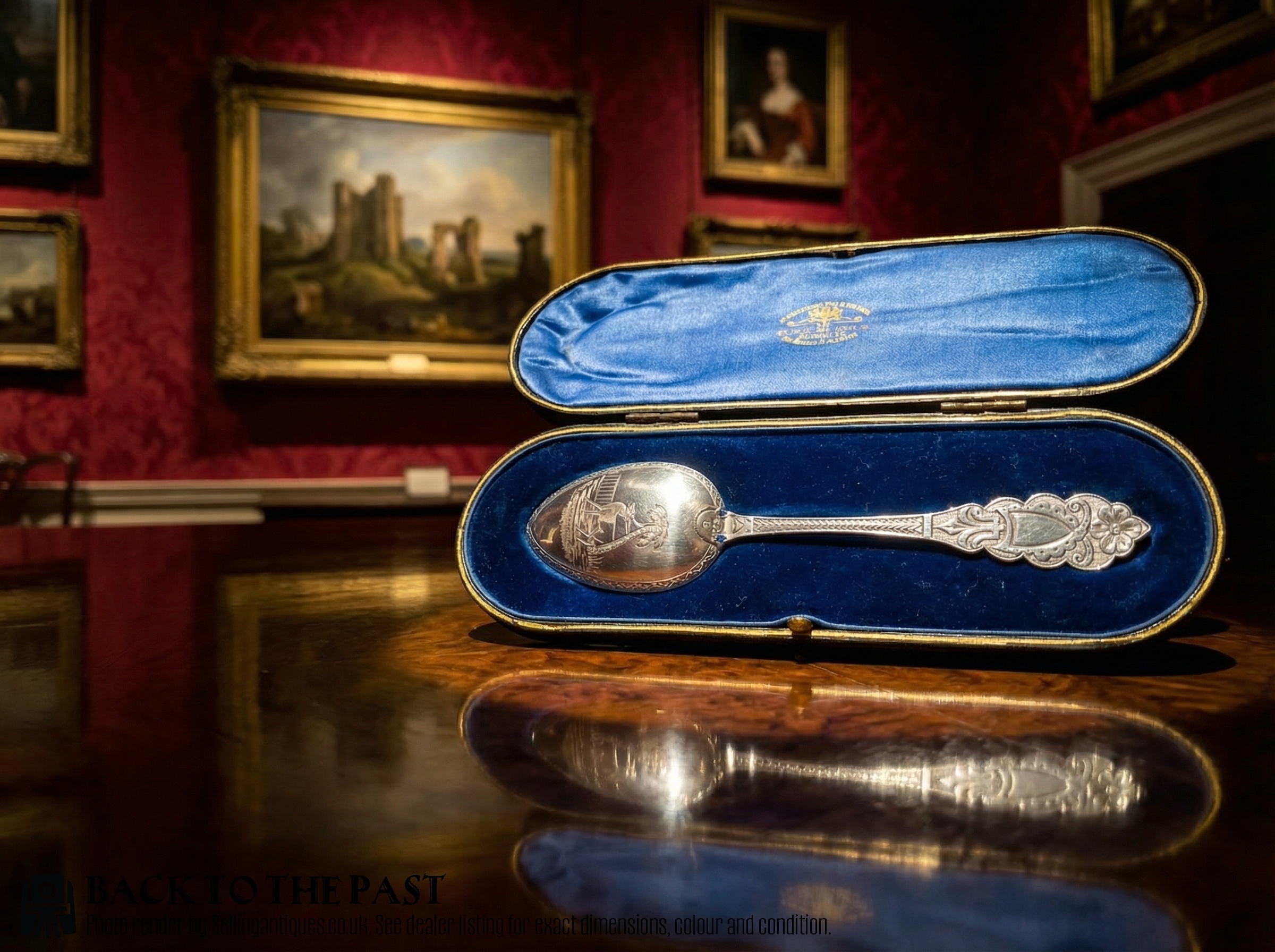
Forms and periods
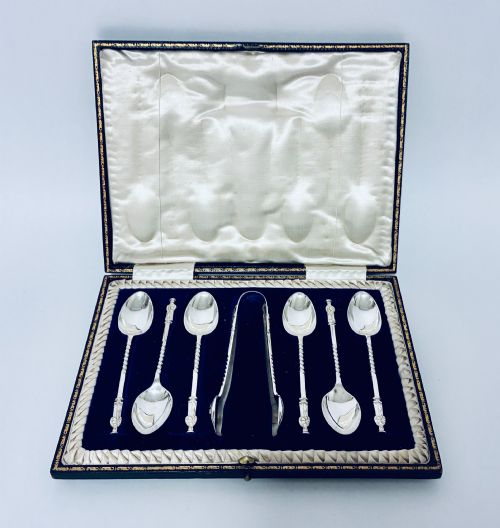
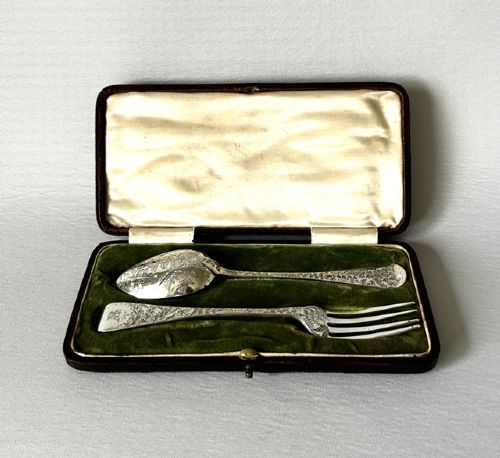
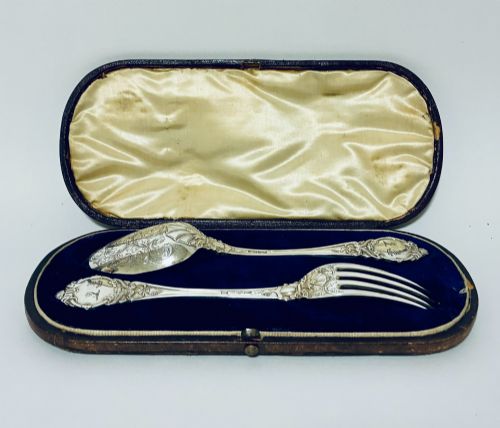
A silver christening spoon arrives in various configurations, ranging from single spoons to multi-piece cutlery sets and cased presentation bundles. The evidence shows flatware and spoons appearing alongside forks, napkin rings, egg cups, and pushers.
Makers produced these pieces across several eras, including seventeenth-century examples, Victorian designs, and George V items. Scandinavian and British workshops both contributed significant examples to the historic record.
Collectors encounter single spoons alongside larger matching sets that include boxes lined with velvet, silk, or leather. These housings preserve the finish of the metal and protect the pieces between uses.
Materials and construction
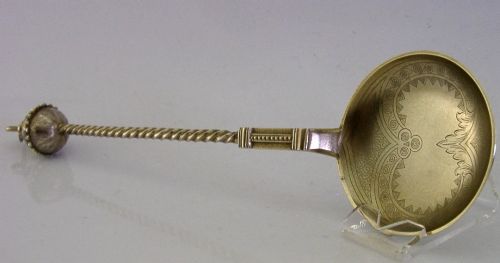
Silversmiths utilised sterling silver and standard silver grades, shaping the metal into bowls and handles that often feature applied enamel decoration or gold gilt finishes. The resulting pieces combine durability with ornamental detailing.
Production methods encompass traditional casting and hand-finishing, with many spoons paired with specialised accessories like food pushers or feeding spoons. Fitted cases lined with silk, velvet, or leather accommodated these components securely.
Retail Price Guide 2026
Typical UK retail prices for silver christening spoon, calculated from the Sellingantiques database of over a million retail prices indexed since 2003. This retail price guide relies exclusively on Sellingantiques data; no external sources or auction records are used, so the figures do not describe the wider market.
Some spoons arrived with a nursery rhyme prompt to encourage porridge consumption.
Quality and execution
The distinction between standard production and superior execution lies in the depth of the metalwork, the complexity of patterns such as stag hunt motifs or Art Nouveau decoration, and the presence of complete original boxes. Finishes involving gold gilt and meticulous enamel work elevate specific items above plain functional flatware.
Makers who incorporated specialised regional styles, such as Scandinavian filigree or named British manufacturing houses, demonstrate higher levels of craftsmanship. The inclusion of matching supplementary items like napkin rings or egg cups within a fitted leather or velvet case indicates a more ambitious original commission.
Marius Hammer·Broadway And Co·Henry Williamson Ltd·Tiffany And Co·Elkington And Co
The Silver Christening Spoon Glossary
- Silver Gilt
- Silver that has been coated with a thin layer of gold on its surface. This technique provides a rich two-tone appearance.
- Pusher
- A flat piece of silver designed to assist a child with eating by pushing food onto a spoon or fork. It typically forms part of a cased set.
- Flatware
- Utensils used for eating and serving, including spoons and forks. In this context, it covers both single items and coordinated sets.
- Hallmark
- An official stamp applied to precious metals indicating the standard of purity and the place and year of assay. These marks help verify the provenance of silver items.
Frequently Asked Questions
What is included in a christening set?
These sets often combine a silver christening spoon with complementary items like forks, food pushers, egg cups, and napkin rings. Many packages include a fitted presentation box lined with silk or velvet.
Such configurations allowed gift-givers to present a complete dining set intended for a child's future use.
How are these spoons decorated?
Decoration ranges from plain polished silver surfaces to intricate Art Nouveau patterns and pictorial motifs like stags or nursery themes. Some examples feature applied enamel work or selective gold gilt finishes.
These decorative choices reflect the aesthetic preferences of periods spanning from the seventeenth century through the twentieth.
Are original boxes common?
Many pieces survive alongside their original fitted cases, which were constructed using materials such as leather, velvet, and silk. These containers kept the silver components secure and unblemished.
Finding a set complete with its original housing enhances the historical context of the piece.
Where were these pieces made?
Manufacturing locations recorded in the evidence span British assay offices such as London, Birmingham, Sheffield, Chester, Glasgow, and Exeter. Scandinavian makers from countries like Norway and Denmark also produced notable baptismal pieces.
This broad geographical origin introduces diverse regional styles to collectors.