






17th Century Spoon
A 17th century spoon is a domestic survival in silver or pewter that brings the weight of the Stuart era straight to the palm.
17th Century Spoon
When you search for a 17th century spoon, you enter a field dominated by early flatware in sterling silver, Britannia standard silver, and pewter. These pieces span the reigns from James I and Charles I through the Commonwealth, Restoration, and William and Mary periods.
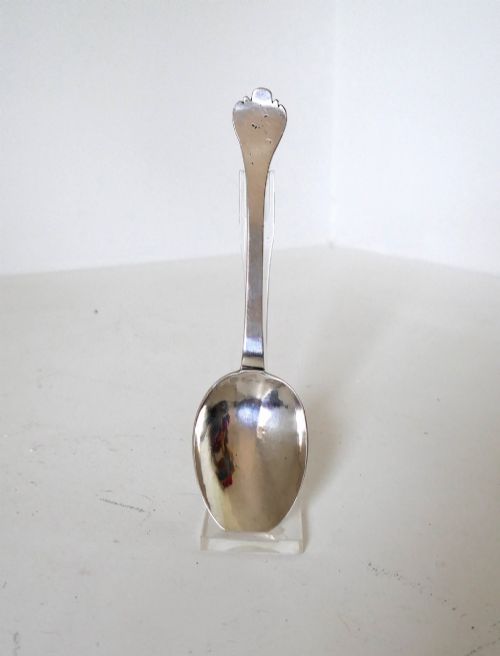
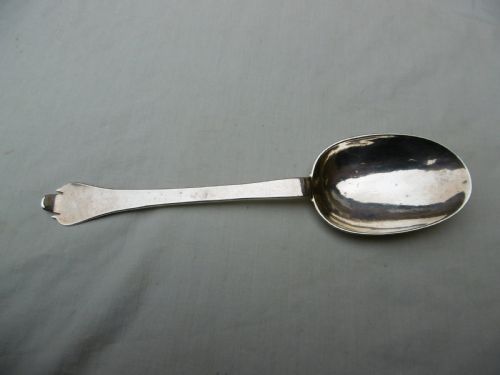
The most frequent forms you will encounter on this page are trefid spoons, seal tops, and slip tops, alongside occasional dognose and lace pattern variations. While most examples are solid silver, you also find pewter pieces housed in oak spoon racks.
Collectors look for clear hallmarks and original maker marks that anchor these utensils to specific decades between sixteen-ten and the turn of the eighteenth century. Every surviving piece offers a direct connection to the dining habits of the Stuart period.
How they were made
Silversmiths hammered sterling silver and Britannia standard silver into heavy stems and fig-shaped bowls, applying cast terminals like seals and apostles by hand. Pewterers cast similar forms in moulds before finishing the metal with scrapers and burnishing tools.
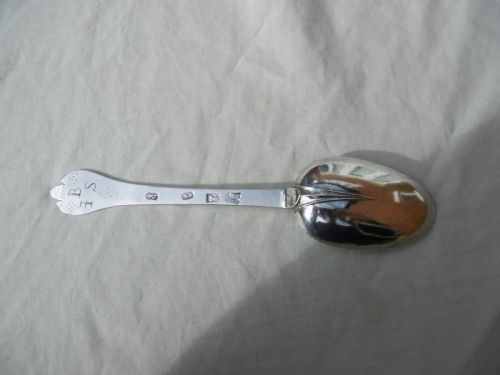
Makers struck their punches directly into the hot or cooling metal to record town marks, date letters, and personal ciphers. Wooden elements such as oak spoon racks were joined with traditional pegged construction to hold the heavy metal flatware.
What varies in quality
The survival of crisp hallmarks and legible maker stamps separates standard examples from exceptional pieces. When punches remain deep and unrubbed, the spoon retains its historical documentary value.
Original bowl shape and stem thickness dictate the integrity of the piece. Spoons that have avoided excessive polishing over the centuries retain the correct balance and weight intended by the original smith.
Jerimiah Johnson·William Penstone·Isaac Davenport·Benjamin Prosser·Thomas Issoa·Stephen Coleman·Daniel Cary·John King·Peter Webb
The 17th Century Spoon Glossary
- Trefid spoon
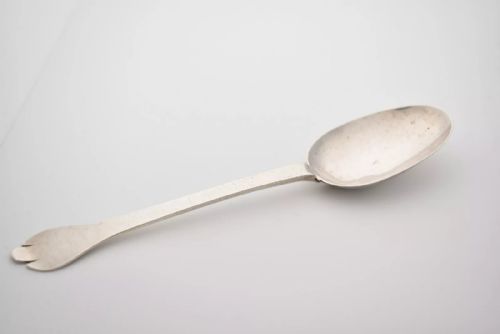
- An early form of flatware featuring a flattened, three-lobed terminal at the end of the stem. It emerged during the Charles II period and dominated late seventeenth-century dining.
- Seal top spoon
- A utensil finished with a small cast knob or seal shape at the top of the handle. This style was popular during the sixteenth and seventeenth centuries.
- Slip top spoon
- A plain handle cut off diagonally at the end, presenting a clean line without a cast terminal. It represents an early seventeenth-century aesthetic.
- Britannia standard silver
- A compulsory higher grade of silver introduced in England to curb the melting of coinage. It contains ninety-five point eight percent pure silver.
- Dognose spoon
- A transitional flatware style with a rounded tongue on the terminal, evolving directly from the trefid spoon around the seventeen hundreds.
17th Century Spoon: Frequently Asked Questions
How do I identify a genuine 17th century spoon?
Examine the form of the bowl, which is typically narrower and more fig-shaped than later spoons, alongside the construction of the stem and terminal. Look for period-appropriate maker marks and town punches stamped into the metal.
Compare the piece against known examples from reigns such as Charles I or William and Mary. Weight and gauge of the silver also offer reliable clues to seventeenth-century manufacturing standards.
How were seal top spoons used?
Seal top spoons served as personal eating utensils and prestigious gifts during the sixteenth and seventeenth centuries. Diners carried their own spoons to meals, using the flat top of the terminal much like a signet ring.
While wealthy households used silver sets, pewter versions filled similar dining roles for middle-income families. The seal terminal provided a decorative grip for the hand during use.
Why do some silver spoons have different finials?
Finial styles changed as dining fashions evolved from the medieval period through the Stuart era. Slip tops and apostle figures gave way to seal tops, followed later by trefid and dognose terminals.
Each finial type reflects the prevailing aesthetic and manufacturing techniques of a specific decade. Makers adapted their cast ornaments to suit the changing tastes of wealthy patrons.