


Engraved Silver Christening Gift
An engraved silver christening gift is a traditional heirloom piece designed to mark a child's birth or baptism.
Engraved Silver Christening Gift
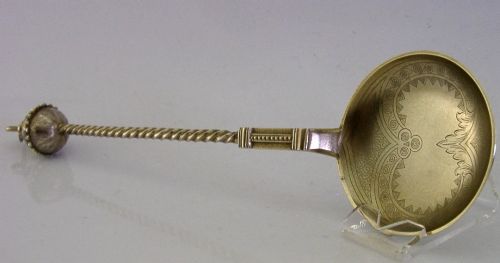
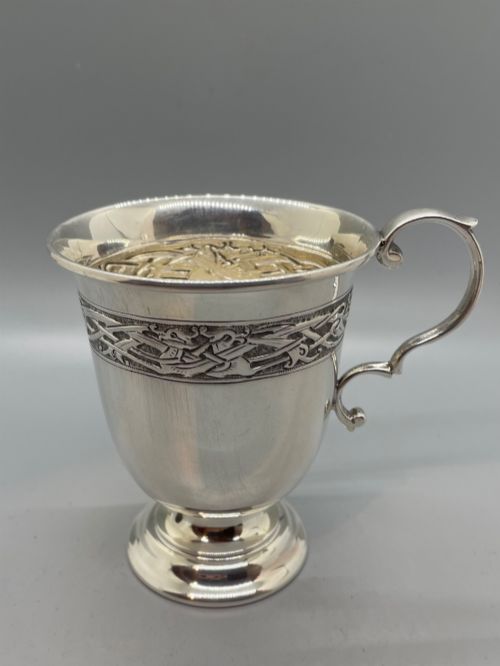
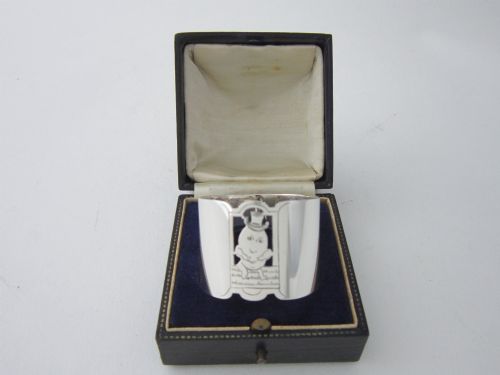
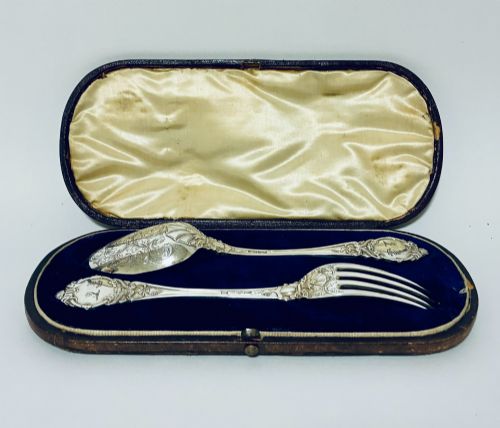
An engraved silver christening gift brings together personal celebration and functional metalwork through forms such as mugs, tankards, cups, napkin rings, cutlery sets, and serving spoons. These items span periods from the Georgian and Victorian eras through the Edwardian and mid-century years, reflecting changing domestic tastes.
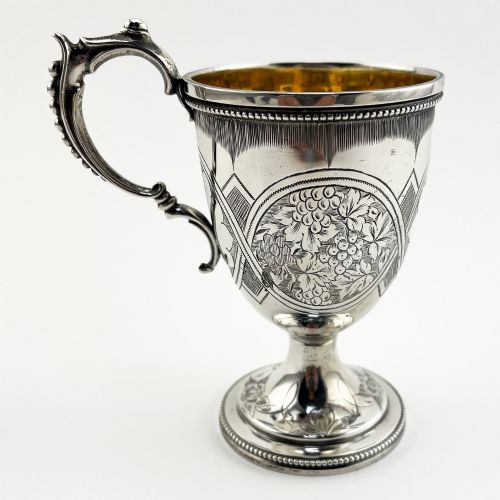
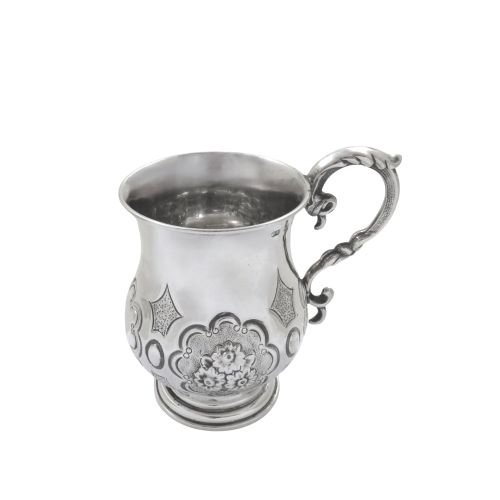
The pieces on this page are most commonly Victorian sterling silver christening mugs decorated with floral or foliate engraving, alongside boxed cutlery sets and napkin rings. Each object was originally presented to mark a milestone, carrying hand-engraved monograms, dates, or dedications that record family histories.
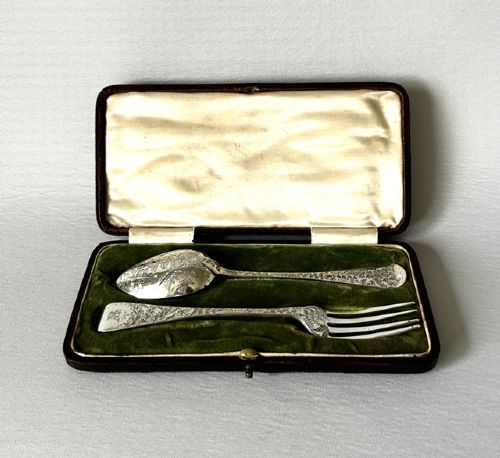
Mugs and tankards dominate the selection, often paired with fitted leather or velvet cases lined with silk. Cutlery sets ranging from single spoons to three-piece collections provide an alternative option, utilising solid silver or silver plate across various regional assay offices.
How they were made
Silversmiths formed these objects primarily from sterling silver, solid silver, or silver plate, sometimes applying gold gilt or silver gilt finishes to the interior surfaces of mugs and bowls. Techniques involved raising or spinning hollowware from sheet metal and casting handles or decorative mounts separately before assembly.
Hand engraving formed the central decorative step, where artisans cut floral, foliate, or stag hunt patterns directly into the metal surface using sharp gravers. Fitted presentation cases lined with silk, velvet, and leather were constructed to house the cutlery sets and mugs securely.
What varies in quality
Quality rests in the depth and execution of the hand engraving, where crisp, confident lines set apart superior items from simpler production work. The crispness of hallmarks struck into the metal also indicates the care taken during manufacturing.
The presence of original fitted cases lined with silk and velvet influences the completeness of the piece. Substantial gauge silver and balanced proportions contribute to the durability and tactile weight of mugs and cutlery.
R E Stone·William Bateman·Thomas Harwood and Co·John Round
The Engraved Silver Christening Gift Glossary
- Sterling silver
- An alloy containing a high proportion of pure silver combined with other metals to ensure durability for daily handling. This standard material forms the basis of most Victorian and later christening gifts.
- Silver gilt
- Silver objects that have a thin layer of gold applied to their surfaces, often seen on the interiors of christening mugs and baptism spoons. This technique protected the silver from tarnishing when exposed to liquids.
- Hollowware
- Tableware items such as mugs, tankards, and cups that possess volume rather than being flat objects. Silversmiths created these vessels by raising metal sheet or spinning it on a lathe.
- Assay office
- An official body responsible for testing the purity of precious metals and stamping items with appropriate hallmarks. Towns such as London, Birmingham, and Sheffield operated distinct offices.
- Hallmark
- A series of official marks stamped onto precious metal items to denote the maker, standard of purity, and year of testing. These stamps provide a reliable method for dating antique silver.
Engraved Silver Christening Gift: Frequently Asked Questions
What is an engraved silver christening gift used for?
These items were traditionally given by godparents or relatives to mark a child's birth, naming ceremony, or baptism. Mugs, cups, and cutlery served as both functional tableware for the growing child and lasting keepsakes.
Over generations, many of these pieces transitioned into decorative display items or family heirlooms passed down through subsequent generations. Their engraved monograms and dates preserve specific family milestones.
How can I tell the date of a silver christening mug?
Dating relies primarily on the hallmarks stamped into the metal by official assay offices. These marks typically include a date letter corresponding to a specific year alongside the maker's mark and purity standard.
Stylistic indicators such as the shape of the mug, the style of the handle, and the type of floral engraving also offer clues to the period. Victorian pieces often feature dense foliate engraving, while later twentieth-century items tend toward simpler, cleaner outlines.
What is the difference between solid silver and silver plate?
Solid silver, including sterling silver, consists of precious metal throughout the entire object. This material holds intrinsic value and develops a characteristic patina through handling and polishing over decades.
Silver plate involves a thin layer of silver bonded to a base metal core such as copper or brass. Plated items offered a more affordable alternative for families purchasing commemorative gifts during the nineteenth and twentieth centuries.
How should I clean antique silver christening items?
Maintenance requires gentle cleaning with a specialist silver cloth or a mild silver polish designed to remove tarnish without abrasive scrubbing. Care must be taken around engraved lines where polish can accumulate.
Avoiding harsh chemical dips preserves the original patina and the delicate details of hand-engraved monograms. Storing items in dry conditions helps prevent future tarnishing.