



Silver Spoon and Fork
A silver spoon and fork pairing delivers dual utility for dining or gifting, uniting historical craftsmanship with practical service.
Silver Spoon and Fork
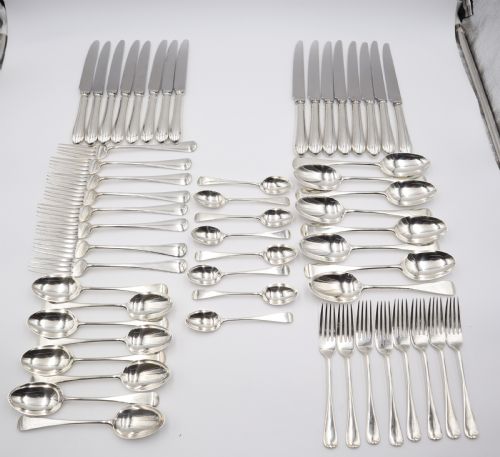
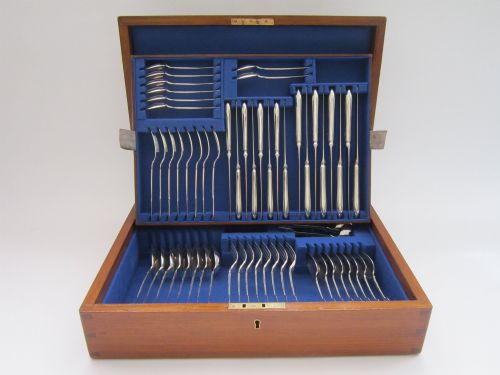
A silver spoon and fork pairing unites two primary dining implements into a cohesive set. When you search for a silver spoon and fork, you encounter everything from individual child's presentation sets to large serving pairs and full canteens. Pieces span the Georgian, Victorian, and Edwardian periods, stretching into mid-century utilitarian designs.
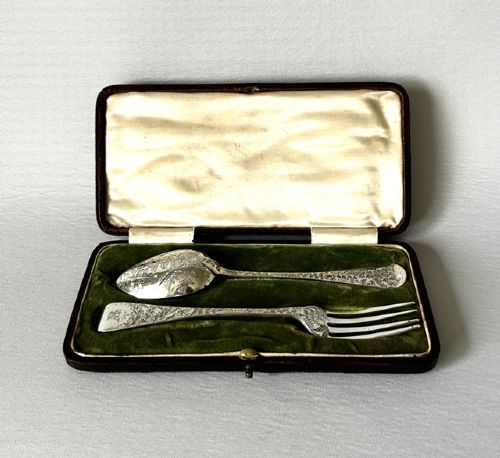
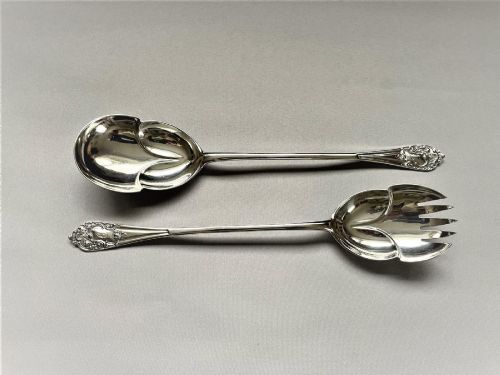
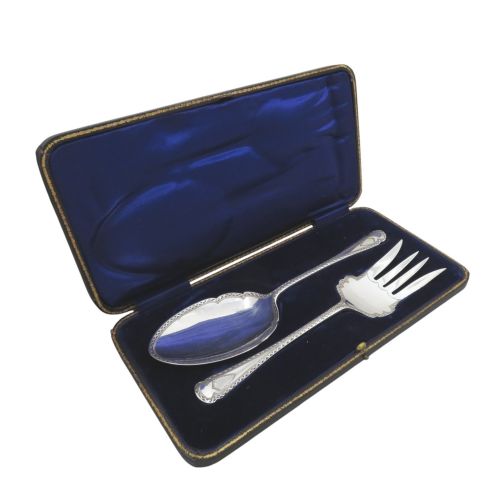
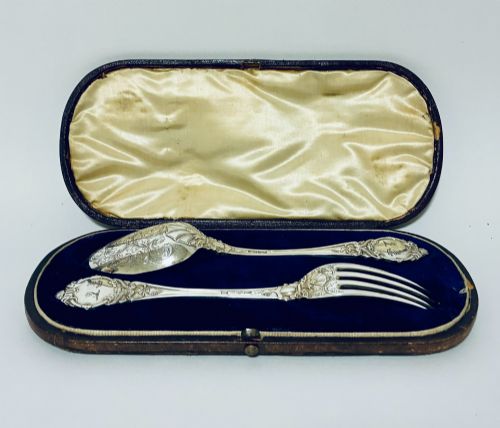
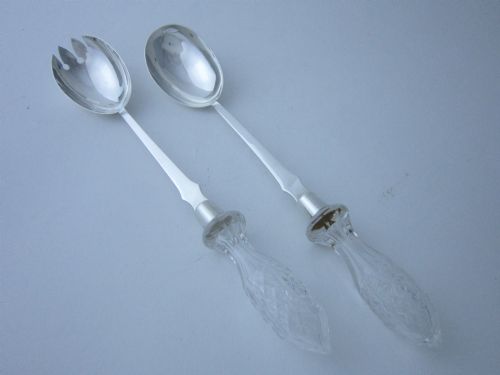
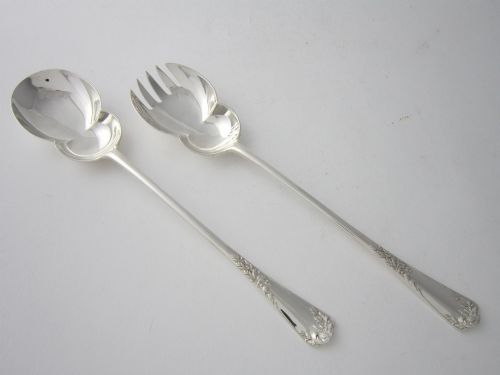
Christening and child's presentations dominate the smaller cased objects, often comprising a matching spoon and fork nestled in velvet, silk, or leatherette. Larger serving sets appear frequently, designed for salads, cold meats, or condiments like jam and pickles. These formations reflect the formal dining habits of nineteenth and early twentieth-century households.
Origins vary widely across the inventory, ranging from British provincial assay offices in Sheffield and Chester to Russian workshops, French makers, and Scandinavian studios. Forms adhere to traditional patterns like Fiddle, Coburg, Rat Tail, and Trefid, utilising sterling silver, silver plate, and occasionally horn or glass.
Distinguishing quality tiers
Quality rests in the crispness of the original pattern work and the weight of the silver utilised in the construction. Pieces displaying deep, deliberate chasing and heavy gauge metal maintain their structural integrity far better through decades of use.
The degree of preservation in fitted presentation cases, alongside the clarity of hallmarks indicating the maker and assay office, elevates the standing of an individual set. Complete original linings and matching components distinguish superior examples from assembled or replacement groups.
Some dining implements double as tactical gear, demonstrated by camp knives equipped with fold-out forks ready for impromptu wilderness feasts.
Walter and John Barnard·John Round·Thomas Harwood and Co·Jowika·Wallace·Paul Storr·Thomas Bradbury and Sons·Martin and Hall
The Silver Spoon and Fork Glossary
- Hallmark
- Official marks stamped onto precious metals to indicate the standard of purity, the assay office, and the year of production. These stamps provide the primary method for dating British silver.
- Christening set
- A matched grouping of eating utensils presented as a traditional gift for an infant's baptism. They frequently arrive in fitted cases lined with velvet or satin.
- Rat Tail
- A prominent dorsal ridge extending down the back of a spoon bowl from the handle stem. This feature reinforces the joint between handle and bowl.
- Fiddle Pattern
- A nineteenth-century cutlery style featuring a handle that broadens smoothly towards a squared, indented shoulder before flaring at the terminal. It remained exceptionally popular throughout the Victorian era.
- Trefid
- An early form of flatware handle terminating in a three-lobed fan shape. Originating in the late seventeenth century, it experienced revival periods in later manufacturing.
Silver Spoon and Fork: Frequently Asked Questions
What is a silver spoon and fork used for?
These pairings serve multiple functions depending on their scale, ranging from infant dining during christening ceremonies to serving salads or cold meats at the table. Smaller versions handle condiments like jam or pickles, while larger sets form part of comprehensive dining canteens.
Historically, matched sets provided guests or family members with dedicated implements for specific courses. Today, they continue to function practically for formal dining or serve as traditional heirloom gifts.
How do I care for antique silver cutlery?
Maintain silver items by washing them gently in warm soapy water and drying them immediately with a soft cloth to prevent water spots. Avoid abrasive cleaners that wear away thin plating or soften hand-engraved details.
Store pieces in tarnish-resistant cloth or original fitted cases lined with velvet or silk when not in use. Regular, light polishing preserves the natural patina without stripping the underlying metal.
How can I date a silver spoon and fork?
Dating relies primarily on the stamped hallmarks, which include specific letters representing the year of assay and symbols for the governing office. Comparing the style of the handle, such as Fiddle pattern or Rat Tail, offers a secondary guide.
Accompanying documentation or original fitted presentation boxes often help narrow the production window. Examining the construction technique provides additional context for the manufacturing era.
Are these sets safe to use for dining?
Most solid sterling silver and silver-plated utensils remain fully functional for modern dining and food service. Sterling silver possesses natural antimicrobial properties that make it safe for everyday use.
Inspect pieces with steel components, such as multi-bladed knives, to ensure the joints remain stable before dining. Acidic foods should not be left in contact with silver for extended periods to avoid surface reactions.