

Victorian Brass Vessels
These victorian brass vessels bring robust metalwork and domestic utility into modern rooms through planters, kettles, and coal scuttles.
Victorian Brass Vessels
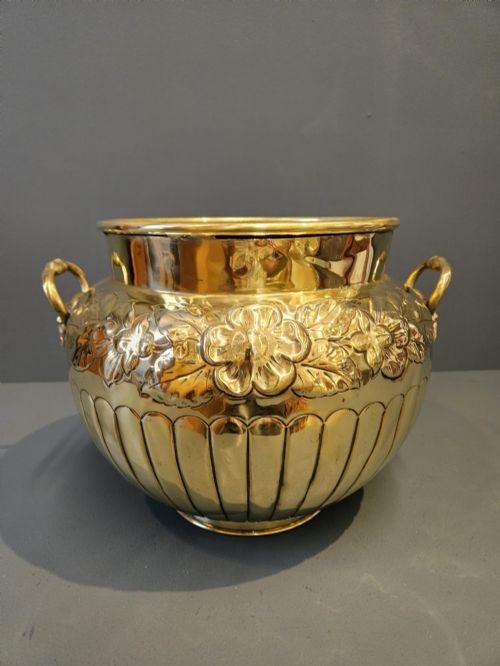
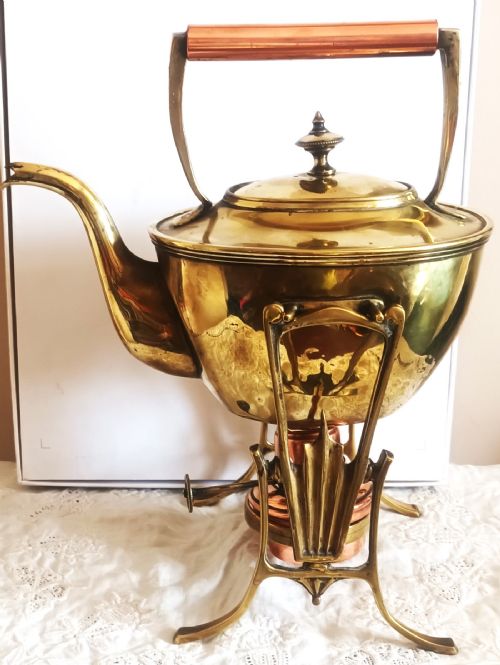
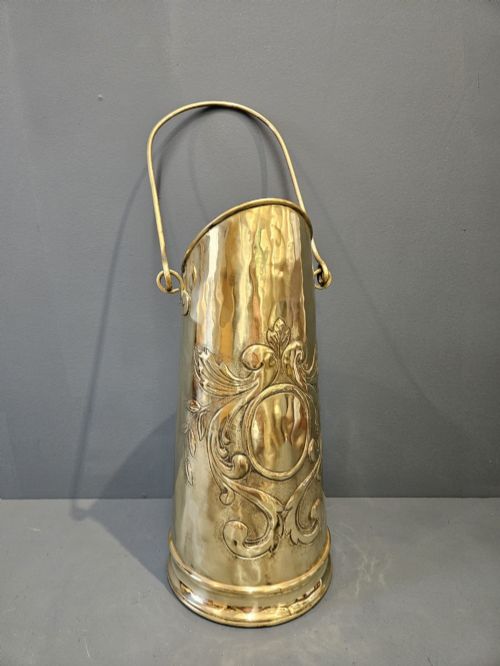
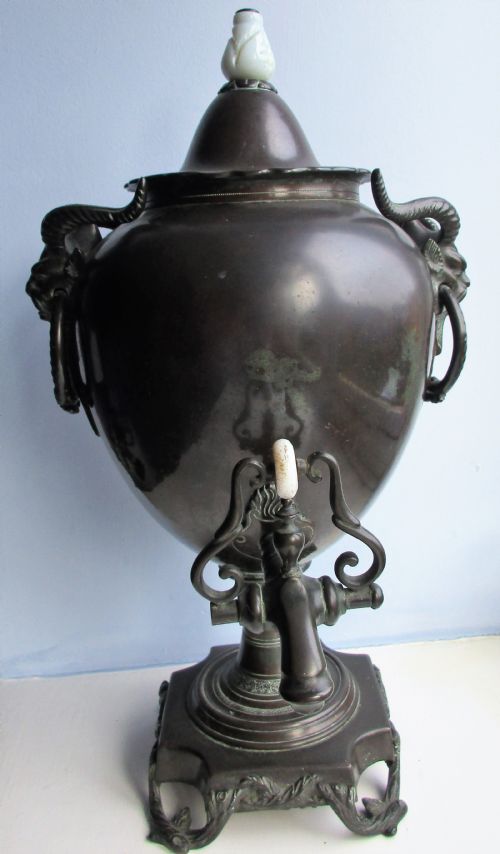
When you search for victorian brass vessels, you encounter a varied selection of utilitarian and decorative metalware designed for nineteenth-century domestic life. These objects range from heavy planters and jardinieres to spirit kettles, samovars, and coal scuttles used across Victorian households.
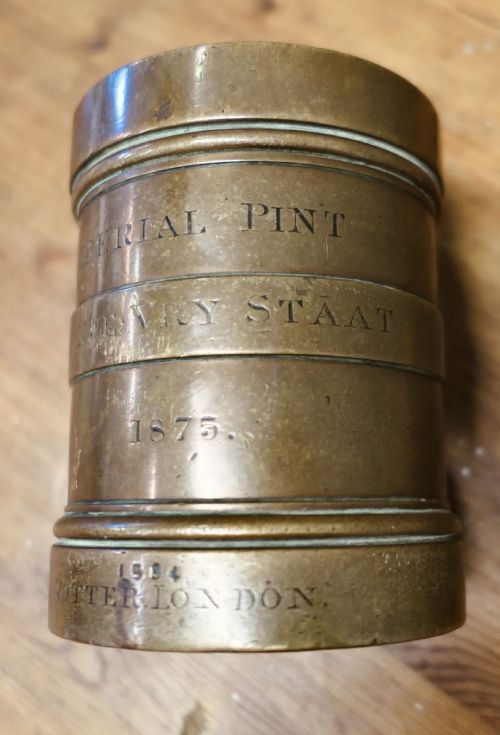
You are most likely to meet planters, cachepots, and watering cans fashioned from brass or copper, alongside coopered oak buckets bound in brass hoops. The inventory also includes specialised items such as sauce holders, milk cans, and public house tankards from the same period.
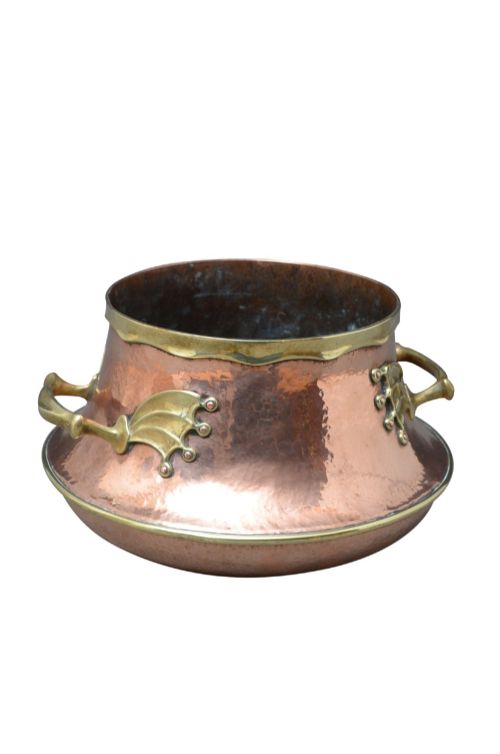
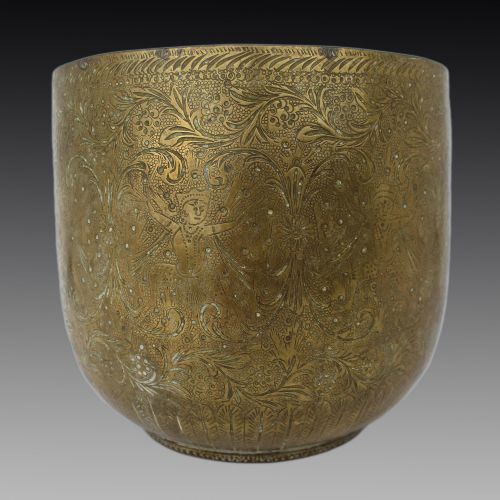
Origins stretch beyond standard English Victorian workshops to encompass Anglo-Indian and Raj period creations, featuring cairoware bowls and hand-engraved jardiniere vessels. Gothic Revival and Arts and Crafts influences appear frequently, bringing decorative shields, pierced designs, and hammered textures to the metal surface.
How they were made
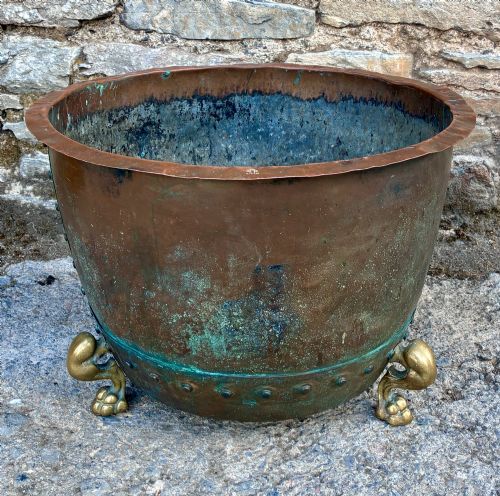
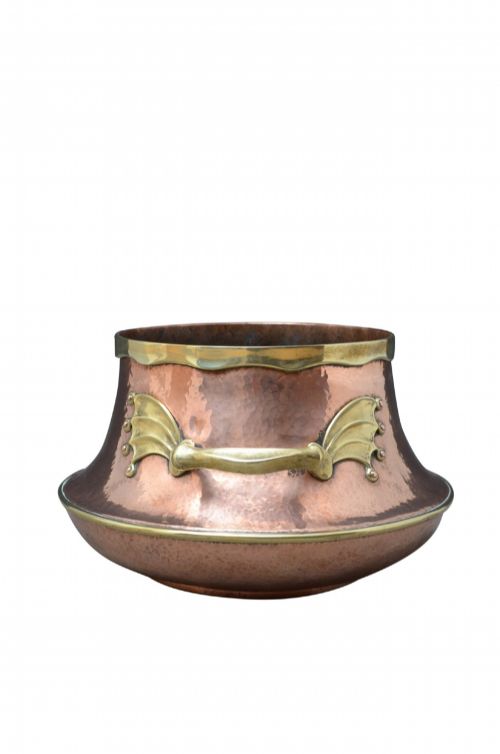
Metalworking techniques rely heavily on the combination of brass and copper sheets, often joined with visible rivets or shaped through hammering. Artisans utilised casting for handles, feet, and crests, while others employed piercing and hand-engraving to create intricate surface patterns.
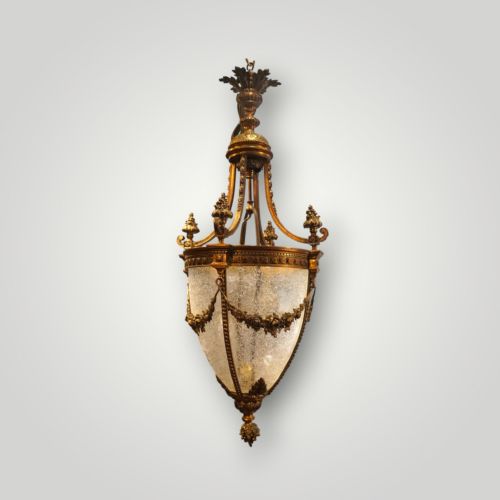
Woodwork frequently accompanies the metal components, seen in coopered oak barrels, ebonised wood details, mahogany umbrella stands, and walnut frames. Glass and iron also contribute to pieces such as hall lanterns, ecclesiastical bottles, and wirework stands.
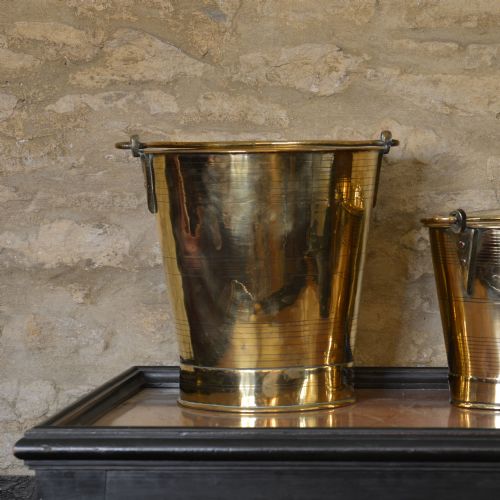
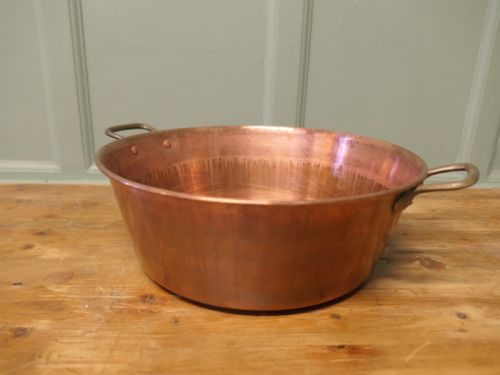
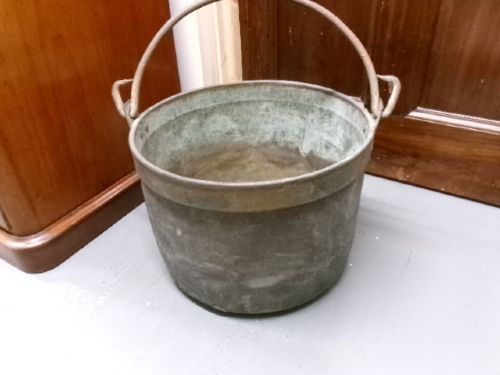
Makers applied finishing touches including gilt bronze mounts and crests soldered to the front of large planters. Construction methods prioritise durability, evident in the sturdy double-handled jam pans, swing-handled cauldrons, and brass-bound buckets designed for heavy daily use.
A dairy cream can stands ready for milk rounds that ended over a century ago.
What varies in quality
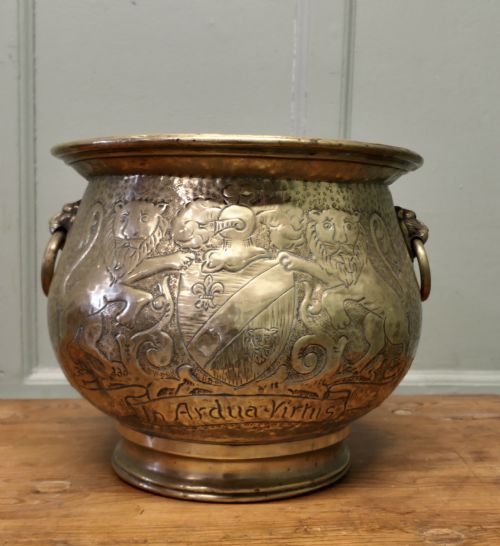
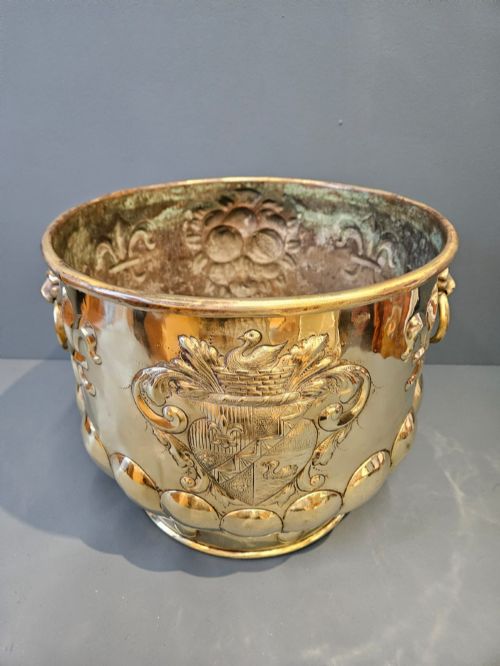
The distinction between standard utility items and finer examples rests upon the depth of hand-engraving, the complexity of pierced brass work, and the crispness of applied crests or shields. Pieces displaying refined hammering and substantial metal gauge command greater presence than simple machine-pressed goods.
Materials and secondary woods dictate quality tiers, separating plain brass containers from those combining copper bodies, cast bronze mounts, and coopered oak with clean grain. The presence of named makers or specific regional styles, such as Anglo-Indian cairoware, elevates an object above domestic kitchenware.
Potter of London·William Soutter & Sons·Benetfink & Co
The Victorian Brass Vessels Glossary
- Jardiniere
- An ornamental pot or stand for holding plants or flowers. These vessels often feature decorative brass reliefs, shields, or pierced galleries.
- Cachepot
- An ornamental container used to conceal a less decorative flower pot. They appear frequently in brass and copper across nineteenth-century interiors.
- Samovar
- A heated metal container traditionally used to boil water for tea. Victorian examples often incorporate elaborate spigots and handles.
- Coopered
- Formed of staves of wood bound together with metal hoops, typical of oak buckets and barrels. This method ensures waterproof integrity for holding liquids or plants.
- Cairoware
- Metalwork decorated with intricate inlaid patterns of silver, copper, and brass. This Islamic revival style was popular in the Victorian era.
Victorian Brass Vessels: Frequently Asked Questions
What were brass vessels used for?
Victorian households utilised these vessels for a multitude of practical and decorative tasks, ranging from heating water in kettles and samovars to containing coal for fires. Planters and jardinieres brought greenery indoors, while specialised items served dairies, public houses, and domestic kitchens.
Over time, many of these utilitarian objects transitioned into purely decorative roles within the home. Their robust construction allowed them to survive heavy daily service before becoming sought-after pieces for interior display.
How do I clean antique brass?
Maintaining nineteenth-century brass requires a gentle approach to preserve the accumulated patination that accumulates over decades. Harsh commercial abrasive cleaners strip away the historical surface character, so mild soapy water and a soft cloth usually suffice for routine dust and grime removal.
If polishing is necessary, select a specialised metal polish and apply it sparingly with minimal friction. Unlacquered period brass naturally darkens again over time, developing a warm tone preferred by many collectors.
How do I date a brass vessel?
Dating these pieces involves examining manufacturing marks, construction methods, and stylistic cues such as Gothic Revival or Arts and Crafts motifs. Hand-beaten surfaces, dovetail joints, and specific maker stamps or registration numbers provide reliable chronological indicators.
Comparing the weight of the metal, the style of the handles, and the integration of secondary materials like oak or copper helps narrow down the decade of production. Documentation or engraved crests can also link a vessel to a precise historical window.
Where were Anglo-Indian pieces made?
Anglo-Indian metalwork originates from the Indian subcontinent during the nineteenth century, often created during the Raj period for export or British residents abroad. Artisans utilised traditional hand-engraving and hammering techniques to produce distinct decorative bowls and jardiniere vessels.
These items combine local craftsmanship with British aesthetic preferences of the period. Their detailed surface ornamentation sets them apart from standard domestic English brassware.