


Traditional Metal Water Jug
These traditional metal water jugs span Georgian, Victorian, and Ottoman periods, offering solid copper, brass, and bronze vessels suited for practical use or display.

Traditional Metal Water Jug
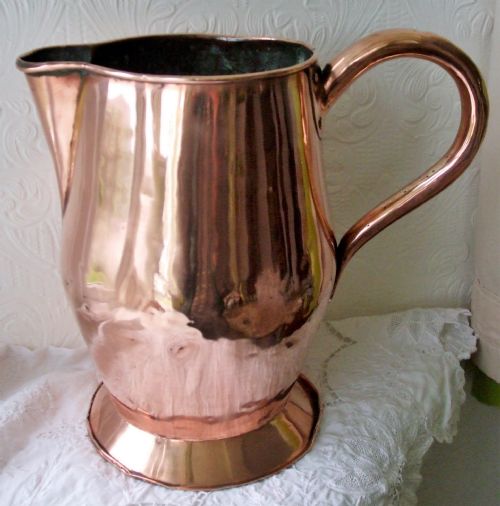
A traditional metal water jug encompasses utilitarian and decorative vessels fashioned from copper, brass, bronze, and toleware across the Georgian, Victorian, and Ottoman periods. You are most likely to encounter sturdy copper jugs and pitchers from the nineteenth century, ranging from modest two-pint measures to large twelve-pint containers and monumental display pieces.
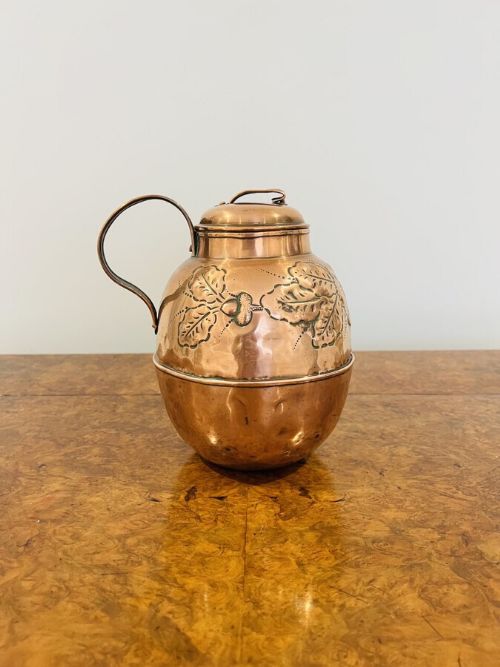
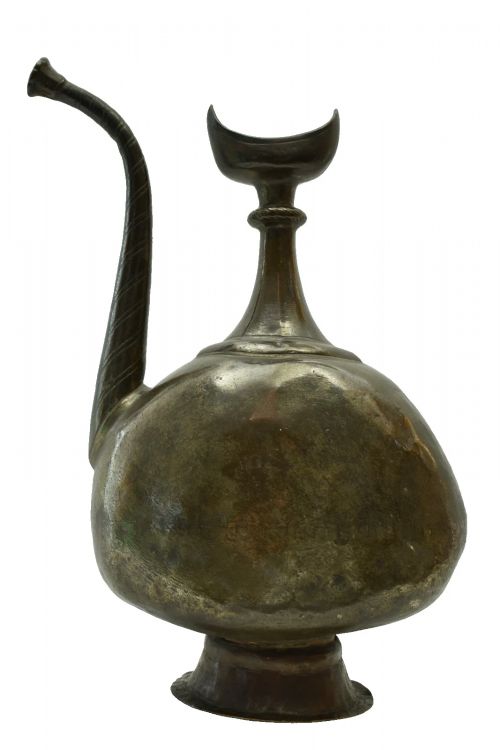
The selection includes specialised forms such as Jersey cans, lidded pitchers, hot water cans, watering cans, and measuring jugs marked with royal ciphers alongside ornate Islamic ewers. Styles stretch from plain rustic farmhouse utensils to decorative Indo-Persian aftaba designs featuring crescent moon finials and Makara handles.
How they were made
The construction of these vessels relies primarily on heavy-gauge copper, brass, and bronze, often joined with visible solder seams. Artisans shaped sheet metal by hand, hammering and riveting panels together to create watertight bodies capable of holding large volumes of liquid.
Surface treatments vary from the plain polished finish of utility measures to painted toleware and intricate cast details. Handles and spouts are securely attached using traditional metalworking joints, sometimes enhanced with decorative finials or figural motifs.
Some bronze aftaba handles feature mythical creatures that ensure your water jug comes with its own aquatic beast.
What varies in quality
Quality in these traditional metal water jugs is determined by the weight of the metal, the integrity of the seams, and the crispness of any cast or hammered ornamentation. Heavier gauge copper and substantial bronze castings represent superior commercial or domestic production.
The refinement of the silhouette and the harmony between handle, spout, and body separate utilitarian containers from finer decorative works. Surviving marks, such as official VR verification stamps on measuring jugs, add documentary value.
The Traditional Metal Water Jug Glossary
- Aftaba
- An Islamic ewer or pitcher traditionally used for ritual washing. These vessels often feature long spouts and distinctive finials.
- Jersey can
- A distinctive tall, narrow metal jug originating from the Channel Islands, typically made of copper with a fitted lid and vertical handle.
- Toleware
- Japanned or painted metalware, usually tinplate, decorated with lacquer or enamel finishes. This technique was common on nineteenth-century household vessels.
- Seamed measuring jug
- A container constructed from rolled sheet metal joined at the edges with solder or rivets. These were calibrated for official capacity standards.
- Makara
- A mythical sea-creature from Hindu mythology often incorporated into the handles of Indian bronze ewers. It provides an ergonomic grip while adding sculptural detail.
Traditional Metal Water Jug: Frequently Asked Questions
How do I clean an antique copper jug?
Most collectors prefer to leave a natural aged patina on nineteenth-century copper and brass surfaces rather than polishing them to a bright shine.
If cleaning is necessary, use a mild non-abrasive metal cleaner specifically formulated for copper, taking care to avoid damaging any soldered seams or historic markings.
Are these old metal jugs still watertight?
Many of these vessels retain their structural integrity and can still hold water for floral displays or practical garden use.
However, older soldered joints can weaken over time, so it is wise to test a jug gently before filling it indoors.
What is the difference between an aftaba and a standard jug?
An aftaba is a specific form of Islamic ewer characterised by a bulbous body, a slender curved spout, and often a crescent moon or similar decorative finial.
Standard English and European jugs focus on utilitarian capacity or pouring utility without the ritual connotations of the Near Eastern forms.
How can I tell a Victorian jug from a Georgian one?
Georgian copper jugs often display heavier, simpler hand-beaten construction with simpler lines intended for domestic or tavern service.
Victorian examples frequently introduce standardised measuring marks like the VR stamp, more ornate decorative shaping, or specialised forms such as the Jersey can.