
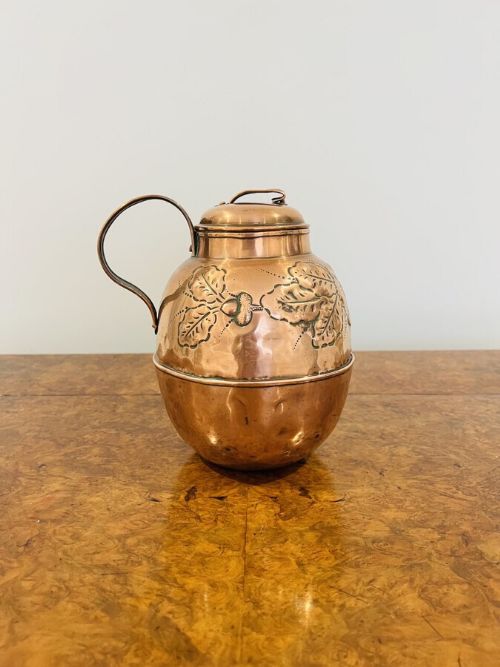


Victorian Metal Water Jug
These Victorian metal water jug pieces offer robust utility and warm metal tones, making them essential finds for country houses and period interiors.

Victorian Metal Water Jug
A victorian metal water jug encompasses vessels designed for carrying, storing, or serving liquids, spanning simple utilitarian forms and ornamental display pieces. The listings demonstrate a heavy reliance on copper and brass, alongside silver plate, toleware, and tinplate examples.
Most items on this page lean towards generous capacities, appearing as large copper flagons, Jersey cans, toleware hot water cans, and decorative ewers. Makers utilised these heavy metal containers for daily household chores or grand hospitality across the nineteenth century.
Origins stretch from plain farmhouse service to refined Arts and Crafts metalwork, reflecting the broad aesthetic shifts of the period. Buyers frequently encounter robust measuring jugs marked with VR stamps sitting alongside ornate Rococo revival vessels.
Materials and construction methods
Heavy gauge copper and brass form the backbone of these pieces, shaped through traditional hand-beating, spinning, and seamed construction. Visible solder joints and artisan rivet work appear regularly on functional measuring jugs and Jersey cans.
Surface finishes range from polished silver plate over copper to painted toleware and patinated bronze, each requiring specific manufacturing techniques. Toleware items rely on japanning or painted tinplate, whilst Arts and Crafts examples often combine copper bodies with contrasting brass handles.
Listings feature multiple examples dated to eighteen-sixty, alongside pieces spanning the Arts and Crafts and Victorian periods.
Assessing quality in metal vessels
Weight and gauge thickness dictate the structural integrity of a victorian metal water jug, distinguishing heavy service pieces from lighter decorative items. Thicker metal walls resist denting and hold heat more effectively in functional flagons.
Integrity of construction matters deeply, particularly where spouts, handles, and seams meet the main body. Superior pieces display clean dovetailing or smooth soldering, whilst lesser examples show crude patching or distorted proportions from heavy past use.
H F Fearncombe & Co of Wolverhampton·Boardman Glossop & Co·Royal Doulton
The Victorian Metal Water Jug Glossary
- Jersey can
- A distinctive tall, slender copper jug featuring a hinged lid and a long pouring spout, originating from the Channel Islands for dairy or water use.
- Toleware
- Lacquered or painted metalware, usually tinplate, decorated with hand-painted or transferred motifs popular throughout the nineteenth century.
- Flagon
- A large drinking vessel with a handle and lid, primarily used for holding and pouring generous quantities of liquids.
- Ewer
- A large pitcher with a wide spout and elaborate handle, traditionally used alongside a basin for washing, though later employed as a decorative centrepiece.
- Old Sheffield Plated
- An early composite material made by fusing a thin sheet of silver to a thicker copper base, creating a durable tableware finish.
Victorian Metal Water Jug: Frequently Asked Questions
What were these metal jugs used for originally?
These vessels served practical domestic roles, carrying water for washing, heating for tea, or measuring quantities of ale and milk.
Larger specimens functioned in commercial settings or country house sculleries, whilst smaller decorated versions sat on washstands or dining tables.
How do I clean an antique copper jug?
Light dusting and occasional gentle wiping with a soft, dry cloth preserve the natural aged patina that collectors value most.
Abrasive metal polishes strip away historical surface oxidation and should be avoided unless a bright, reflective finish is specifically desired.
Are these jugs safe for holding drinking water?
Most antique metal water jugs were manufactured before modern food safety standards and may contain exposed lead solder or degraded internal linings.
They function best today as decorative objects, floral vases, or umbrella stands rather than for daily beverage consumption.
How do I distinguish Arts and Crafts examples from earlier Victorian pieces?
Arts and Crafts pieces prioritise honest construction, hand-beaten textures, and simple geometric forms without excessive historical ornamentation.
Earlier Victorian pieces often display ornate surface engraving, Rococo scrolls, or polished silver and brass finishes influenced by revivalist tastes.