


Copper Brass Pitcher
These copper brass pitcher pieces combine warm metalwork with practical utility, offering collectors enduring domestic charm and rich historical character.
Copper Brass Pitcher
When you search for a copper brass pitcher, you look at metal vessels shaped for pouring liquids, spanning domestic jugs to ceremonial ewers. The pieces on this page draw from the nineteenth century, the Victorian and Edwardian eras, and the George III period, alongside Arts and Crafts, Art Nouveau, Tibetan Traditional, and Middle Eastern styles.
The most common versions you will meet here are utilitarian milk jugs, water jugs, and haystack measures, alongside decorative ewers and coffee pots. These vessels unite copper and brass in varied forms, ranging from simple provincial kitchenware to ornate floral relief designs.
Makers and origins stretch across local British workshops, continental manufacturers like WMF, Middle Eastern trading hubs, and Tibetan monasteries. Each object reflects the specific daily routines or ritual uses of its original context, whether serving at a dining table or holding butter tea.
How they were made
These vessels rely on the combination of hammered copper bodies and contrasting brass handles, rims, or bases. Metalsmiths shaped the copper sheets by hand or with early industrial machinery, joining seams with dovetailing or early brazing techniques.
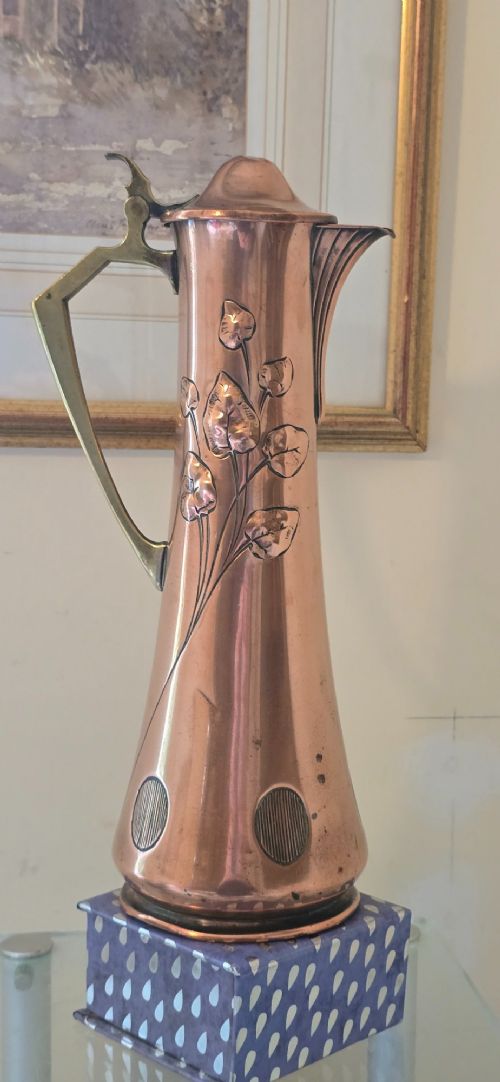
Decorative elements such as floral reliefs on Art Nouveau pieces required careful repousse work, pressing or hammering the metal from the reverse side to raise the pattern. Brass spouts and handles were then securely riveted or soldered onto the main copper body to ensure structural strength.
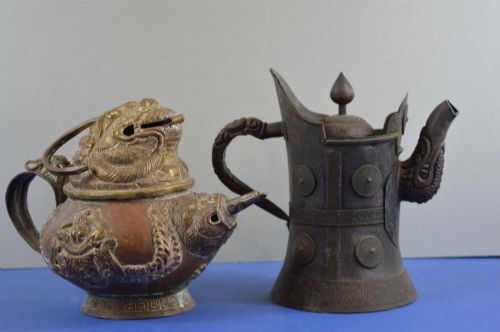
Some nineteenth-century monks relied on yak butter tea pots made of copper and brass to sustain daily monastic life.
What varies in quality
The distinction between standard utility items and finer examples rests on the balance of metals and the crispness of decorative detailing. Pieces featuring hand-hammered surfaces and well-integrated brass mounts display a higher degree of workshop skill than plain stamped vessels.
Proportion and weight also dictate the calibre of a piece, with sturdier walls and harmonious handle placement separating master metalwork from everyday production. Surface patination achieved through age and handling adds a depth of character that modern reproductions lack.
WMF·J Bower·Orme Evans And Co
The Copper Brass Pitcher Glossary
- Ewer
- A large jug with a wide spout and a looped handle, traditionally used for holding and pouring water. These vessels often served ceremonial or decorative purposes alongside their practical functions.
- Haystack measure
- A specific type of British liquid capacity measure, named for its distinctive tapered profile resembling a hayrick. These brass pieces were calibrated for trade use in taverns and markets.
- Jug and pitcher
- Terms generally used interchangeably to describe deep vessels with spouts for holding and pouring liquids. Pitchers often imply a larger capacity and sturdier handle for daily domestic service.
- Repousse
- A metalworking technique where the artisan hammers the metal from the reverse side to create a raised design on the front. This method is frequently seen on Art Nouveau and Arts and Crafts metalwork.
- Jug
- A small container with a narrow mouth and a handle, designed for holding and pouring milk, water, or other liquids. They appear across various historical periods in both plain copper and mixed brass.
Copper Brass Pitcher: Frequently Asked Questions
What is a copper brass pitcher used for?
These vessels served diverse roles ranging from heating water and pouring milk to measuring liquids in public houses and holding tea in monastic rituals. Their dual construction of copper bodies and brass fittings provided both thermal conductivity and structural durability for daily tasks.
Over time, many of these utilitarian items transitioned into decorative display pieces, prized for the warm metallic tones they bring to domestic interiors. Their varied forms reflect the specific domestic and trade requirements of past centuries.
How do I date a brass and copper vessel?
Dating relies on observing manufacturing techniques, construction marks, and stylistic markers such as Arts and Crafts or Art Nouveau motifs. Machine-rolled sheets and specific maker stamps often point toward the later nineteenth or early twentieth centuries, while hand-forged seams suggest earlier periods.
Comparing the form and handle attachment methods against known examples from eras like George III or the Victorian period helps narrow down the decade of production. Examining the wear patterns on the base and interior also offers clues regarding the age and intensity of use.
How do I clean and care for antique copper?
Maintaining these metals involves removing dust with a soft, dry cloth and avoiding harsh chemical polishes that strip away historical patination. Many collectors prefer to leave the darkened surface oxidation intact, as it highlights the age and genuine history of the piece.
If cleaning is necessary, mild soap and warm water applied gently will remove surface grime without damaging the underlying metal. Storing the vessels away from high humidity prevents active corrosion and preserves the stability of soldered joints.
What distinguishes Arts and Crafts metalwork?
Arts and Crafts pieces emphasise visible handcraftsmanship, simple structural forms, and the honest expression of materials like copper and brass. Makers in this tradition rejected mass-produced uniformity in favour of subtle hammer marks and functional designs.
Decoration on these items is typically restrained, often drawing inspiration from nature with stylised floral motifs rather than excessive ornamentation. The resulting objects balance utility with a distinct artistic integrity rooted in the late nineteenth and early twentieth movements.