


Brass Water Pitcher
These brass water pitcher examples span Victorian, Edwardian, and earlier periods, offering heavy metal and mixed wood vessels designed for domestic service.
Brass Water Pitcher
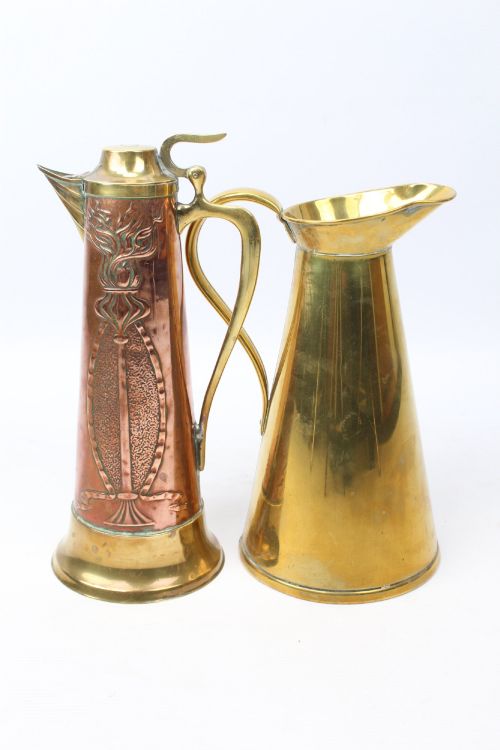
When you search for brass water pitcher, you encounter domestic vessels and ceremonial ewers fashioned primarily from sheet metal or coopered staves. The listings on this page include tall Victorian water jugs, Edwardian brass-bound oak examples, and George III copper water vessels.
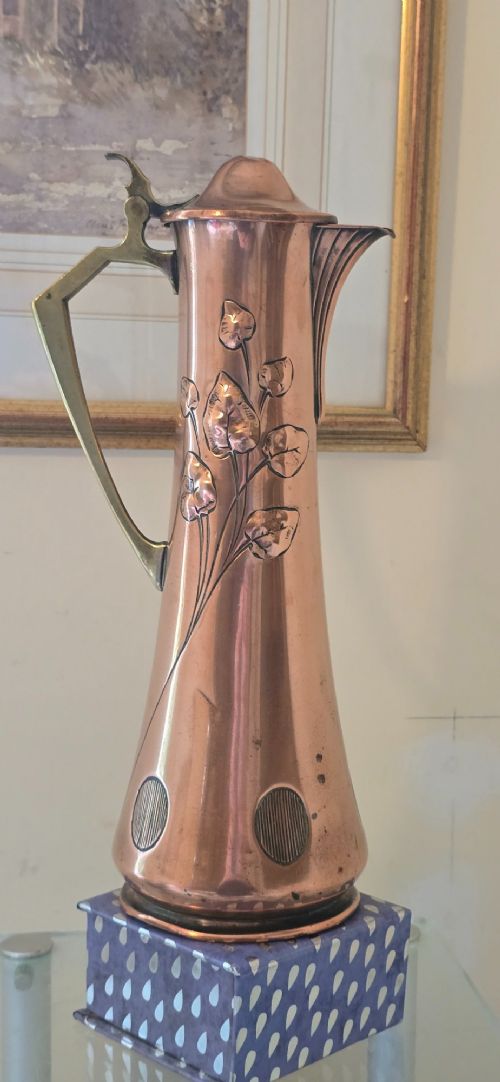
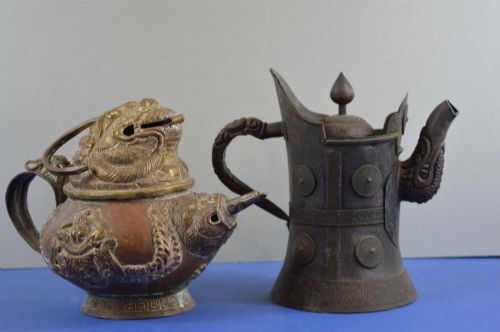
You will also find regional variations such as Middle Eastern copper coffee pots, Tibetan ceremonial monks ewers, and Art Nouveau copper and brass ewers featuring floral relief designs. Forms range from straightforward jugs to complex vessels combined with teak or ebonised wood elements.
How they were made
These items rely on traditional metalworking techniques, frequently pairing hammered or sheet brass with warm copper bodies and contrasting handles. Makers utilised riveting and seaming to join the metallic components securely.
Certain heavier domestic examples adopt coopered construction, binding seasoned oak staves together with tight brass bands in the manner of traditional bucket-making. Decoration varies from plain polished surfaces to embossed floral reliefs and chased Middle Eastern motifs.
Some vessels double as yak butter tea pots, proving that hot tea and cold water share very similar metal tastes.
What varies in quality
Quality rests upon the crispness of the metal forming and the integrity of the joinery rather than superficial brightness. Pieces bearing named maker marks, such as H F Fearncombe & Co, demonstrate superior workshop standards.
The sophistication of decorative execution separates standard utility items from artistic statements, particularly visible in the organic relief work of Art Nouveau specimens and the careful stave alignment of coopered oak jugs.
H F Fearncombe & Co·WMF
The Brass Water Pitcher Glossary
- Ewer
- A large jug with a wide spout and a curved handle, traditionally used for holding water. These vessels often feature decorative pedestal bases and pronounced spouts.
- Coopered
- Constructed from wooden staves fitted tightly together and bound with metal hoops. This method was essential for holding liquids securely without adhesive.
- Repoussé
- A metalworking technique where the design is hammered into relief from the reverse side. It appears frequently on decorative Art Nouveau pieces.
- Arts and Crafts
- A design movement valuing handcraftsmanship and simple traditional forms over industrial mass production. Items from this era emphasise honest materials like copper and brass.
Brass Water Pitcher: Frequently Asked Questions
What is a brass water pitcher used for?
These vessels originally served practical functions like carrying washing water or holding table beverages in homes. Over time, their heavy metal construction and decorative designs transitioned them into display pieces.
Today, they function well as decorative interior accents, flower vases, or standalone display objects on sideboards and mantels.
How do I clean brass and copper?
Most collectors prefer to leave an aged patina on older metal surfaces to preserve their historical character. Vigorous polishing can strip away the subtle colour variations accumulated over decades.
If cleaning is necessary, use a mild, non-abrasive metal cleaner designed specifically for antiques to remove active dirt without altering the underlying finish.
How do I date a brass water pitcher?
Dating relies on observing construction methods, handle attachments, and stylistic markers such as Victorian proportions or Art Nouveau floral motifs. Maker marks stamped into the base also provide clear chronological evidence.
Comparing the weight of the metal and the presence of hand-beating versus machine stamping helps distinguish nineteenth-century examples from later reproductions.