

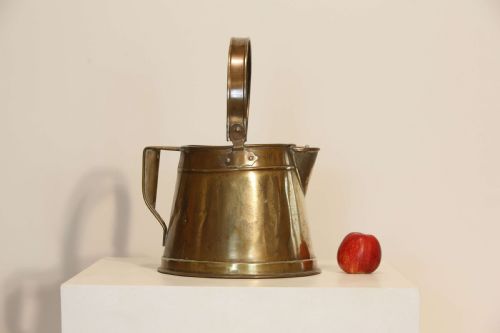


Large Brass Water Vessel
These large brass water vessel examples are heavy utilitarian containers that bring genuine warmth and function to modern interiors.
Large Brass Water Vessel
A large brass water vessel search reveals utilitarian containers designed for heating, carrying, and storing water across domestic settings. You will most frequently meet nineteenth-century copper and brass kettles, samovars, and tall country house jugs.
The material combination typically unites a warm copper body with contrasting brass handles, taps, and mounts. George III and Victorian examples dominate the selection, spanning from simple kitchenware to refined hanging urns.
Forms range from sturdy coopered oak and brass buckets to Swedish barrels and matched pairs of watering cans. Each piece reflects practical nineteenth-century craftsmanship adapted for heavy daily use.
How they were made
Construction relies upon heavy-gauge sheet copper and cast brass, joined with overlapping seams and secured by rivets. Craftsmen hammered and polished the metal surfaces by hand, leaving subtle working marks that reveal their manual production.
Stave-built pieces utilise coopered oak bound with thick brass bands, combining timber construction with metal reinforcement. Handles and spouts incorporate turned bone or iron elements for thermal insulation and structural strength.
Large Brass Water Vessel Retail Price Guide 2026
Typical asking prices for large brass water vessel among the pieces listed under this phrase on Sellingantiques today, from the lower quarter to the upper quarter. They describe what is for sale here now, not the wider market.
The listings combine brass and copper with occasional bone, iron, and oak elements across nineteenth-century forms.
What varies in quality
Quality rests upon the thickness of the metal plate and the integrity of the original construction. Superior examples display crisp hand-beating, robust dovetailed or riveted seams, and well-balanced proportions that survive centuries of handling.
The refinement of cast brass mounts and handles separates standard utility pieces from exceptional country house items. Original patination and untouched polished surfaces indicate whether an object retains its historical character.
The Large Brass Water Vessel Glossary
- Samovar
- A heated metal container traditionally used to boil water for tea. These large vessels feature an internal vertical tube and a small spigot near the base.
- Coopered
- Constructed from wooden staves fitted together side by side and bound by metal hoops. This technique is typical of water barrels and large storage jugs.
- Patina
- The surface sheen and colour acquired by metal and wood through age and use. It develops naturally from handling, cleaning, and oxidation over generations.
- George III
- The stylistic period spanning from seventeen sixty to eighteen twenty. Pieces from this era often display classical proportions and fine brass detailing.
Large Brass Water Vessel: Frequently Asked Questions
What were large brass water vessels used for?
These vessels served practical domestic roles involving water storage, transport, and heating for household tasks. Large kettles and samovars provided hot water for washing and tea, while barrels and cans managed daily supply.
In country houses and modest dwellings alike, they stood near hearths or in sculleries for ready access. Their durable construction allowed them to handle heavy daily labour without failing.
How do I date a brass water vessel?
Dating relies upon examining the construction methods, handle attachments, and overall stylistic markers present in the piece. Eighteenth-century examples often feature hand-hammered seams and specific George III mount designs.
Victorian and later nineteenth-century items introduce machine-rolled sheet metal alongside traditional hand-finishing. Comparing the form and material combination against known period pieces clarifies the age.
How do I clean and polish them?
Maintenance requires gentle cleaning using non-abrasive metal cleaners formulated specifically for copper and brass. Avoid stripping the aged dark areas entirely, as historical character resides within the recessed details.
Regular dusting and occasional light waxing preserve the surface without removing the accumulated lustre. Treat wooden staves or bone handles with appropriate oils to prevent drying.
Can these vessels still hold water?
Many surviving vessels retain their structural integrity and watertight seals after proper inspection. However, historic soldered joints and antique taps can develop leaks over time.
It is advisable to test them carefully before putting them into active service as functional jugs or kettles. Most owners choose to display them as decorative objects rather than using them daily.