

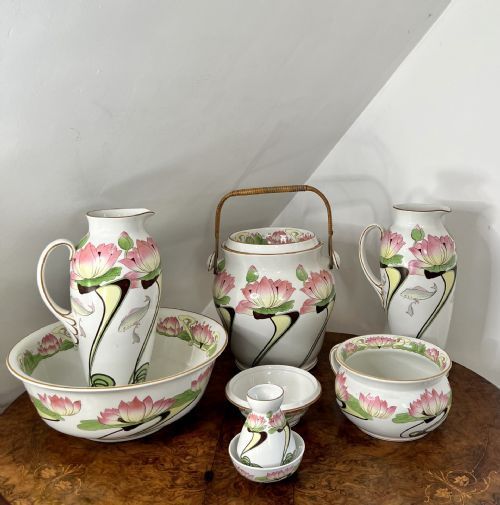


Art Nouveau Pitcher
An art nouveau pitcher brings fluid botanical lines and sculptural metalwork to the table, uniting domestic utility with organic design.
Art Nouveau Pitcher
An art nouveau pitcher serves as both a functional vessel and a sculptural statement, drawing on the organic motifs that defined the turn of the twentieth century. These pieces appear in forms ranging from tall claret jugs and beer flagons to large wash sets and coffee pots.
The aesthetic bridges several related design movements, frequently intersecting with Arts and Crafts simplicity and Vienna Secessionist geometry. Creators adopted fluid, whiplash lines and botanical reliefs to transform everyday vessels into decorative objects.
Buyers encounter variations spanning from British stoneware and pewter to continental silvered metal and glass combinations. The most common examples date from the nineteen hundreds, reflecting the peak years of organic design.
Materials and construction
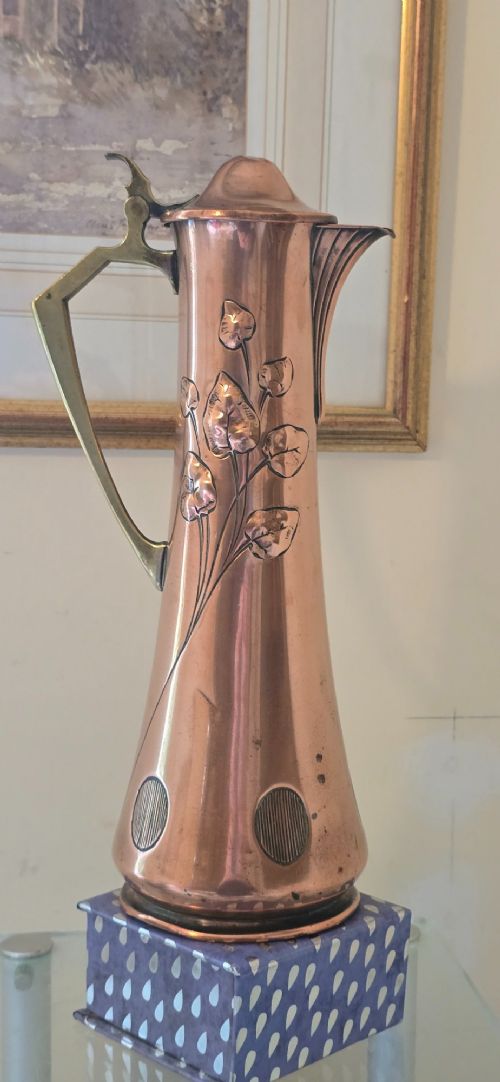
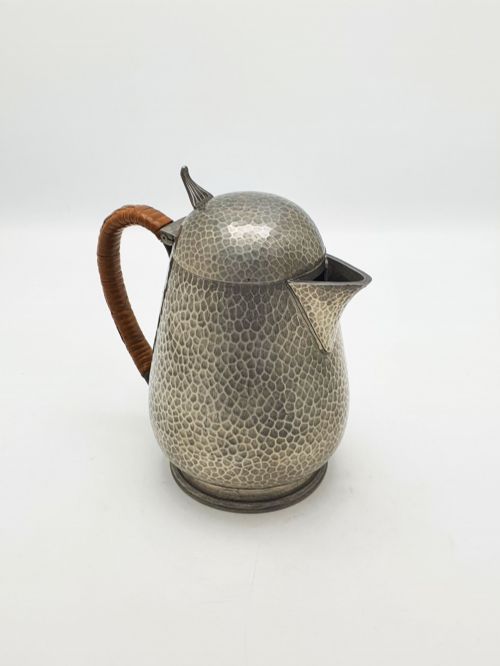
Metalwork dominates the surviving evidence, utilising pewter, copper, brass, and silver plate shaped through casting, hammering, and repoussé relief. Pewter alloys allowed makers to achieve intricate floral and figural mounts, often housing glass or ceramic bodies.
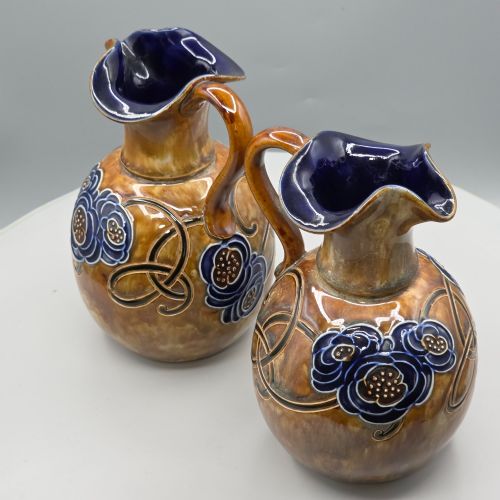
Ceramic examples rely on stoneware and earthenware bodies, decorated with hand-thrown glazes or applied slip. Stoneware iterations often feature incised or moulded botanical patterns, while pottery pieces showcase distinct underglaze painted decoration.
Glass components incorporate crackle techniques, applied enamel, or blown bodies fitted securely within metal mounts. Handles frequently integrate contrasting elements such as woven cane or specialised metal casting.
Materials represented include pewter, copper, brass, stoneware, earthenware, crackle glass, and silver plate.
Assessing craftsmanship and design
The distinction between standard production and exceptional work rests on the crispness of the casting and the integration of mount to body. Superior metalwork retains sharp relief in floral or figural motifs without softening from worn moulds.
Designer attribution elevates a piece, particularly when connected to notable firms or independent metalworkers and glasshouses. The nuance of the glaze and the harmony between glass and metal mounts determine the visual success of mixed-media vessels.
WMF·Royal Doulton·Joseph Sankey·Archibald Knox·Liberty and Co·Doulton Lambeth·William Moorcroft·Koloman Moser·Loetz·Georges Van De Voorde·Christofle·Daum·John Grinsell
The Art Nouveau Pitcher Glossary
- Repoussé
- A metalworking technique where the design is hammered into relief from the reverse side. This method allowed craftsmen to create deep, tactile floral patterns on copper and pewter surfaces.
- Jug and bowl set
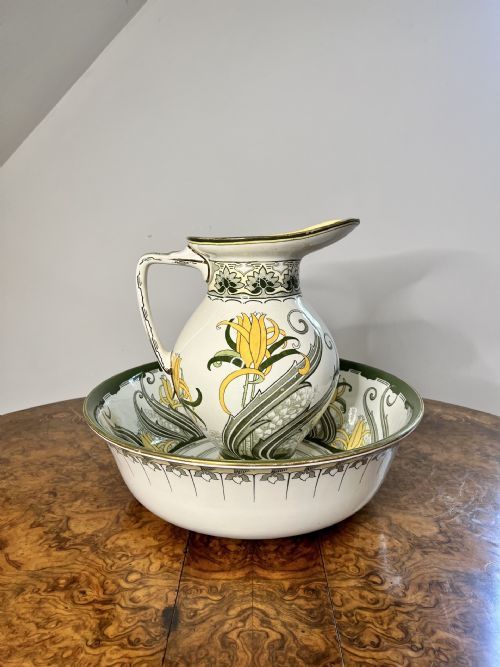
- A matching set consisting of a large pitcher and a deep basin, historically used for washing in bedrooms before indoor plumbing became universal.
- Claret jug
- A specialised pouring vessel designed for serving red wine, typically combining a glass body with a silver-plated or pewter handle, collar, and hinged lid.
- Stoneware
- A robust, vitrified ceramic fired at high temperatures, rendering it impermeable to liquids even without glaze. Doulton workshops frequently utilised this durable material for relief-decorated vessels.
- Jugendstil
- The continental European iteration of the organic design movement, originating in Germany and sharing the characteristic floral curves seen across British and Austrian metalwork.
Art Nouveau Pitcher: Frequently Asked Questions
What is an art nouveau pitcher?
An art nouveau pitcher is a pouring vessel characterised by organic motifs, whiplash lines, and natural forms popular around the turn of the twentieth century.
These pieces range from silver-plated claret jugs to pewter beer flagons and ceramic ewers, serving both decorative and practical purposes.
How were these pitchers used?
Original uses varied widely depending on the scale and material of the vessel, encompassing wine service, beer pouring, and water delivery.
Large sets functioned as bedroom wash basins, while smaller metal and glass jugs sat on dining tables for wine or lemonade.
How do I date a piece?
Dating relies on stylistic markers, maker stamps, and material characteristics associated with the decades around nineteen hundred.
Victorian pieces often display heavier historic revivalism, whereas nineteen-ten examples lean toward cleaner secessionist lines.
How do I clean pewter?
Pewter requires gentle washing with mild soap and warm water followed by immediate drying to preserve the historic surface.
Harsh metal polishes should be avoided to retain the soft, original grey patina characteristic of turn-of-the-century metalwork.