
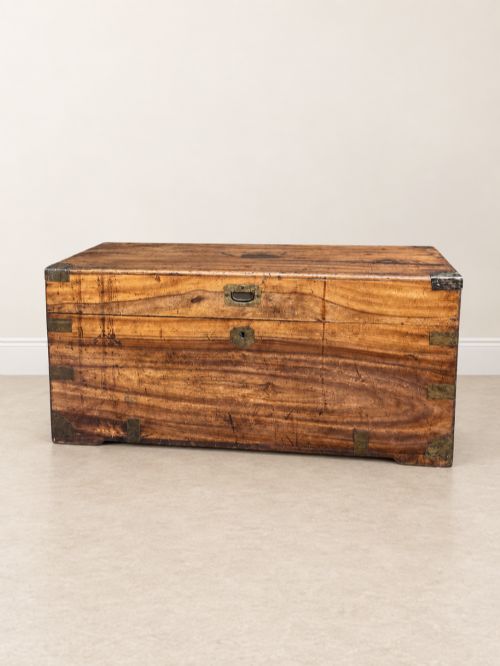
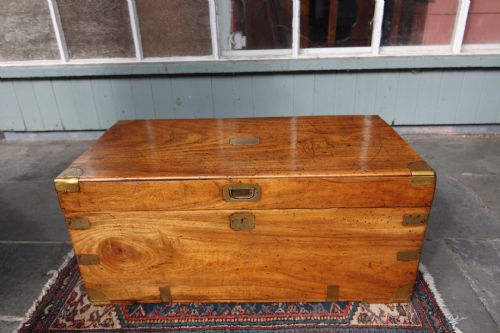
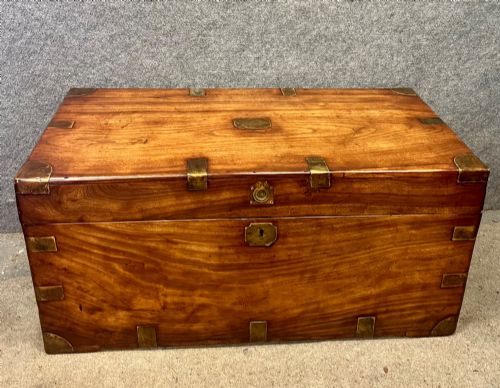
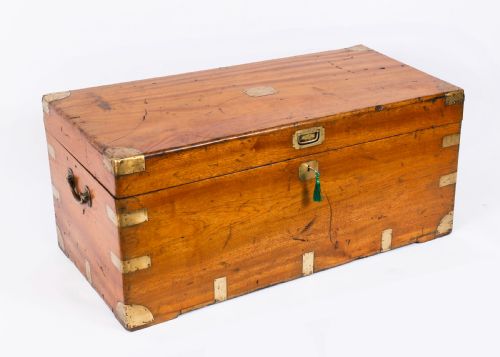


Victorian Brass Trunk
When you search for a victorian brass trunk, you find robust travel chests built to endure the rigours of nineteenth-century military campaigns and colonial service abroad.
Victorian Brass Trunk
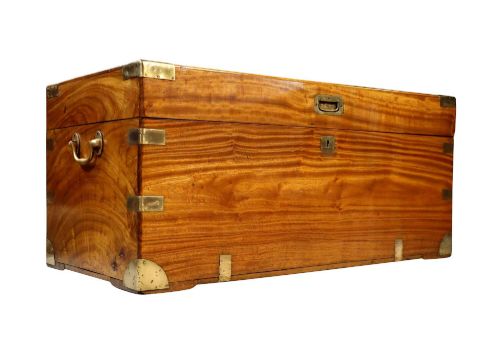
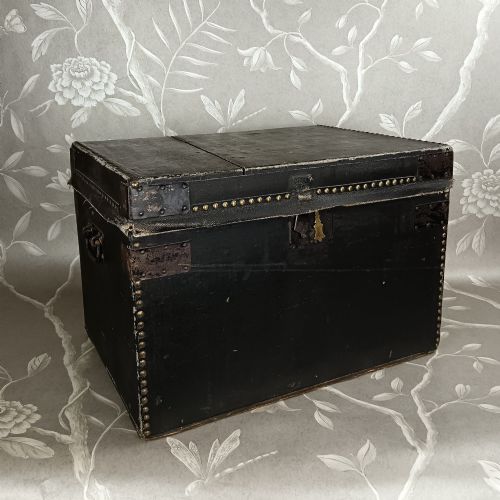
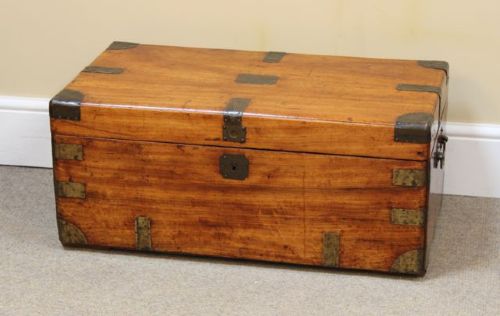
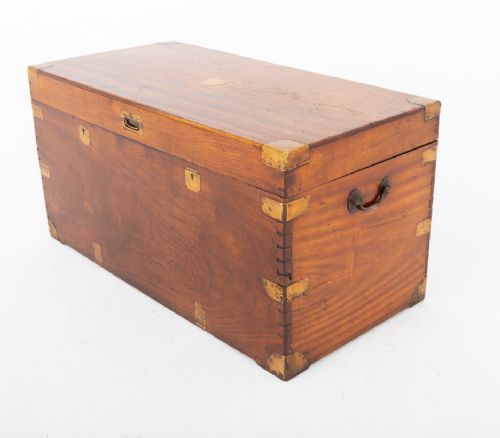
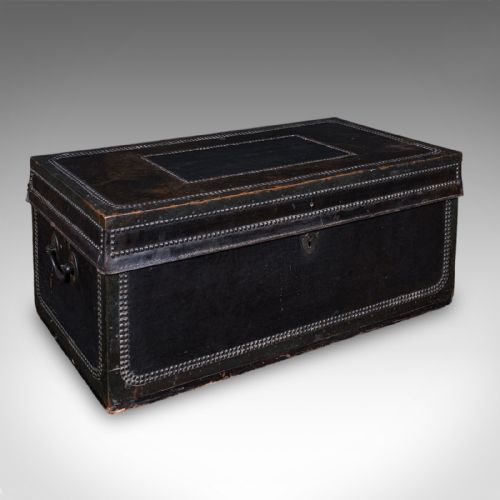
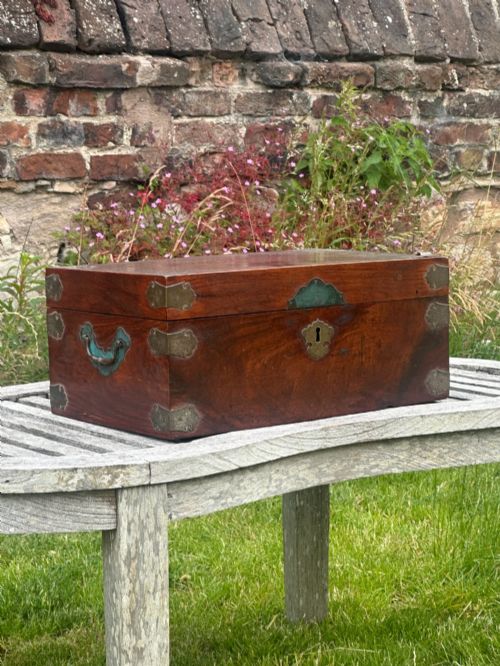
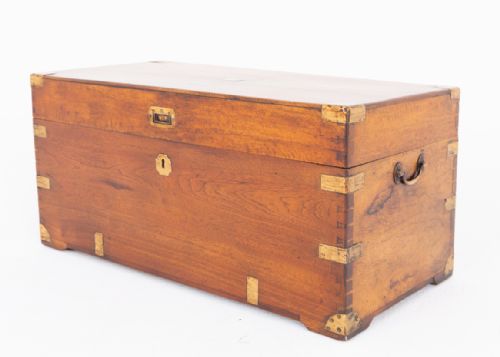
A victorian brass trunk typically combines dense timbers like camphor wood, teak, or mahogany with heavy brass banding, corner pieces, and flush inset carrying handles. These storage pieces were constructed for officers and merchants who required secure, portable luggage capable of withstanding long sea voyages and overland transit. The versions most commonly encountered on this page date from the middle to the late nineteenth century and often display modular campaign styling designed for practical stacking and packing.
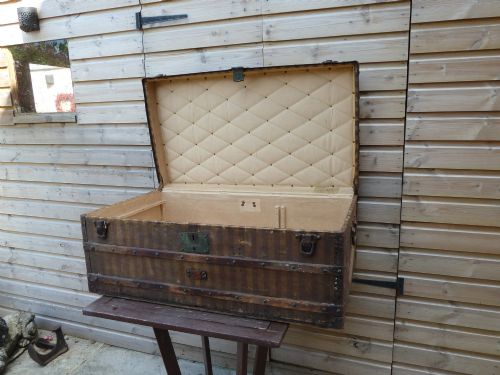
Many examples originate from Anglo-Indian or colonial workshops, utilising aromatic camphor wood to protect contents from insects in tropical climates. Other variants employ durable teak or mahogany, reinforced heavily with brass strapwork to protect the edges and corners from rough handling. Interiors frequently feature partitioned compartments, smaller till boxes, or candle boxes intended to keep travel necessities organised during transit.
Factors that separate quality grades
The degree of original hardware preservation largely determines the quality standing of a piece, particularly whether all flush handles, strapwork, and working locks remain intact. The selection of timber also plays a role, with densely grained camphor wood or figured teak commanding greater attention than plain utility pine or mixed secondary woods.
Subtleties in internal carpentry, such as secret compartments, fitted pigeonholes, or dovetailed internal tills, demonstrate the level of craftsmanship invested in the construction. Pieces retaining their original patination and unpolished wood surfaces exhibit a truer historical character than heavily refinished examples.
Listings demonstrate that camphor wood and teak were the primary timbers utilised for military and colonial campaign trunks during the nineteenth century.
Wm. Insall·Arthur Wannop·James Purdey & Sons·Halliday & Rich·LOUIS VUITTON
The Victorian Brass Trunk Glossary
- Campaign chest
- A portable chest of drawers or trunk designed to break down into sections for easy transport by military officers on active service. These pieces feature recessed handles and brass corner protection.
- Camphor wood
- An aromatic hardwood native to Asia, prized for its insect-repelling properties and distinctive medicinal scent. It was widely utilised for military and maritime trunks.
- Brass binding
- Flat strips of brass screwed along the edges, corners, and panels of a trunk to reinforce the structure against heavy impact and wear during transit.
- Escutcheon
- A protective brass plate surrounding a keyhole, designed to prevent the surrounding wood from splitting or wearing away from repeated use.
- Till box
- A small internal compartment or lidded box fitted inside the main cavity of a chest to hold smaller valuables, documents, or personal items.
Victorian Brass Trunk: Frequently Asked Questions
What were victorian brass trunks used for?
These trunks served as durable luggage for British military officers, diplomats, and merchants travelling across the empire during the nineteenth century. Their robust construction protected uniforms, documents, and personal valuables against moisture and rough handling.
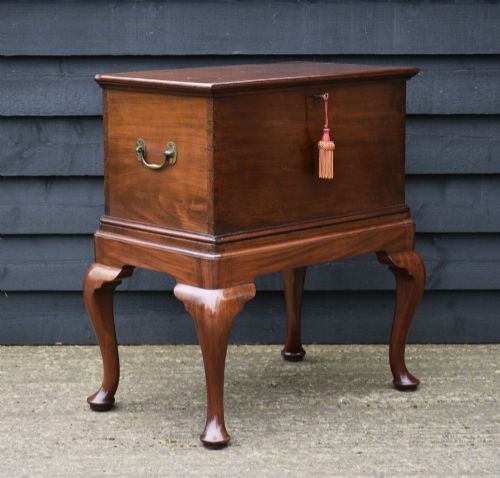
Inside, compartments and small till boxes kept smaller items organised during long sea voyages or overland marches. Many of these chests were also adapted for domestic use as blanket boxes or coffee tables once owners retired from service.
How do I identify camphor wood?
Camphor wood is readily identified by its distinct, clean, medicinal aroma when the lid of the trunk is opened. The timber ranges from pale honey tones to rich reddish-brown hues, often featuring a pronounced, wavy grain pattern.
Because the wood naturally repels insects, these chests were heavily favoured for storing woollens and uniforms in tropical climates. Over decades, the scent may soften, but rubbing the interior lightly can often revive the characteristic fragrance.
Why do some trunks have brass corners?
Brass corners and strapwork were applied to protect the vulnerable end-grain and mitred joints of the wooden carcase from heavy impacts during transit. They added structural reinforcement without adding excessive bulk to the luggage.
Additionally, the brass components were screwed down firmly to keep the panels aligned despite changes in humidity and temperature during global travel.
Are these trunks waterproof?
While tightly fitted wooden joints and heavy brass bindings offered a strong defence against rain and sea spray, these trunks were not hermetically sealed. They were built to withstand harsh weather conditions encountered on campaign rather than complete submersion.
The natural density of hardwoods like teak and camphor wood provided inherent resistance to moisture penetration compared to softer domestic timbers.