



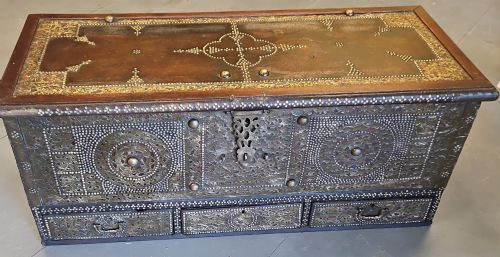
Brass Stud Coffer
A brass stud coffer is a robust storage piece defined by metal nailhead work, offering travellers and households practical utility with decorative presence.
Brass Stud Coffer
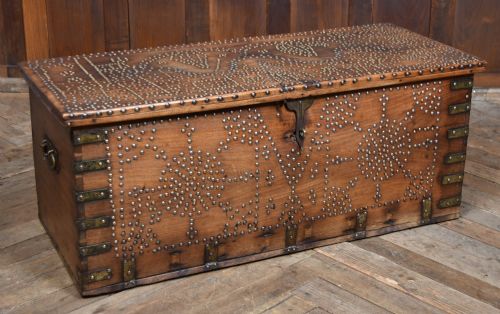
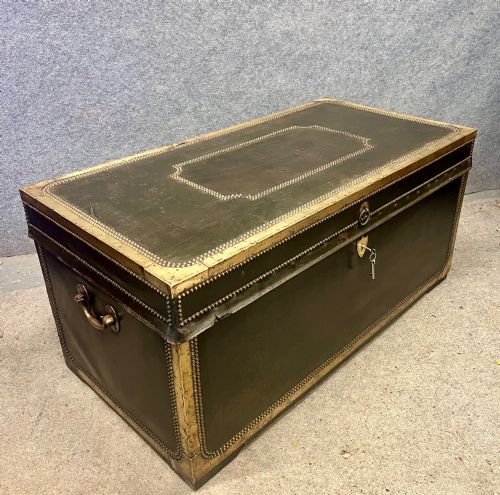
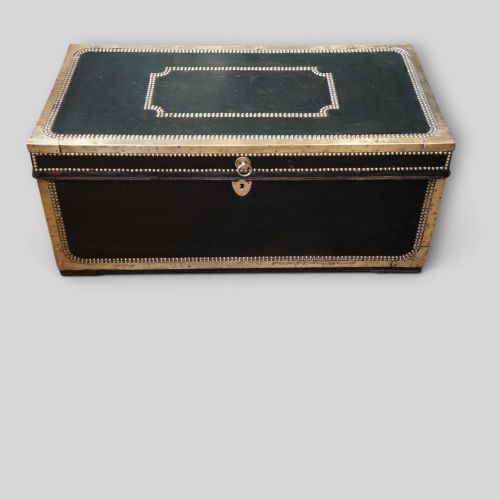
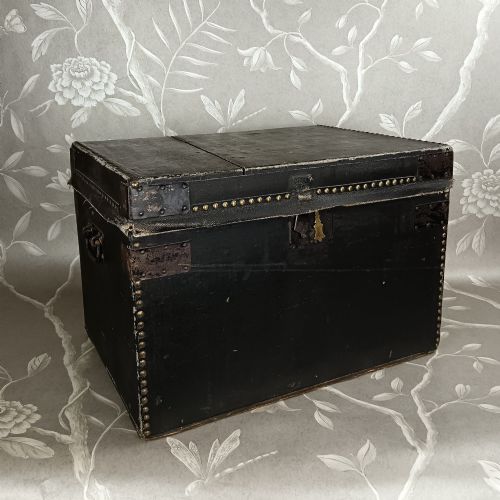
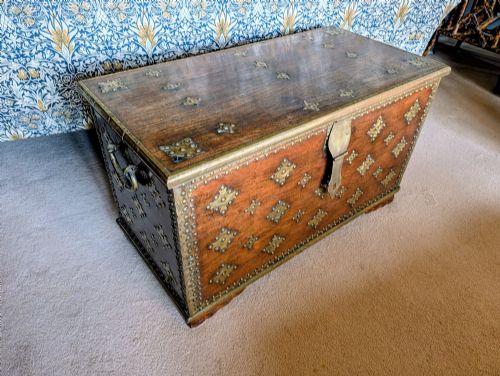
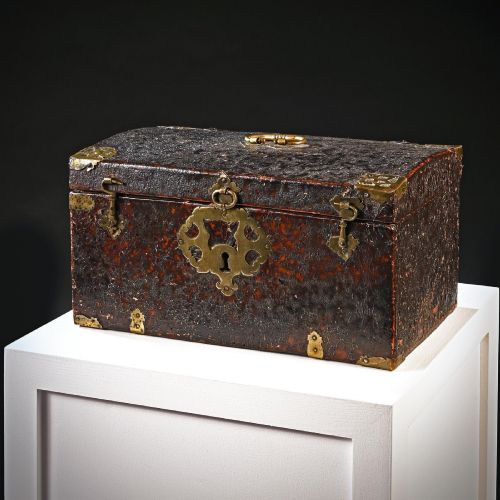
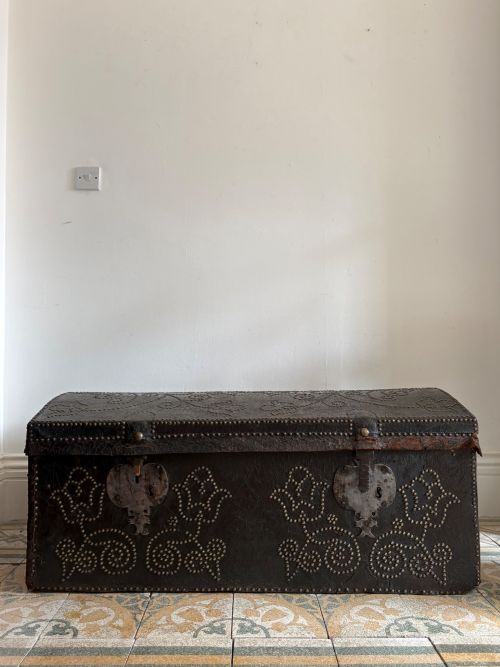
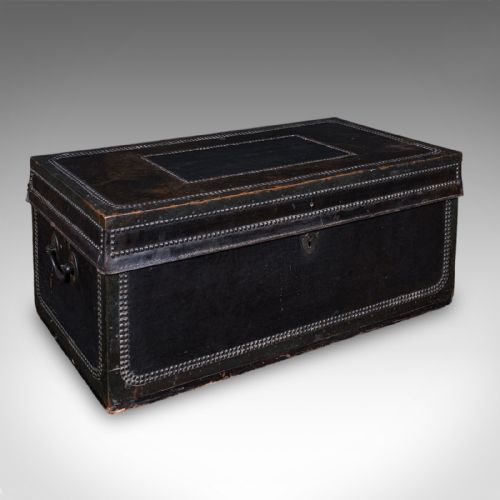
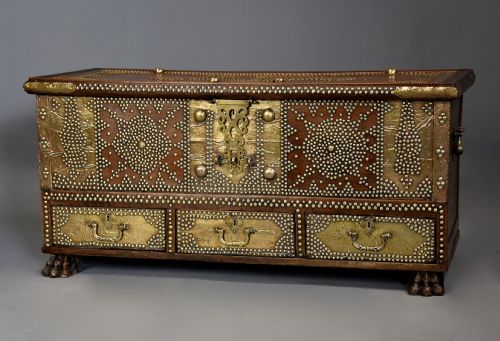
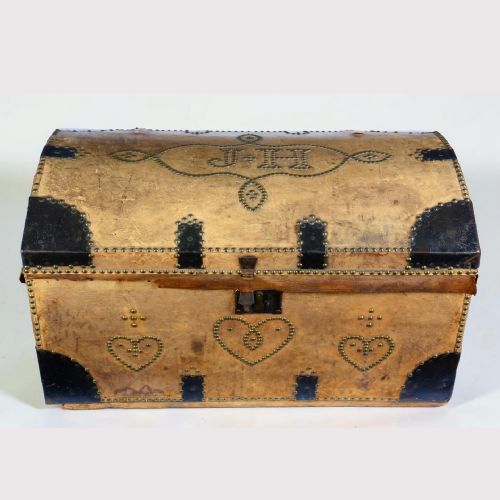
A brass stud coffer is a sturdy storage piece designed for travel or domestic organisation, frequently appearing as a leather-covered trunk, a dome-top box or an exotic hardwood chest. These items bridge utilitarian transport and decorative furnishing, originating from various global trade routes and domestic workshops.
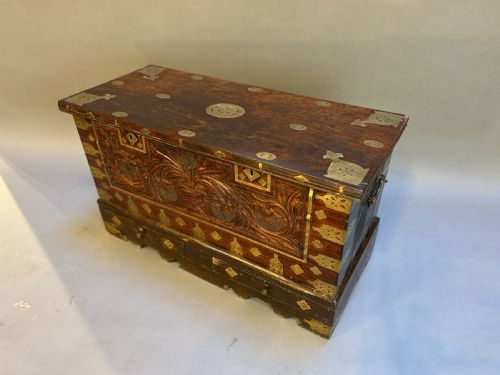
The pieces on this page are predominantly nineteenth-century examples, spanning Regency campaign cases, Victorian leather trunks and East African Zanzibar boxes. Alongside these, earlier seventeenth-century leather travelling boxes and eighteenth-century Dutch dome-top trunks emerge regularly in the selection.
Buyers encounter forms ranging from compact caskets and blanket boxes to large country house ottomans and heavy merchant chests. Each variation reflects the specific geographical origin and intended transit method of the era in which it was built.
How they were made
Makers constructed these coffers using durable timbers such as teak, padouk, camphor wood, shisham and mahogany, often pairing them with structural iron straps and binding. The timber frames provided the necessary rigidity for long journeys by coach, ship or caravan.
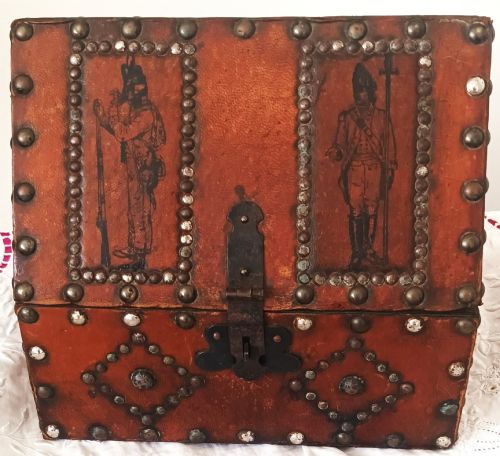
Outer surfaces were frequently clad in hide, leather or fine textiles, secured and ornamented through precise patterns of brass studwork and nailheads. These studs served a dual purpose, fastening the outer skin firmly to the wood while creating intricate geometric or pictorial designs.
Some nineteenth-century traders left their initials hammered in brass studs right across the lid.
What varies in quality
The hierarchy of quality rests on the complexity of the brass stud patterns, the integrity of the original leather or hide covering and the density of the underlying hardwood. Pieces featuring dense, decorative brass work alongside robust carrying handles occupy the upper end of the range.
Maker attribution elevates a coffer significantly, with signed brass plaques or stamped locks from known makers like Samuel Pratt or William Insall indicating superior workshop execution. Conversely, utilitarian pieces built strictly for transit without decorative refinement sit at the simpler end of the spectrum.
Samuel Pratt·Wm Insall of Bristol·Arthur Wannop·Chapple & Sons·Seabrook of St Pauls London
The Brass Stud Coffer Glossary
- Coffer
- A large wooden chest used for storing valuables or clothing, frequently reinforced with metal bands. These boxes often feature hinged lids and heavy carry handles for transit.
- Campaign case
- A portable chest or trunk designed for military officers or travellers on the move. They typically incorporate collapsible elements and robust brass binding to withstand rough journeys.
- Dome top
- A rounded lid construction on a trunk designed to shed water during travel. This profile requires specialised carpentry to curve the timber and leather cladding effectively.
- Shisham
- A durable Indian rosewood utilised in the construction of colonial trading chests. The timber provides a stable, dense substrate for intricate brass ornamentation.
Brass Stud Coffer: Frequently Asked Questions
What is a brass stud coffer?
A brass stud coffer is a heavy-duty storage trunk or chest decorated with metallic nailhead patterns.
These pieces combine wooden or leather bodies with structural brass fastenings built for travel.
How do I date a leather trunk?
Dating relies on examining the construction methods, lock mechanisms, and the style of the brass studding.
Earlier pieces from the seventeenth and eighteenth centuries display different hide treatments and joinery compared to Victorian examples.
How can I use an ottoman at home?
These large lidded chests function well as living room centrepieces, end-of-bed storage, or occasional seating.
Their robust construction allows them to hold heavy blankets while adding texture to a room.