


Victorian Brass Desk Stand
These nineteenth-century writing accessories combine utility and display, offering a tangible link to period correspondence through inkwells, pen rests, and trays.
Victorian Brass Desk Stand
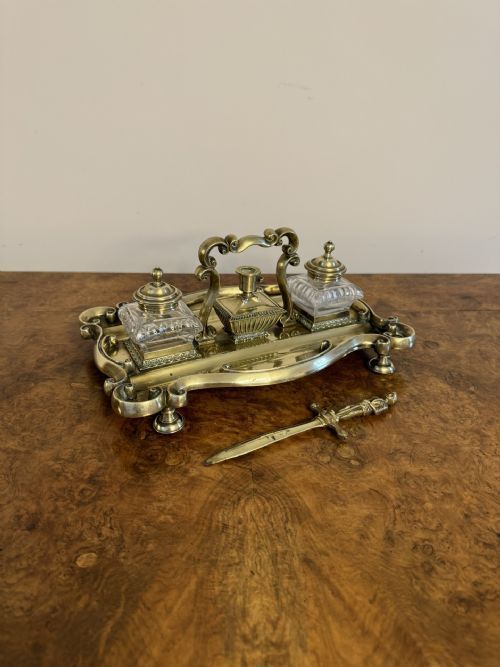
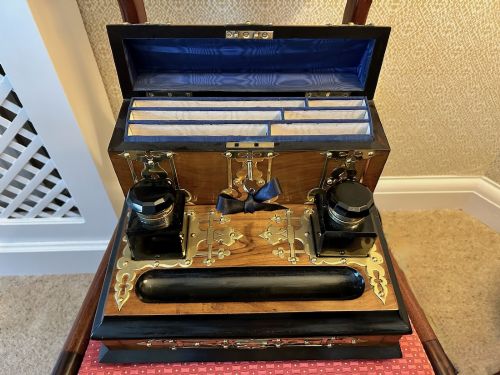
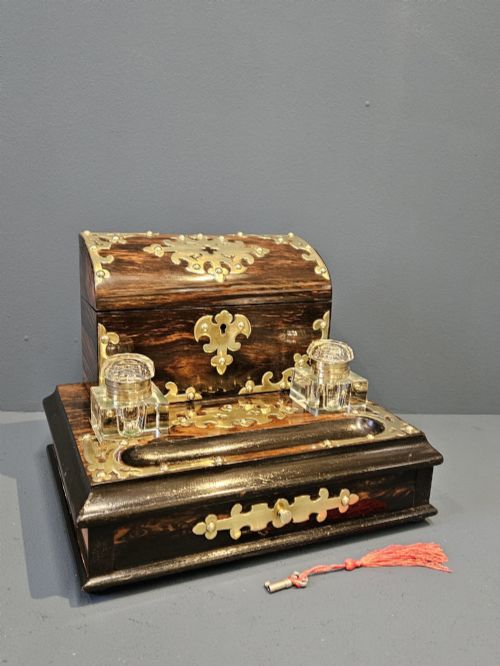
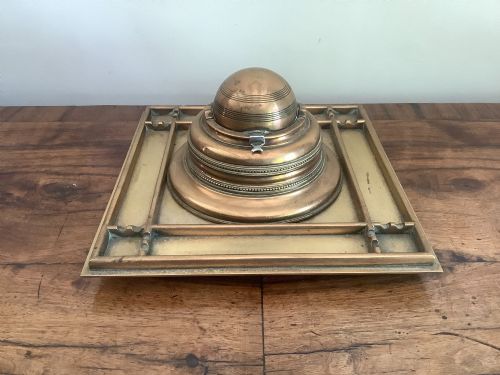
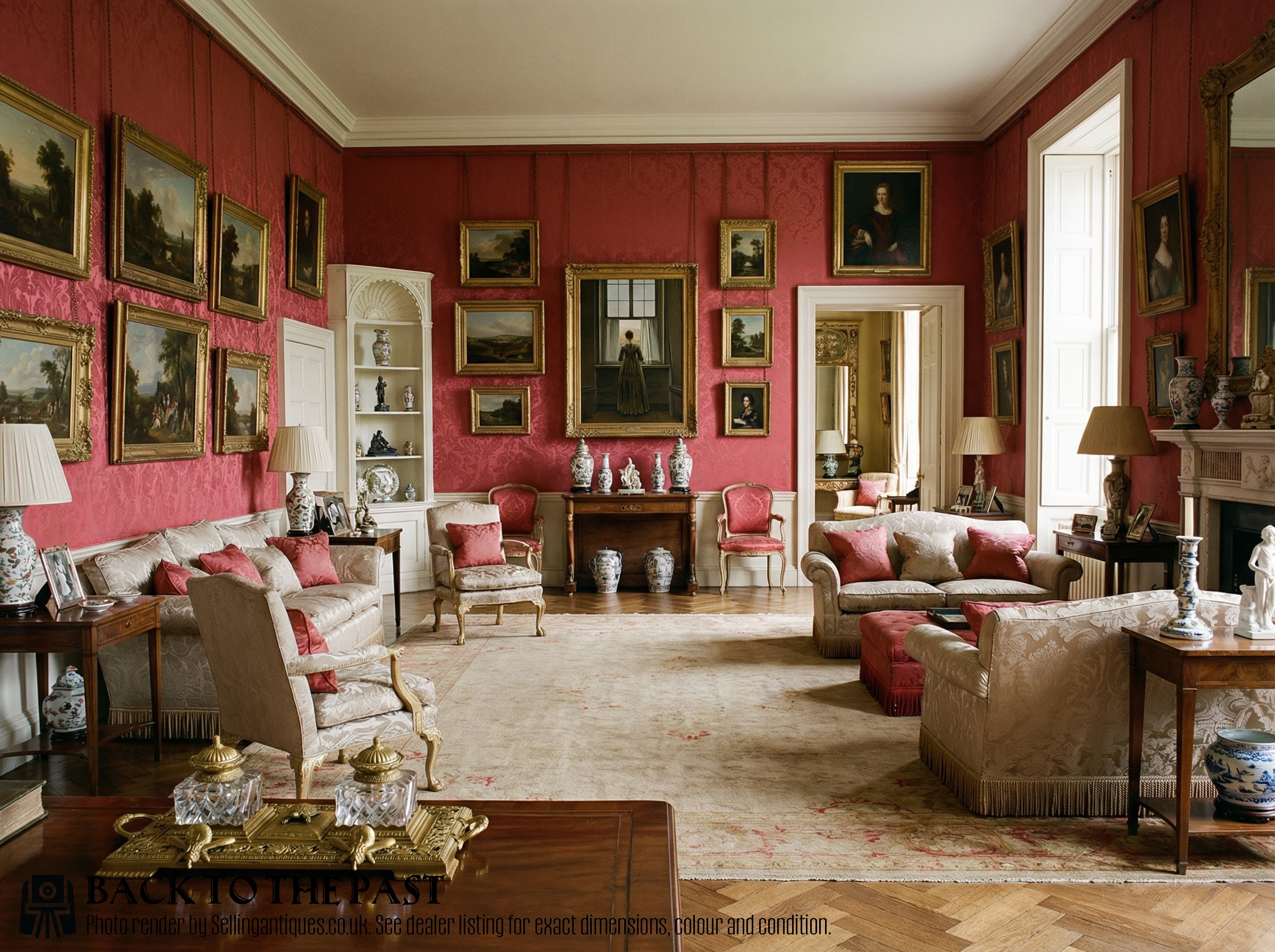
A search for a victorian brass desk stand reveals heavy, metal-mounted inkstands and desk tidies designed to hold writing implements and glass inkwells upon a library or study table. These accessories appear in forms spanning the mid to late nineteenth century, frequently incorporating brass framing alongside timber bases like walnut, oak, and coromandel.
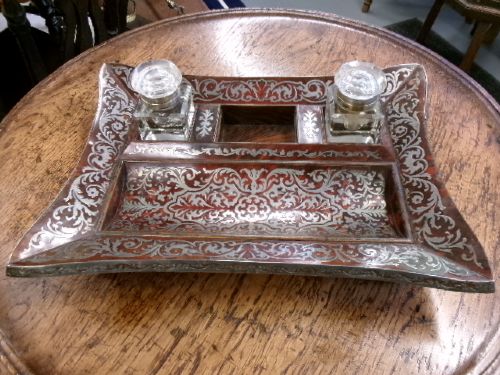
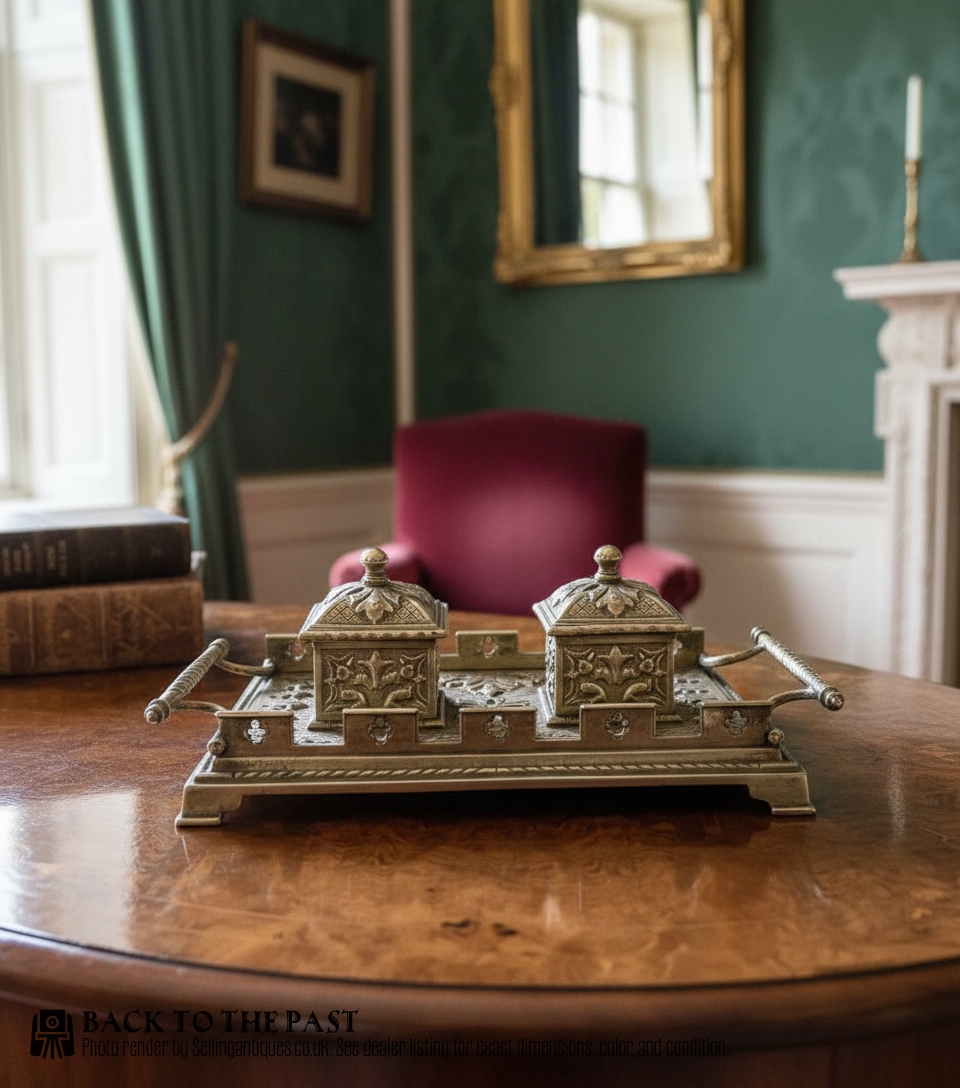
The objects listed on this page encompass various configurations, from simple twin inkwell trays with integrated pen rests to elaborate stands featuring chased brass, glass inserts, and mounted decorative motifs. Alongside standard brass models, variants emerge in styles such as Rococo Revival, French Napoleon III, and Victorian Gothic Revival, reflecting the diverse aesthetic preferences of the period.
Materials and Construction
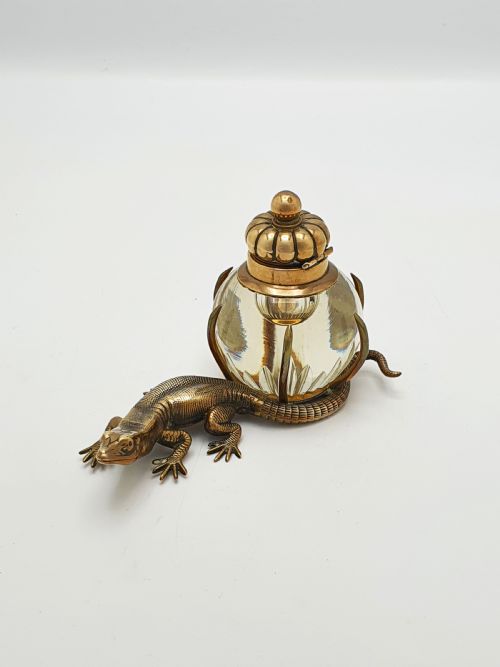
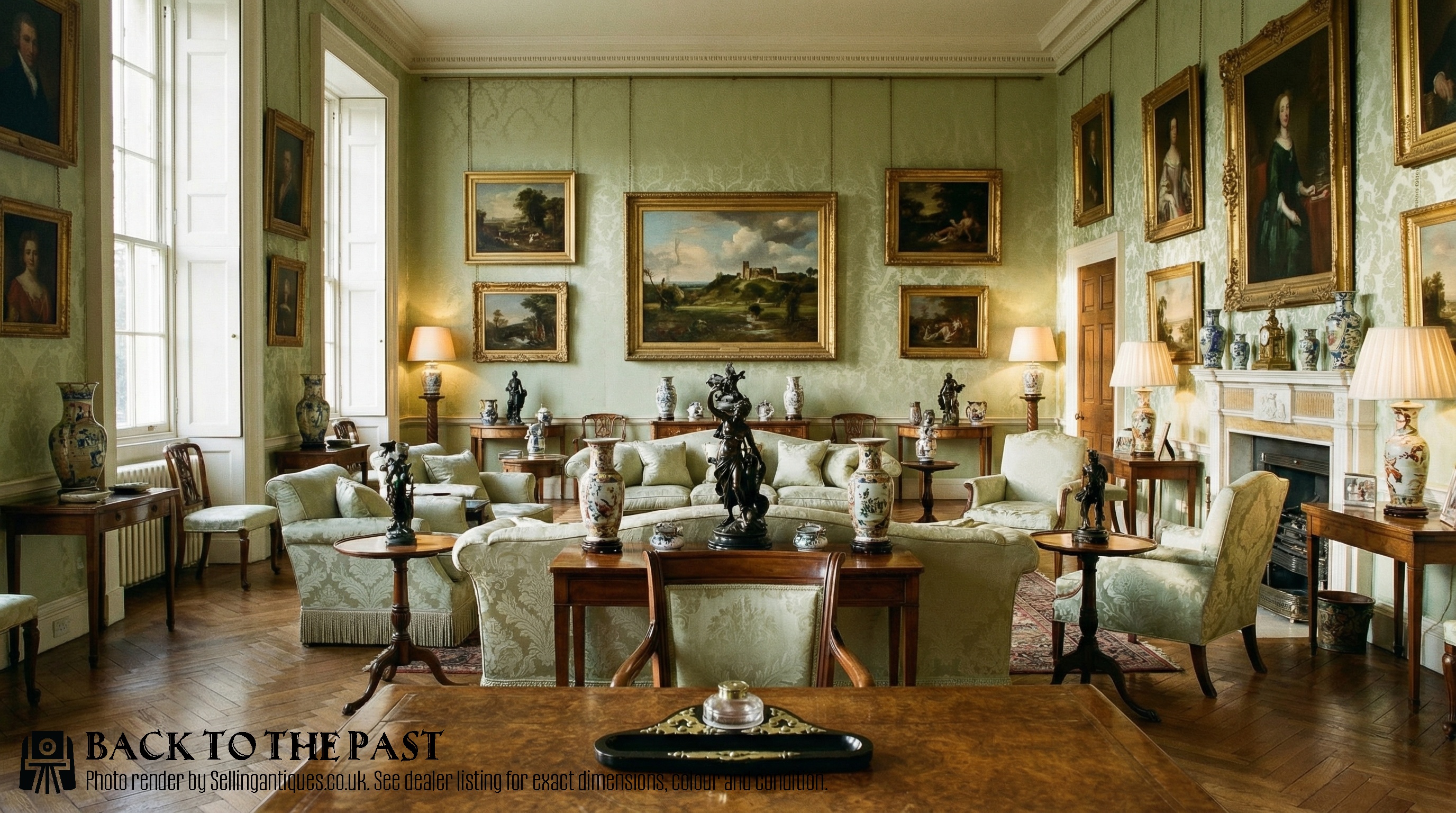
Makers utilised cast and chased brass for the structural frameworks, galleries, and inkwell lids, often combining the metal with dense secondary timbers like mahogany, walnut, and rosewood. Glass featured predominantly in the blown and cut inkwell inserts that sat within the brass collars.
Assembly methods relied upon threaded fasteners, rivets, and flush-fitting mounts to secure the metal elements to wooden or marble bases, while decorative details were achieved through surface chasing, engraving, and applied ornamentation.
Listings demonstrate that brass desk stands frequently incorporated burr walnut, oak, and coromandel bases alongside glass inkwells.
Assessing Quality and Execution
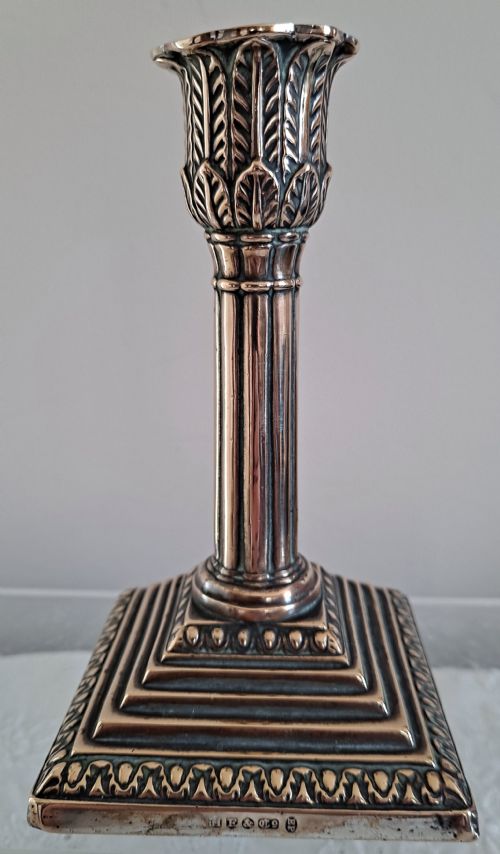
Quality rests upon the weight and crispness of the brass casting, where sharper detailing in chased ornament and heavier gauge metal distinguish finer examples from mass-produced wares. The integration of materials also dictates standard; pieces combining solid brass with richly figured timbers, porcelain accents, or complete, undamaged cut-glass inkwells demonstrate superior original manufacture.
Malby's·Ross of London·J Hicks of London·Thomas Rubergall of London·Lebegue & Cie
The Victorian Brass Desk Stand Glossary
- Inkstand
- A portable tray or stand fitted to hold one or more inkwells, sanders, and pen rests. These accessories sat upon writing tables to keep writing materials organised.
- Standish
- An alternative term for a standing tray or inkstand holding writing implements, popular from the seventeenth through the nineteenth centuries. It often included small compartments for wafers and sealing wax.
- Rococo Revival
- A nineteenth-century decorative style characterised by asymmetrical scrollwork, naturalistic floral motifs, and C-scrolls. This style heavily influenced the ornamentation found on mid-century brass desk accessories.
- Coromandel
- A dense, heavily figured timber imported from Asia, utilised for luxury nineteenth-century box and desk stand construction. Its dark brown grain with contrasting light stripes made it a favored substrate for brass mounts.
- Napoleon III style
- A French eclectic design movement of the mid-nineteenth century that revived elements of Louis XIV, XV, and XVI styles. Pieces often featured intricate brass inlay, boulle work, and gilt bronze mounts.
Victorian Brass Desk Stand: Frequently Asked Questions
What is a victorian brass desk stand?
A portable tray or stand made primarily of brass, or brass-mounted wood, designed to hold inkwells, pens, and other writing accessories on a desk.
These pieces served as the central organising hub for correspondence in nineteenth-century studies and libraries, combining functional ink storage with decorative display.
How were they used?
They were placed on writing desks to keep ink, sand, and pens readily available for writing letters and official documents.
The inclusion of pen rests and lidded glass inkwells prevented ink from drying out and kept dipping implements from staining the desk surface.
How do I tell periods apart?
Periods are identified by the prevailing decorative styles and secondary materials used alongside the brass work, such as burr walnut, rosewood, or ebonised wood.
Earlier nineteenth-century examples often display Regency or William IV restraint, while mid to late-century pieces frequently exhibit heavier Rococo Revival casting or elaborate strapwork.
Are the inkwells usually original?
Many surviving desk stands retain their original matching cut-glass or moulded glass inkwells, though replacements are sometimes found due to breakage.
Matching collars, lids, and glass inserts that fit flush into the brass housings generally indicate original components.
How do I clean the brass?
Routine maintenance involves gentle dusting with a soft, dry cloth to prevent the accumulation of grime within the chased recesses.
Avoiding harsh chemical polishes preserves the aged patina that developed over decades of handling.