
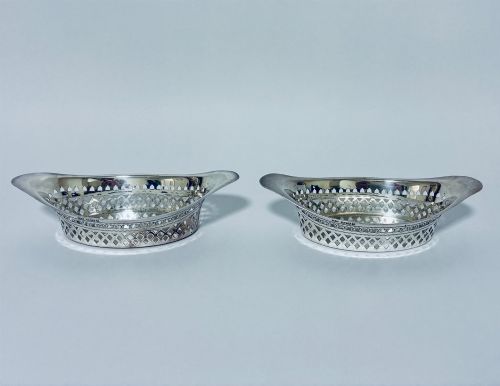
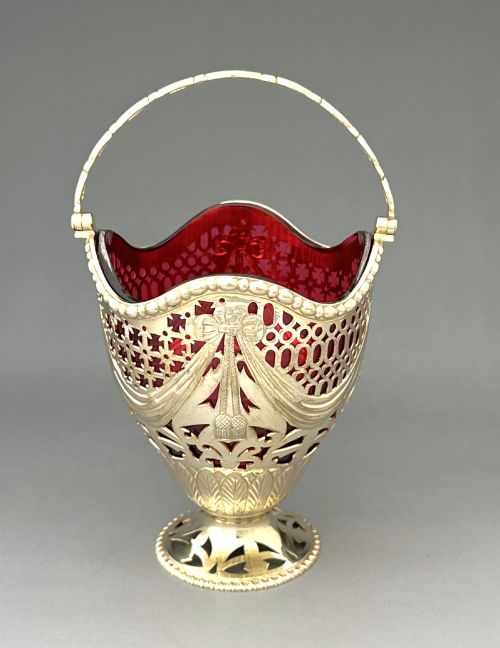
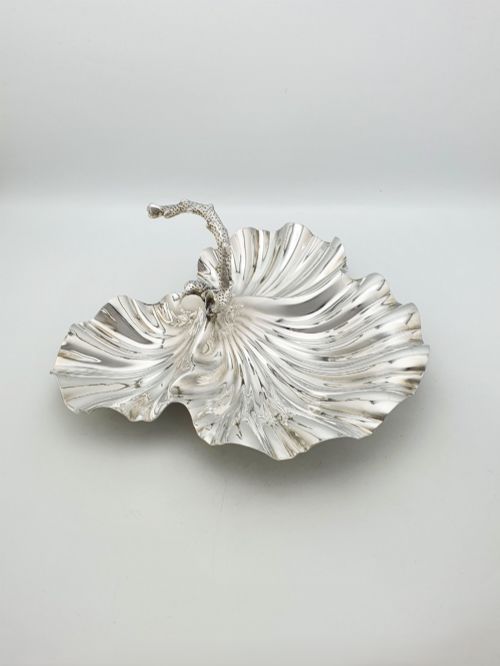
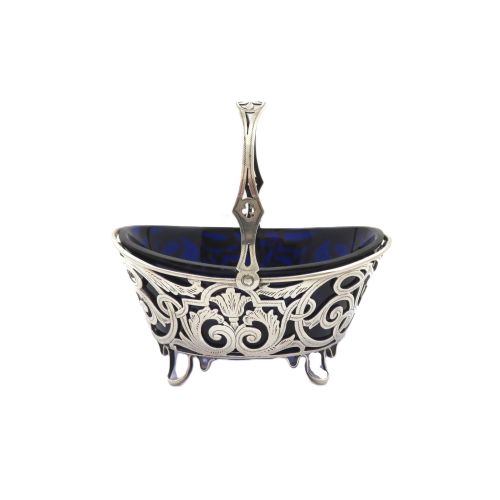



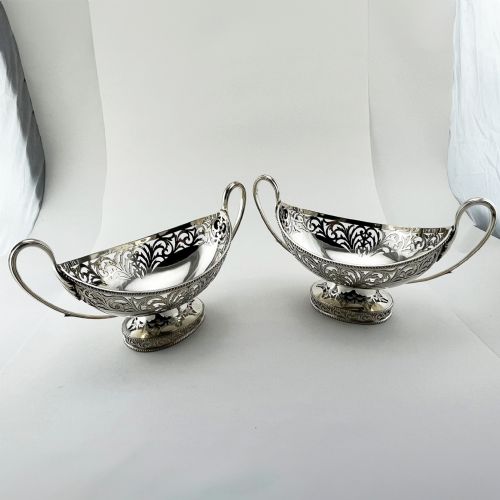


Victorian Bonbon Dish
These delicate victorian bonbon dish examples bring nineteenth-century tables to life with pierced silverwork and coloured glass.
Victorian Bonbon Dish
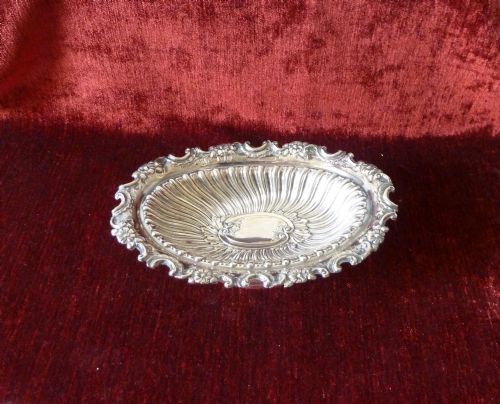
A victorian bonbon dish serves sweet treats, nuts or small confections, typically taking the form of a small footed bowl, basket or heart-shaped tray. The items on this page span the mid-nineteenth century through to the early decades of the twentieth century, reflecting varied dining habits.
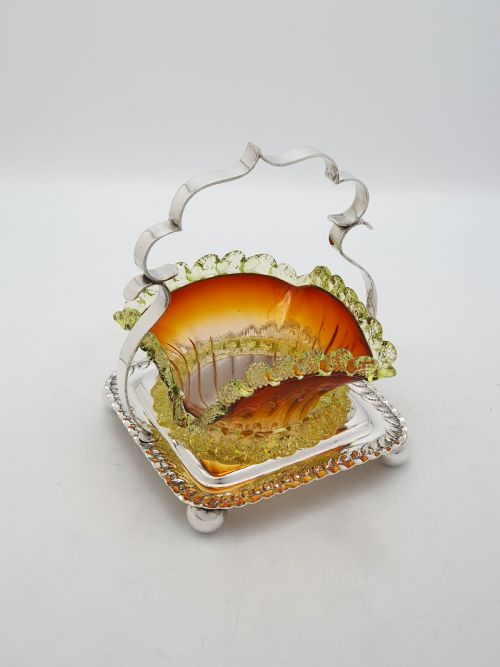
Most examples found here appear in either solid sterling silver or silver plate, frequently fitted with colourful glass liners in cranberry, vaseline or amber shades. Pierced metalwork, embossed floral detailing and swing handles dominate the forms recorded in both current and past inventories.
How They Were Made
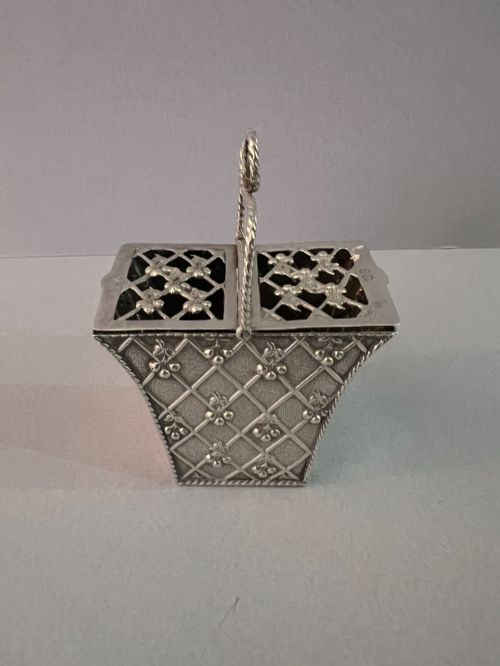
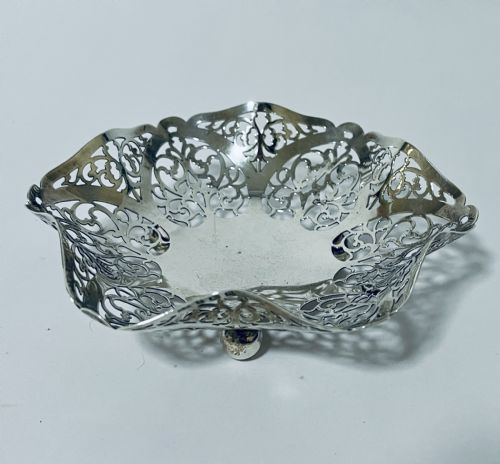
Silversmiths shaped sterling silver and silver plate through piercing, embossing and chasing, creating intricate wickerwork and floral motifs by hand or with specialised tooling. Cast handles and mounts added structural weight to otherwise fragile openwork baskets and sweetmeat dishes.
Makers combined metal frames with blown or moulded glass inserts, notably cranberry glass and vaseline glass, which provided striking colour contrasts. Gilt finishes were applied to silver surfaces to enrich the interior glow of preservation and preserve dishes.
The inventory records forms ranging from simple sweet bowls and heart dishes to intricate wickerwork baskets.
What Varies In Quality
Quality rests upon the crispness of the piercing and the depth of the chased or embossed ornament, where sharper detail indicates superior craftsmanship. Substantial gauge silver and well-balanced swing handles distinguish high-tier production from simpler plated wares.
The integrity and colour intensity of the glass liner also determine overall merit, particularly when paired with maker-marked silver frames by notable silversmiths. Matched pairs and complete sets command distinct regard compared to lone vessels.
William Comyns·Thomas Bradbury·James Deakin And Sons·Martin Hall·Roberts And Belk·Edward H Stockwell·W M F·Garrard London·George Fox·Minshull And Latimer·Charles Stuart Harris
The Victorian Bonbon Dish Glossary
- Bonbon dish
- A small open vessel designed specifically to hold sweets, sugar plums or confectionery during social gatherings. These pieces often feature decorative openwork and low pedestals.
- Cranberry glass
- A rich red glass coloured with gold chloride, popular for Victorian tableware inserts and liners. It creates a warm translucent glow when combined with silver mountings.
- Vaseline glass
- A transparent yellowish-green glass containing uranium dioxide that produces a distinctive greenish fluorescence under ultraviolet light. It frequently appears in late-nineteenth-century sweet bowls.
- Pierced work
- Metal ornament formed by cutting or piercing patterns through sheet silver to create open lattice designs. This technique lightens the visual weight of decorative baskets.
- Silver gilt
- Sterling silver that has been coated with a thin layer of gold, providing a rich yellow surface sheen. This finish protects the underlying silver and enhances coloured glass inserts.
- Sweetmeat basket
- A small handled receptacle intended for preserved fruits, sweetmeats or nuts. They share forms closely related to standard bonbon dishes.
Victorian Bonbon Dish: Frequently Asked Questions
What were bonbon dishes used for?
These dishes held small sweetmeats, sugared almonds and after-dinner confections on the formal dining table. They circulated among guests during dessert courses.
Over time their domestic role shifted toward decorative display on side tables, mantels and cabinets as dining customs evolved.
How do I identify a Victorian piece?
British silver pieces carry hallmarks that include assay office marks, date letters and maker's marks which pinpoint the exact year of manufacture. Stylistic clues such as floral chasing and naturalistic forms also point to the period.
Comparing structural details against documented designs helps separate nineteenth-century examples from later Edwardian or twentieth-century revivals.
Are glass liners original?
Original glass liners fit snugly into the metal frame and match the manufacturing tolerances of the period. Subtle variations in thickness and bubble formation indicate vintage glass production.
Matching the hue of the glass, such as cranberry or vaseline, to documented contemporary examples confirms its authenticity.
How should I clean silver baskets?
Silver baskets require gentle cleaning with a specialist silver cloth to preserve the patina and fine engraved details. Abrasive polishes strip away thin plating and wear down crisp chasing.
Glass liners remove easily for washing in warm soapy water without risking moisture damage to vintage metal mountings.