


Victorian Blush Ivory Ceramic
Victorian blush ivory ceramic pieces combine soft cream glazes with delicate floral painting and gilding, offering a refined touch of late nineteenth-century elegance.
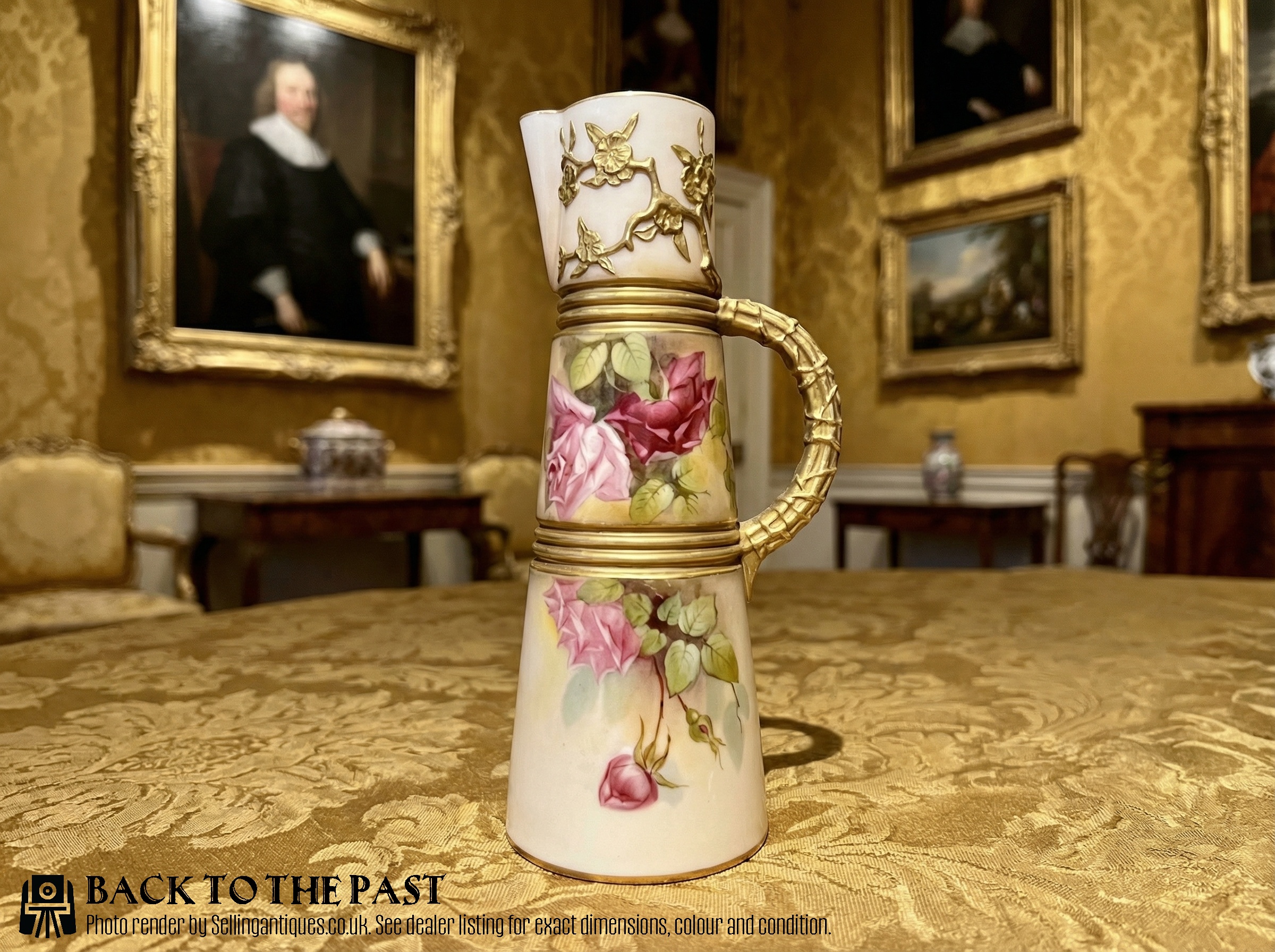
Victorian Blush Ivory Ceramic
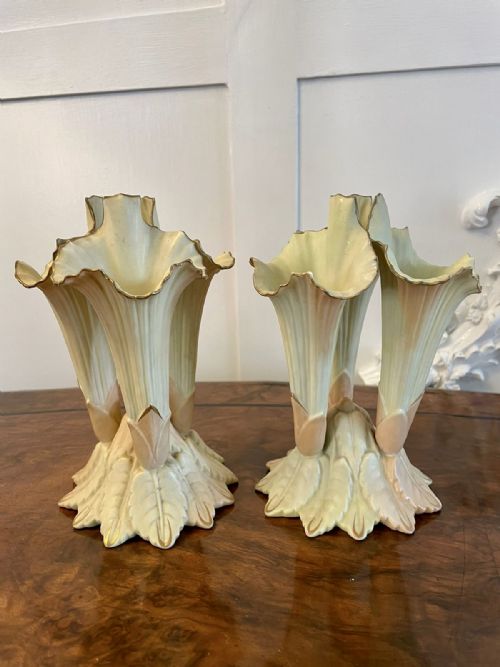
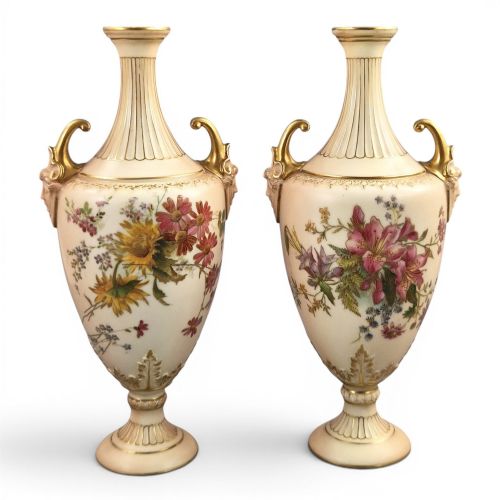
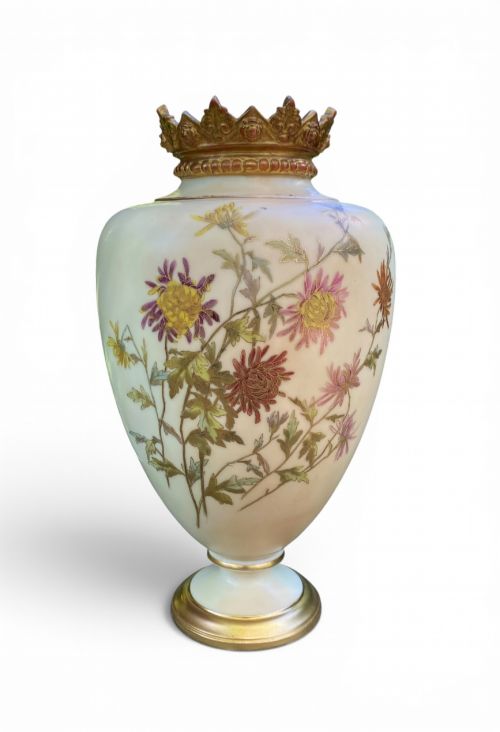
When you search for Victorian blush ivory ceramic, you encounter decorative objects defined by a distinctive shaded cream ground that mimics the warmth of ivory. These pieces predominantly date from the late nineteenth century and the Edwardian era, reflecting the tastes of Victorian Orientalism and the Aesthetic Movement.
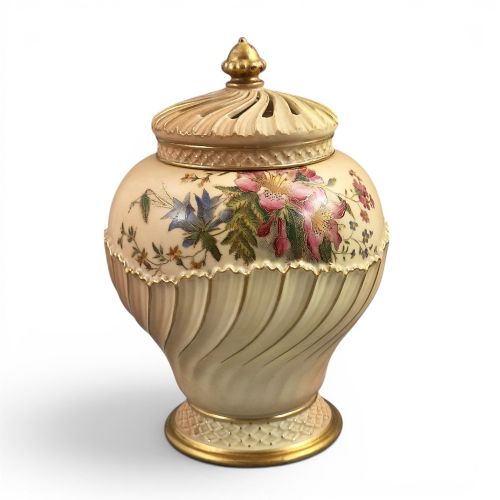
The selection on this page centres heavily on domestic ornamental forms produced by major English potteries. Vases, jugs, ewers, and pot-pourri jars appear alongside figurative works and candlesticks, showing the broad range of decorative household items created in this distinctive palette.
Most examples originate from the Victorian and Edwardian periods, stretching from the 1880s into the early twentieth century. The forms range from simple spill vases and shell dishes to elaborate figural groups and pierced ewers decorated with gold leaf and enamel.
Materials and manufacture
The characteristic surface is achieved through specialised ceramic glaze techniques applied to porcelain bodies, creating a matte or satin-like cream background. Potters then hand-painted floral sprays and ornamental details directly onto the unfired or partly fired glaze so the colours softened into the cream base.
Gilding plays a vital role in the decoration, with gold leaf and gold gilt applied to handles, rims, and borders to accent the pale body. Skilled hands added enamel highlights and pierced openwork handles, combining fine porcelain fabrication with meticulous surface decoration.
Among the figures are musicians, water carriers, and an earnest candle extinguisher modelled after a character named Mrs Caudle.
Assessing quality and craftsmanship
The distinction between standard production and top-tier pieces rests on the complexity of the modelling and the finesse of the hand-painting. Elaborate figural groups, intricate piercing, and detailed hand-painted florals demonstrate superior skill compared to simpler stamped or lightly decorated items.
The crispness of the gilt work and the subtlety of the shaded glaze gradient also separate ordinary examples from exceptional ones. Well-preserved enamel work and undamaged gilded edges indicate careful preservation alongside superior original execution.
Locke and Co·Royal Worcester·Carlton Ware·James Hadley·Doulton Burslem
The Victorian Blush Ivory Ceramic Glossary
- Blush ivory
- A soft cream ceramic glaze developed in the late nineteenth century to imitate the warm tone of elephant ivory. It provides a subtle background for hand-painted floral motifs.
- Ewer
- A large jug with a wide spout and a decorative handle, often produced as an ornamental display piece rather than for practical use. Many Victorian examples feature elaborate gilded handles and floral bodies.
- Spill vase
- A tall, narrow receptacle designed to hold thin wooden spills used for lighting candles or fires. These form a common category among nineteenth-century porcelain table wares.
- Pot-pourri jar
- A covered vessel pierced to allow the scent of dried flower petals and spices to escape into a room. They frequently incorporate decorative handles and matching lids.
- Gilding
- The application of gold leaf or gold paint to ceramic surfaces. It highlights rims, handles, and sculptural details on Victorian decorative wares.
Victorian Blush Ivory Ceramic: Frequently Asked Questions
What is blush ivory ceramic?
Blush ivory ceramic refers to porcelain wares featuring a shaded, warm cream background developed by late nineteenth-century English potteries.
This distinct ground colour serves as a canvas for hand-painted floral sprays, enamel details, and delicate gilding.
How do I date these pieces?
Dating relies on maker marks, registration numbers, and date ciphers stamped or painted on the underside of the porcelain. Stylistic cues such as Aesthetic Movement forms or Edwardian shapes also help narrow the period of manufacture.
Many factories utilised specific dot or letter codes beneath their standard printed marks to indicate the exact year of production during the late nineteenth and early twentieth centuries.
Were these items used daily?
Most of these decorative pieces served as ornamental furnishings for Victorian and Edwardian drawing rooms rather than utilitarian items. Ewers, jardinières, and figural groups were primarily intended for display on mantelpieces, sideboards, and occasional tables.
Certain forms like teapots and jugs had practical functions, but the delicate blush ivory glaze and gold leaf meant owners handled them with care.
How should I clean blush ivory ceramics?
Gentle dusting with a soft, dry cloth is the safest way to maintain the surface of these antique porcelain pieces. Avoid harsh chemical cleaners, soaking, or abrasive materials that can damage the delicate enamel painting and gold gilt.
If washing is necessary, use lukewarm water and mild soap, drying the piece immediately with a soft towel.