
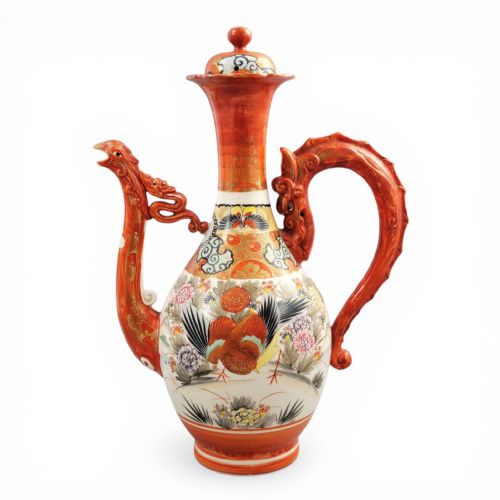


Late Victorian Porcelain Ewer
These late victorian porcelain ewer pieces bring dramatic form and intricate decoration to a room, offering a striking centrepiece for any table or mantel.
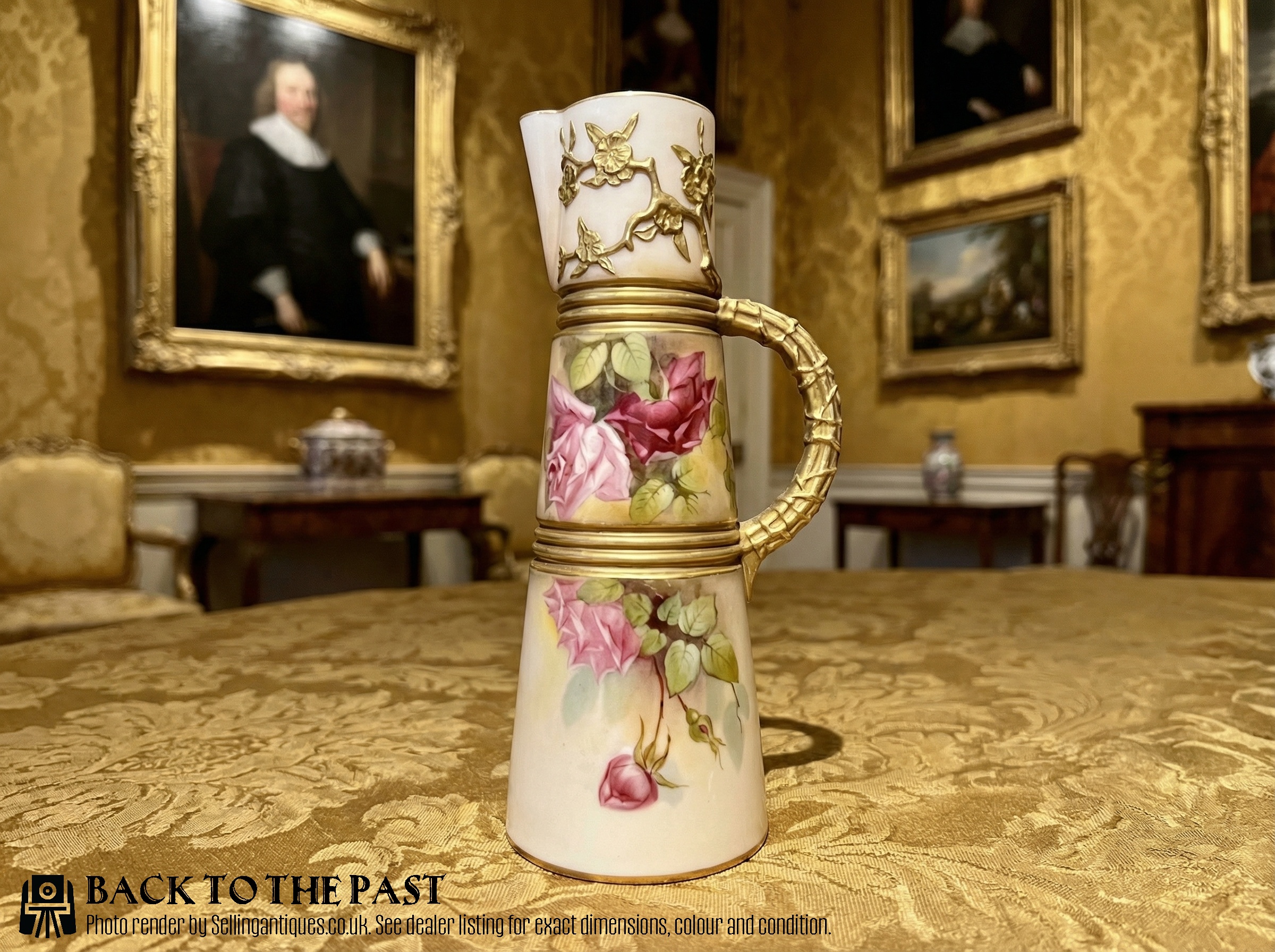
Late Victorian Porcelain Ewer
When you search for late victorian porcelain ewer, you find decorative vessels shaped for water or wine that survived from the nineteenth century. These objects include pedestal ewers, washstand sets, and matching pairs designed for display.
The pieces on this page span the Victorian period into the early twentieth century, showing influences from Japanese Meiji design and Neoclassical revival styles. Makers such as Royal Worcester, Grainger Worcester, Doulton Burslem, Royal Crown Derby, and Vienna created these works in earthenware and porcelain.
You will encounter forms ranging from reticulated work and blush ivory finishes to Persian influenced pottery and dragon designs with phoenix spouts. Most examples date from the final decades of the nineteenth century and the transition into the nineteen hundreds.
How they were made
Potters shaped these vessels from porcelain and earthenware, often applying glazes and overglaze enamel to build up the surface decoration. Many items received detailed hand-painting in colours alongside gold leaf and gilding.
Specialised techniques included reticulated piercing in the ceramic body and the characteristic blush ivory finish developed by major factories. Firing methods allowed for intricate painted details and metallic highlights that stayed fixed to the surface.
Listings feature porcelain and earthenware ewers spanning the Victorian era, the Aesthetic Movement, and the Japanese Meiji period.
What varies in quality
The preservation of surface gilding and enamel work determines the visual strength of the piece. Matching pairs and complete sets command distinct interest from single vessels.
Grainger Worcester·Royal Worcester·Doulton Burslem·Royal Crown Derby·Vienna
The Late Victorian Porcelain Ewer Glossary
- Ewer
- A large jug with a wide spout and handle, traditionally used for holding water or wine. In this collection, these objects serve decorative purposes.
- Blush ivory
- A specific ceramic finish pioneered by factories like Royal Worcester, showing a soft, matte cream ground often painted with floral details. It mimics the tone of natural ivory.
- Reticulated
- Describes ceramics featuring an openwork lattice pattern created by cutting through the clay before firing. This technique requires high skill to prevent warping in the kiln.
- Overglaze enamel
- Coloured glass decoration applied on top of the already fired and glazed ceramic body, then fixed with a lower temperature second firing. This allows for bright, varied hues.
- Gilding
- The application of gold leaf or gold paint to the surface of the porcelain or earthenware. It highlights handles, rims, and moulded motifs.
Late Victorian Porcelain Ewer: Frequently Asked Questions
What were late victorian porcelain ewers used for?
Originally designed to hold water for washing or wine for serving, these vessels transitioned into decorative display items during the late nineteenth century. Many formed part of larger washstand sets or decorative garnitures for the home.
Over time, their functional purpose faded while their sculptural value remained. People placed them on sideboards, mantelpieces, and pedestals to showcase fine ceramic artistry.
How do I display a porcelain ewer at home?
Place an ewer where light catches the gilding and painted details, such as on a wooden console table or inside a glass cabinet. Because many examples come as pairs, they work well framing a mirror or fireplace.
Keep them away from direct sunlight to protect enamel colours and gold leaf over long periods. A stable surface prevents accidental knocks to handles and narrow spouts.
How can I tell the period of a ewer?
Look to the factory marks stamped or painted on the base, which often indicate specific decades or years of production. Stylistic clues like blush ivory finishes and Japanese-inspired motifs point directly to the late nineteenth century.
The materials and manufacturing techniques also align with the Victorian era and the transition into the twentieth century. Comparing known factory date codes provides the clearest timeline.