
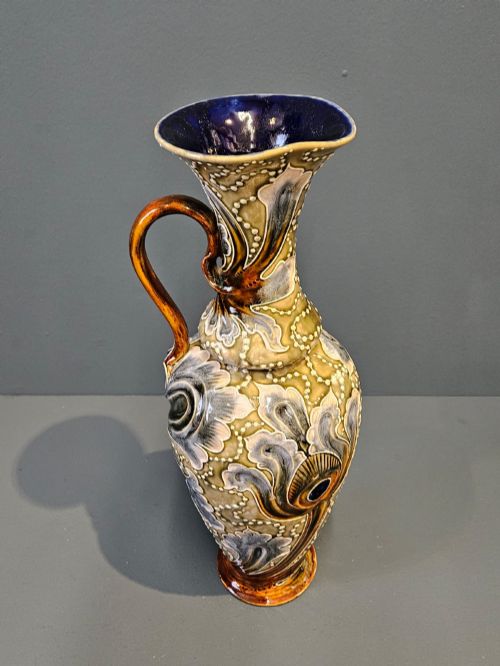


Victorian Decorative Ewer
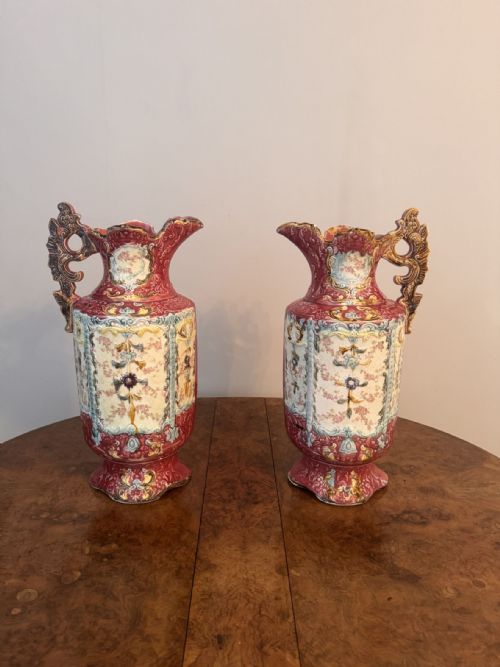
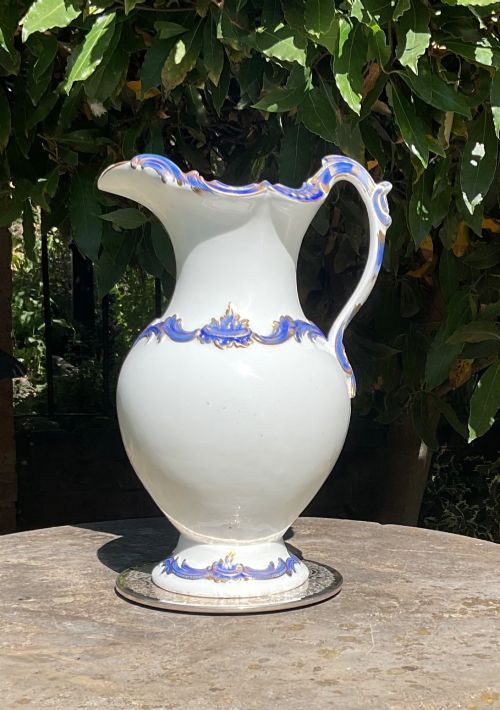
These Victorian decorative ewer examples are ornamental pouring vessels shaped for display rather than service, bringing nineteenth-century craftsmanship directly into a modern room.
Victorian Decorative Ewer
A victorian decorative ewer serves primarily as an ornamental object rather than a functional vessel, originating from diverse European factories and domestic potteries during the nineteenth century. Buyers encounter pairs and single pieces cast in ceramic, porcelain, and metal, reflecting periods spanning from the mid-Victorian decades into the early twentieth century.
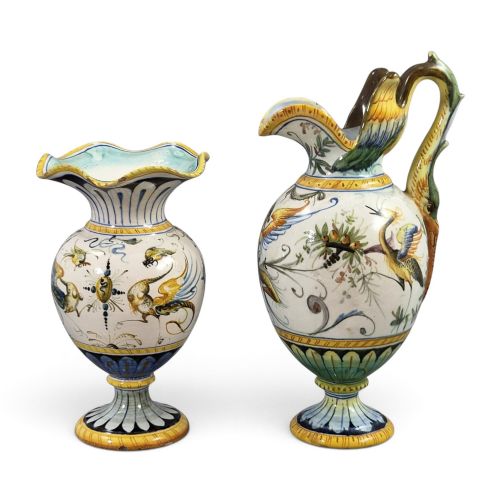
Makers utilised varied stylistic influences including Renaissance Revival, Aesthetic Movement, and Rococo Revival to shape these display pieces. Standard forms range from tall ceramic jugs to bronze display urns and converted lamp bases, often appearing alongside matching bowls or companion pairs.
Materials and Technique
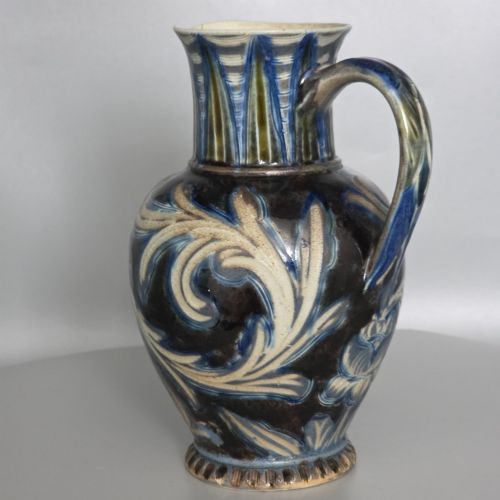
Potters and ceramists shaped these vessels using earthenware, stoneware, and fine porcelain, applying detailed glazes and hand-painted motifs. Many examples feature raised gold decor, enamel flower incrustations, and incised pottery techniques executed by specialised factory studios.
Metalworkers cast bronze, brass, and copper into ornate handles and pouring spouts, frequently applying gilding or gold leaf to enhance the surface detail. Artisans combined these metallic elements with glass and ceramic bodies to produce complex decorative profiles.
More than a few nineteenth-century households kept flower-encrusted scent bottles shaped precisely like miniature ewers just to freshen the parlour.
Judging Quality
Quality rests on the crispness of the cast or the fineness of the ceramic body, alongside the execution of hand-painted details and gilding. Superior pieces display precise factory marks, balanced proportions, and intricate surface decoration without smoothing or blurring of the modelled relief.
The distinction between standard production items and premier works depends on artist signatures, such as painted or impressed studio ciphers, and the complexity of applied ornamentation like reticulated porcelain or gilt bronze mounts.
Royal Worcester·Doulton Lambeth·Cantagalli Florence·Royal Crown Derby·Sherwin and Cotton
The Victorian Decorative Ewer Glossary
- Ewer
- A large pouring vessel featuring a wide spout and a curved handle, traditionally used for water but adapted in the Victorian era purely for decorative display.
- Gilding
- The application of gold leaf or gold powder to the surface of porcelain, ceramic, or bronze to create metallic highlights and decorative borders.
- Reticulated
- A ceramic technique involving pierced or openwork lattice patterns cut into the clay body before firing to create a delicate, lace-like effect.
- Majolica
- A type of earthenware coated with an opaque tin glaze and painted with bright metallic oxide colours, popular during the nineteenth-century Revival periods.
- Puce Mark
- A factory stamp or cipher printed in purple-brown pigment under the glaze, commonly used by Royal Worcester during the late nineteenth century for dating purposes.
Victorian Decorative Ewer: Frequently Asked Questions
How were Victorian decorative ewers used?
These vessels functioned primarily as interior ornamentation on mantelpieces, sideboards, and pedestals rather than for serving liquids. Wealthy households displayed them in pairs or matched sets alongside basins to demonstrate refined taste.
Over time, some bronze and glass examples found new utility when converted into table lamps while retaining their sculptural silhouettes.
What materials are common in these ewers?
Potters shaped the ceramic versions using fine porcelain, earthenware, and stoneware, finished with glazes, enamel, and raised gold decoration. Metalworkers fabricated alternative examples from bronze, brass, and copper, frequently applying gilt finishes.
Glass and silver plate also appear among the recorded material variations, particularly in serving and liqueur formats.
How do I identify the manufacturing period?
Makers often applied impressed factory stamps, incised ciphers, or coloured underglaze marks such as puce stamps directly to the ceramic base. Stylistic cues like Renaissance Revival motifs or Aesthetic Movement forms also help narrow the production decade.
Matching the decorative technique, whether hand-painted floral panels or incised art pottery, aligns the piece with known active years of the factories.
How should I display them at home?
Place pairs symmetrically on heavy furniture or deep window sills where natural light can catch the gilt bronze or glazed porcelain surfaces. Ensure they sit on stable, flat planes away from household traffic due to their decorative handles and spouts.
Keep them clear of direct, intense sunlight to protect hand-painted enamel details and gold leaf applications over time.