


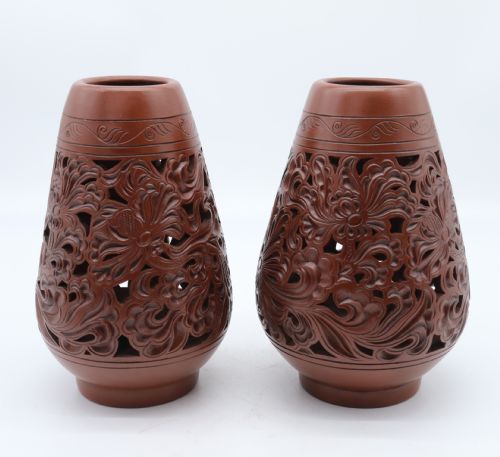


Antique Pierced Ceramic Vase
An antique pierced ceramic vase brings intricate openwork craftsmanship and delicate porcelain forms into a room, offering both historical charm and sculptural presence.
Antique Pierced Ceramic Vase
The version most commonly met on this page is the Royal Worcester porcelain vase, frequently featuring intricate pierced work, painted flora or fauna, and gilt handles. Alongside these English works appear Chinese Yixing pottery, continental pieces from Sitzendorf, and Spanish Hispano-Moresque glazed ceramics.
Forms extend beyond standard vessels to include spill vases, decorative urns, and chamberlain Worcester pommanders. Each piece demonstrates the enduring appeal of openwork ceramic design across multiple manufacturing traditions.
How they were made
Makers shaped these vessels using porcelain, ironstone, terracotta, and ceramic bodies before applying detailed surface decoration. Enamel colours, gold leaf, gilding, and gilt accents highlight the openwork patterns and painted motifs.
Reticulation and piercing required careful knife work or cutting while the clay was leather-hard, demanding immense precision to prevent collapse during firing. Artisans then added hand-painted details, such as chrysanthemums, fruit, and cattle, before final glazing and gilding.
Listings feature works spanning the 18th century, Georgian period, Victorian era, and early 20th century, utilising porcelain, ironstone, and terracotta.
What varies in quality
Quality in these pierced vessels rests primarily on the crispness of the openwork cutting and the skill of the hand-painted decoration. Finer pieces demonstrate exceptionally delicate reticulation combined with detailed naturalistic painting by notable factory artists.
The richness of the gilding and the preservation of gold leaf or gilt details further distinguish standard production items from exceptional works. Structural complexity, such as fitted crown covers and pierced handles, also elevates a piece within its period.
Royal Worcester·Mason's Ironstone·Samuel Alcock·Sitzendorf·Chamberlain Worcester
The Antique Pierced Ceramic Vase Glossary
- Reticulation
- A net-like pattern of openwork cut into the ceramic body before firing. This technique creates delicate lattice designs that allow light through the walls of the vessel.
- Pot pourri
- A vessel designed to hold dried scented plant material, typically featuring a pierced or reticulated cover to release fragrance. These jars often include inner lids and decorative finials.
- Ewer
- A large jug with a wide spout and a handle, historically used for pouring water or serving decorative purposes. In ceramic form, they often display ornate handles and painted surfaces.
- Ironstone
- A heavy, durable type of earthenware patented in the 19th century to imitate porcelain. It provides a sturdy body for richly decorated vessels and jars.
- Blush ivory
- A specific shaded cream and ivory ceramic ground developed by Royal Worcester. It gives a soft background for hand-painted floral and gilt decoration.
Antique Pierced Ceramic Vase: Frequently Asked Questions
What is a pot pourri vase?
A pot pourri vase is a lidded container engineered to diffuse fragrance from dried botanicals within a room. The pierced covers and bodies allow scent to escape while concealing the mixture inside.
These vessels served both functional and ornamental roles in period interiors, often occupying prominent positions on mantelpieces or console tables.
How do I care for antique porcelain?
Antique porcelain requires gentle handling and cleaning with a soft, dry cloth to protect fragile gilt surfaces and painted details. Avoid immersing pieces in water, particularly those with delicate gold leaf or enamel.
Keep vessels away from direct sunlight and areas subject to sudden temperature changes to preserve the glaze and ceramic body over time.
What does reticulated mean?
Reticulation refers to an openwork lattice pattern carved into the damp clay before the firing process. This technique demands high skill to pierce intricate geometric or floral designs without distorting the vessel wall.
Master ceramists used this method to create lightweight, lace-like visual effects in porcelain and pottery.
How do I identify a Victorian vase?
Victorian vases often feature eclectic revival styles, heavy gilding, and vibrant hand-painted motifs like flowers or animals. Examining the paste, glaze characteristics, and any factory marks helps narrow down the production era.
Many pieces from this period reflect the influence of Rococo revival or naturalistic ornamentation popular during the 19th century.