


Blush Ivory Floral Pitcher
A blush ivory floral pitcher brings soft cream tones and delicate blossoms into a room, offering both decorative presence and classic ceramic artistry.
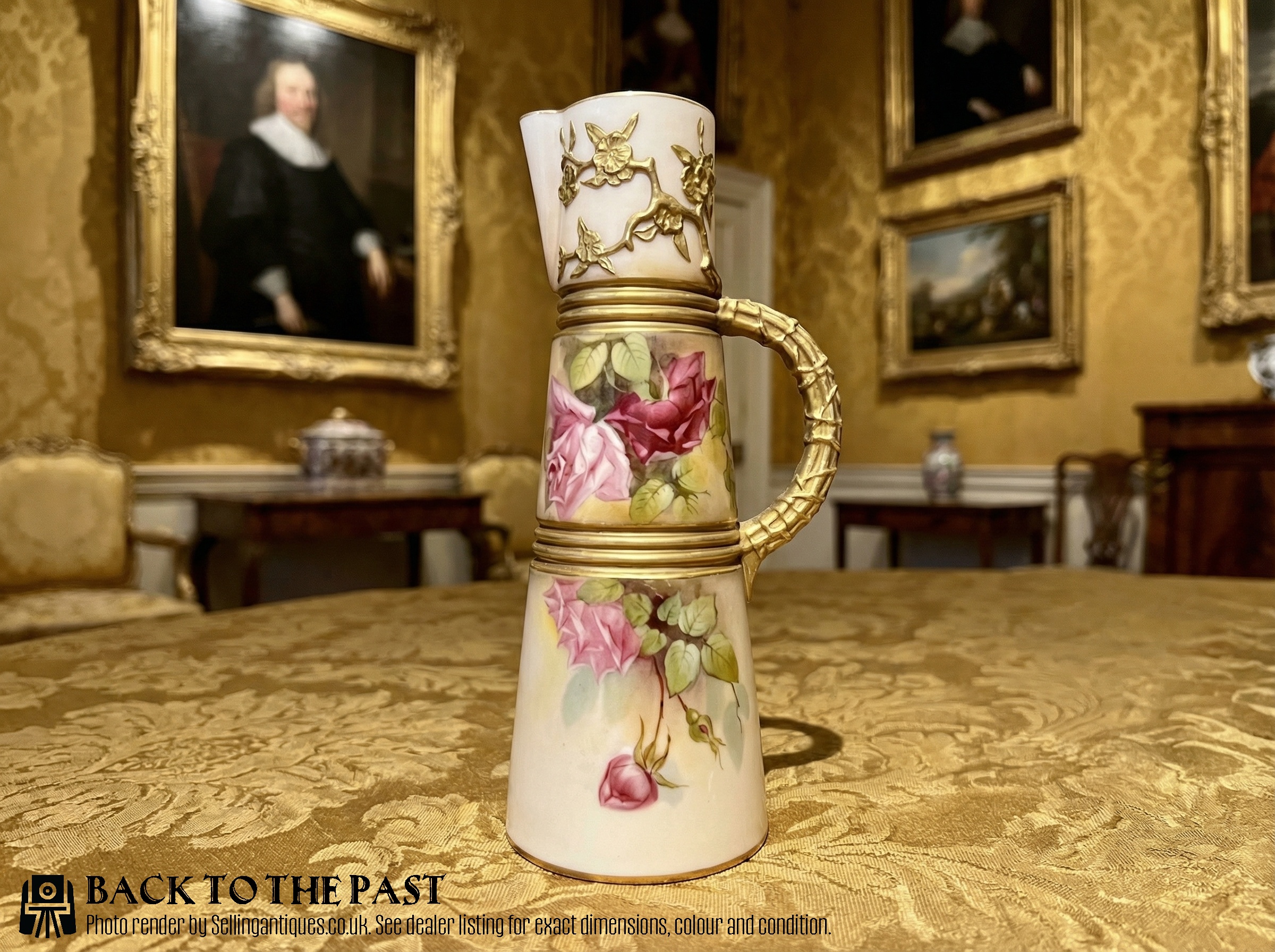
Blush Ivory Floral Pitcher
When you search for a blush ivory floral pitcher, you examine a selection of ceramic vessels primarily produced around the turn of the twentieth century. These pieces span the Victorian era, 1890, 1900, 1910, and 1920, capturing a distinct aesthetic movement in British ceramics.
The objects on this page range from ewers and wine ewers to jugs, pedestal vases, and portions of jug and basin sets. Most examples originate from prominent potteries such as Royal Worcester and Doulton Burslem.
You are most likely to encounter Royal Worcester pieces featuring the signature soft-toned glaze alongside hand-painted floral motifs and gilding. These items serve as traditional decorative ceramics or pouring vessels rather than everyday utility items.
Materials and construction methods
Potters shaped these pitchers using earthenware and porcelain, applying a distinctive pale blush ivory glaze as the ground for subsequent decoration. This matte or semi-matte surface provided a soft backdrop for botanical painting.
Artisans applied enamel colours by hand to render floral subjects, often highlighting handles, rims, and spout details with gold leaf, gilt, or gold gilding. The firing process set these pigments permanently against the pale ceramic body.
Object forms on this page include ewers, pedestal vases, coffee pots, and complete jug and basin sets.
What separates standard pieces from the finest examples
Quality in these ceramics rests upon the crispness of the moulded form and the artistry of the painted decoration. Elaborate shapes like cleft jugs and pedestal ewers demand superior skill during both shaping and glazing.
The preservation of the delicate enamel colours and the brightness of the gold leaf or gilding determine the visual impact of the piece. Finer examples display meticulous hand-painted detail that remains vivid and intact across the ceramic surface.
Royal Worcester·Doulton Burslem
The Blush Ivory Floral Pitcher Glossary
- Blush ivory
- A pale, creamy ceramic glaze developed in the late nineteenth century to mimic the soft tone of natural ivory. It provides a neutral ground for floral decoration.
- Ewer
- A large jug with a wide spout and a curved handle, traditionally used for holding water or wine. In decorative ceramics, it serves primarily as an ornamental object.
- Gilding
- The application of gold leaf or powdered gold onto the surface of ceramic wares. It highlights handles, rims, and structural details.
- Cleft jug
- A pitcher featuring an indented or pinched body contour created during shaping. This form adds sculptural depth to the ceramic silhouette.
Blush Ivory Floral Pitcher: Frequently Asked Questions
What periods do these pitchers come from?
These ceramic pieces date primarily from the late Victorian era through the early twentieth century, spanning the years between 1890 and 1920.
This timeframe encompasses the height of the aesthetic movement in British pottery design.
How were these pitchers originally used?
Many of these vessels functioned as decorative ewers, wine ewers, or components of large jug and basin sets used in period homes.
While some could hold liquids, their delicate enamel painting and gold gilding meant they often served an ornamental purpose on display.
What materials make up a blush ivory pitcher?
The body of the vessel consists of porcelain or earthenware, coated with a matte blush ivory glaze that creates a soft background colour.
Artists then added enamel paints for floral scenes and finished the details with gold leaf or gilding.
How do I care for antique ceramic ewers?
Keep these decorative items out of direct sunlight and clean them gently with a dry, soft cloth to protect the painted enamel and gold trim.
Avoid immersing them in water or using modern cleaning agents, which can damage the historic glaze.