


Royal Worcester Floral Jug
A royal worcester floral jug brings hand-painted petals and gilded handlework straight to a cabinet, offering the unmistakable elegance of late Victorian ceramic artistry.
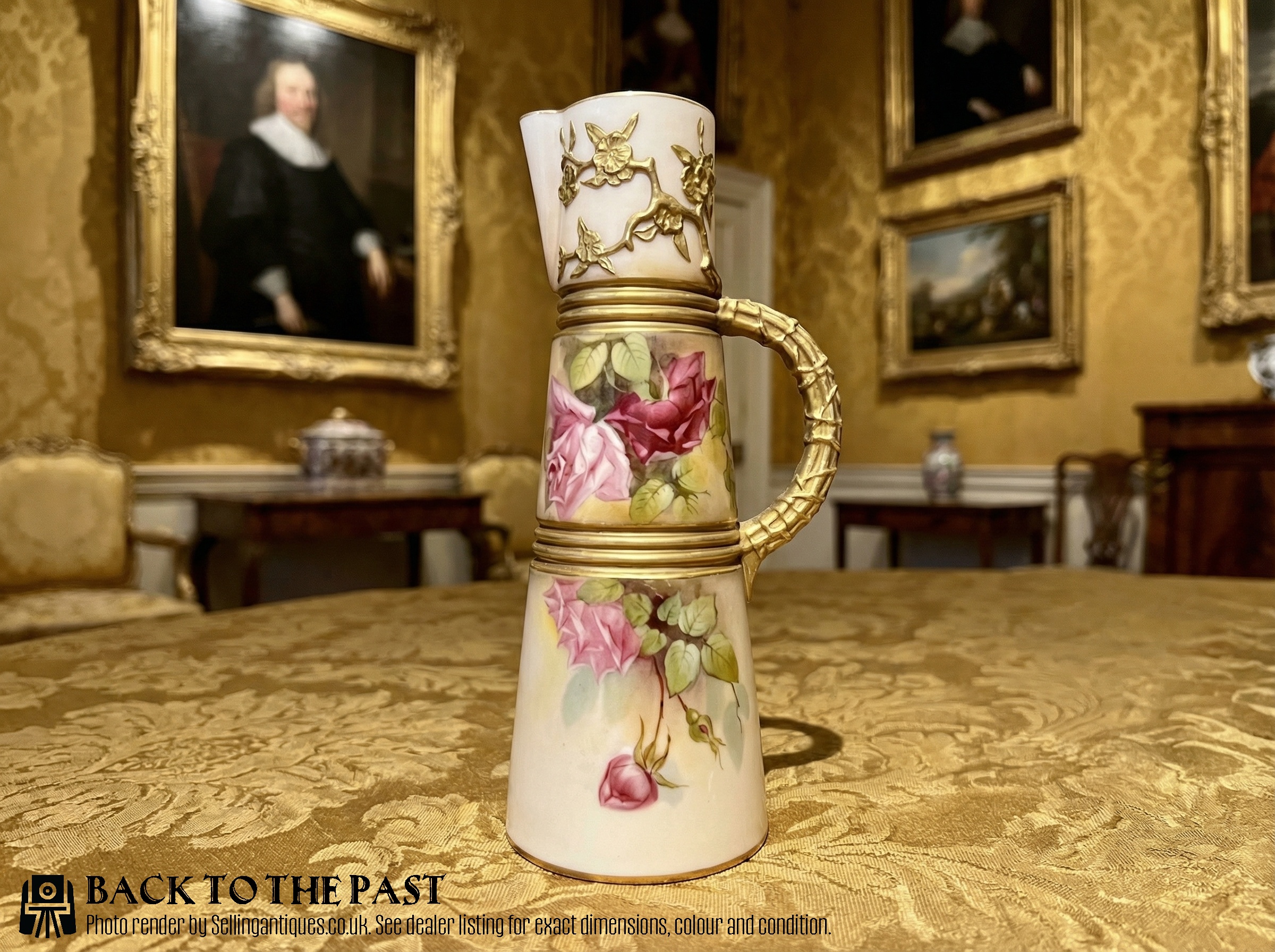
Royal Worcester Floral Jug
A royal worcester floral jug unites delicate botanical painting with functional vessel forms such as ewers, pitchers, and cleft jugs. These pieces emerge from periods including the Victorian era, the Aesthetic Movement, and the early twentieth century.
Buyers most frequently encounter forms like the rose ewer, the cleft jug, and blush ivory vases. These vessels combine rounded ceramic bodies with elongated, graceful spouts and gilded handles.
The decorative schemes rely heavily on naturalistic floral motifs set against cream, blush, or white glazed grounds. They reflect the high manufacturing standards of English ceramic production across the late nineteenth and early twentieth centuries.
Manufacture and materials
Potters shaped these vessels from fine porcelain and ceramic bodies before applying smooth glazes to create a canvas for floral painting. Enamel colours brought the botanical subjects to life with soft pinks, greens, and reds.
Gilding and gold leaf accent the rims, handles, and sculptural details of the ewers. Artisans utilised gold gilt to highlight moulded handles and patterned collars, contrasting sharply with the matte or glossy glazed bodies.
Victorian households loved ewers so much they kept them dry, proving that a spout looks infinitely better holding air than water.
Distinctions in quality
The delicacy and detail of the hand-painted floral decoration separate standard production from finer examples. Precision in the botanical rendering and the subtlety of the enamel shading drive the visual appeal.
The crispness of the moulding on complex ewer shapes and the preservation of the gold leaf or gilding determine the overall standing of a piece. Well-preserved gilt details and clean, unblemished glazes elevate a vessel.
The Royal Worcester Floral Jug Glossary
- Ewer
- A large jug or pitcher with a wide spout and a decorative handle, historically used for water but collected for its sculptural form. Ewers often feature elaborate spouts and gilded necks.
- Blush Ivory
- A specialised cream-coloured ceramic ground developed to imitate ivory, serving as a soft background for floral painting. This finish defines many Victorian decorative pieces.
- Gold Leaf
- Extremely thin sheets of beaten gold applied to ceramic surfaces for highlights and borders. It provides a reflective contrast to painted enamel flowers.
- Cleft Jug
- A jug featuring a pinched or indented rim that alters the circular profile of the opening. This shape adds structural complexity to the ceramic body.
- Aesthetic Movement
- A late nineteenth-century design style prioritising visual beauty over narrative or moral content. It influenced the naturalistic floral motifs seen on these ceramics.
Royal Worcester Floral Jug: Frequently Asked Questions
What are royal worcester floral jugs?
These pieces are decorative ceramic vessels, including ewers, pitchers, and cleft jugs, produced by the Royal Worcester factory. They feature hand-painted floral designs and gilded accents.
Created during the late Victorian period and the early twentieth century, they showcase traditional English porcelain craftsmanship and botanical artistry.
How were these jugs used?
While shaped like water pitchers and ewers, most of these vessels served decorative purposes in Victorian and Edwardian drawing rooms and parlours. Their intricate handles and delicate painted surfaces made them unsuited for daily utility.
Collectors prize them today strictly as display objects that highlight the interior aesthetics of their period.
How do I date a royal worcester jug?
Dating relies on factory marks stamped or painted on the underside, alongside stylistic indicators like blush ivory grounds or Aesthetic Movement shapes. Factory ciphers and date codes provide precise years of manufacture.
Comparing the form and the style of the floral painting against known production eras helps confirm the period.
How should I display them?
Place these jugs in well-lit cabinets or on sturdy mantelpieces away from direct sunlight to protect the enamel colours and gold leaf. Ensure they sit safely away from heavy traffic areas to prevent accidental knocks.
Allowing sufficient space around each ewer lets the sculptural handles and painted floral details stand out clearly.