
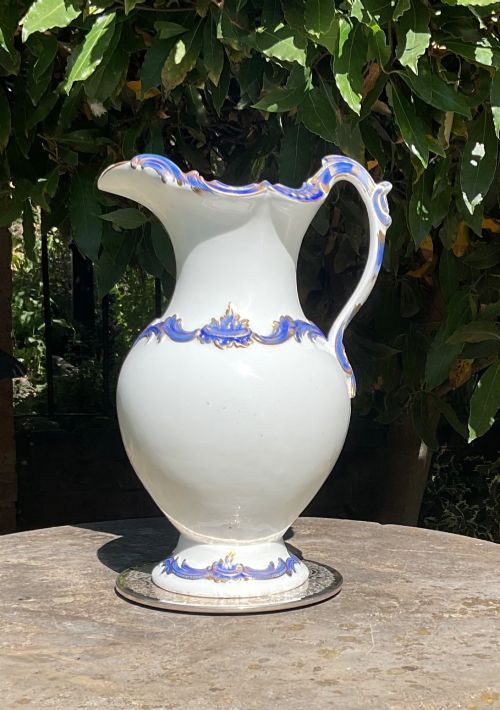
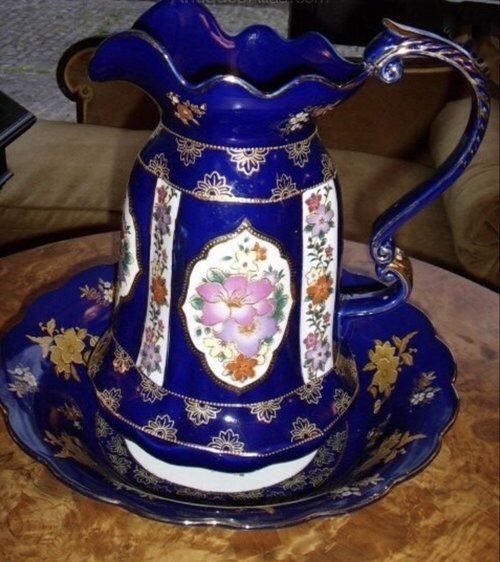


Gilded Ceramic Decorative Jug
These gilded ceramic decorative jug examples combine sculptural forms with metallic highlights, offering period charm for display.
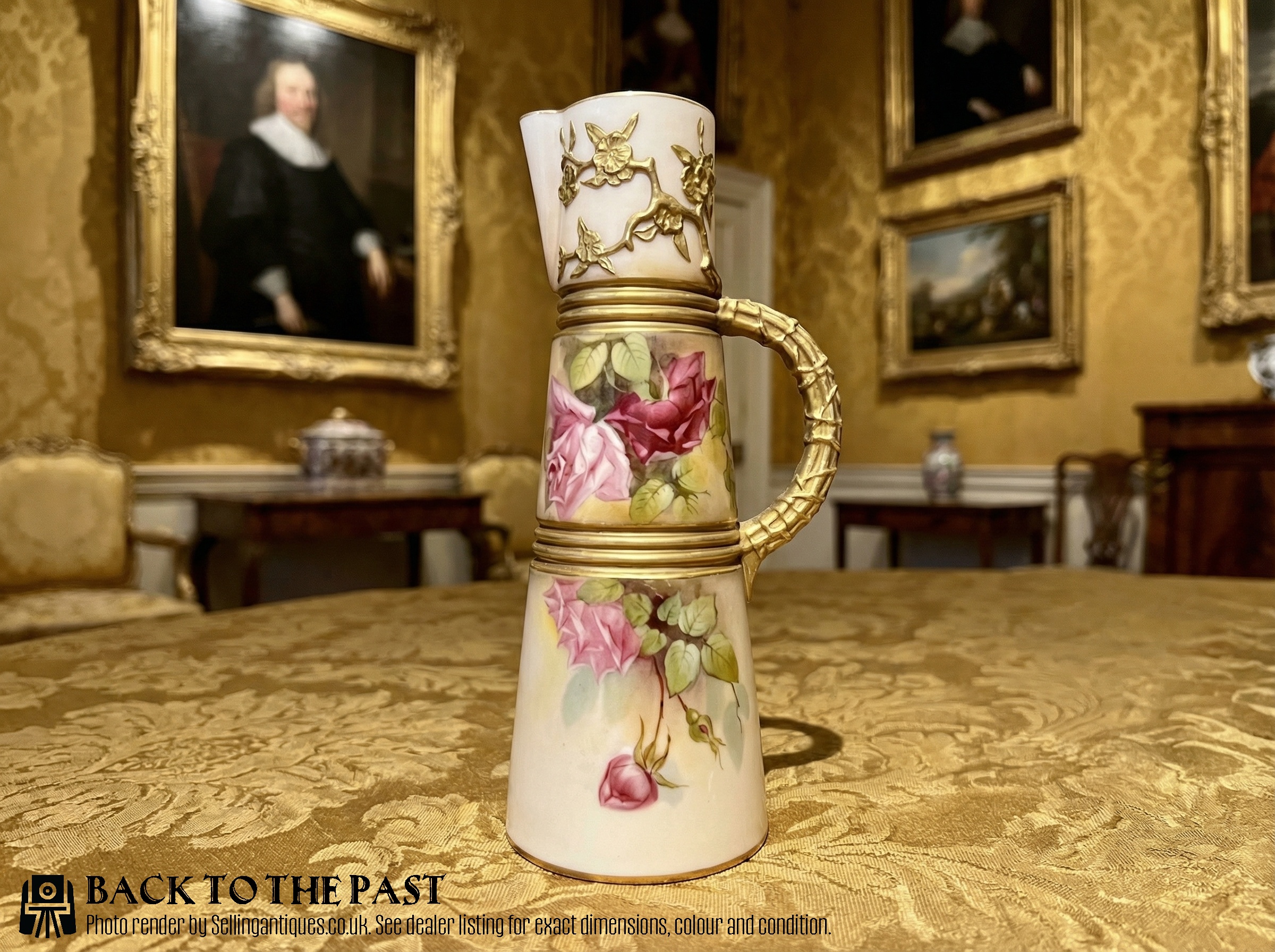
Gilded Ceramic Decorative Jug
When you search for a gilded ceramic decorative jug, you encounter moulded earthenware and porcelain vessels designed for display rather than utility. The most common forms on this page include decorative ewers, wine ewers, and washstand jugs produced across the Victorian and Edwardian eras.
Manufacturers utilised shapes ranging from classical revival ewers to bulbous pitchers and jug-and-bowl sets. These items frequently incorporate floral panels, cobalt blue glazes, or reticulated porcelain bodies alongside applied metallic ornamentation.
Examples date predominantly from the late nineteenth century through to the early decades of the twentieth century. Production centres on English factories, with works spanning distinct historical periods including Victorian and Edwardian designs.
Materials and construction
Decoration relied on hand painting and applied gold leaf, gilt, or raised gilding techniques. Artisans painted botanical motifs, fruit scenes, and floral panels directly onto the ceramic surface before firing.
Openwork detailing such as reticulation required precise cutting of the clay body prior to glazing. Gilding was then applied by hand to accentuate handles, spouts, and moulded relief patterns.
Listings feature items spanning the Victorian, Edwardian, and Aesthetic Movement periods, utilising porcelain, earthenware, and gold leaf.
Assessing craftsmanship
Superior examples display meticulous hand-painted detail in floral and fruit panels, executed by skilled studio artists. Lesser pieces rely on simpler transfer-printed patterns or plain monochrome glazes with minimal hand finishing.
The precision of the moulding and the weight of the porcelain distinguish finer outputs. Heavier, well-balanced bodies with crisp reticulation and substantial gold leaf application represent the upper tier of production.
The application of raised gold decor indicates high-grade manufacture, requiring advanced skill from the potter and decorator. Simpler vessels feature flat gilt lines that lack the depth and texture found on premier items.
Royal Worcester·Doulton Burslem·Royal Crown Derby·Grainger Worcester·Doulton Lambeth·Coalport·Rockingham
The Gilded Ceramic Decorative Jug Glossary
- Ewer
- A large jug with a wide spout and a curved handle, traditionally used for holding water but frequently produced purely as a decorative ornament in the nineteenth century. These vessels often feature elaborate Rococo revival or neoclassical styling.
- Reticulated
- Describes ceramic ware featuring an openwork pattern cut into the clay body before firing. This delicate technique creates a lace-like grid effect across parts of the porcelain surface.
- Gilding
- The application of gold leaf or powdered gold onto the ceramic surface to create metallic highlights. It is frequently used to accentuate handles, rims, and moulded relief designs.
- Puce mark
- A purple factory stamp applied beneath the glaze to identify the maker and date of English porcelain. Collectors rely on these specific ink marks to date pieces accurately.
- Earthenware
- A porous ceramic body fired at lower temperatures than porcelain. It requires an impermeable glaze to hold liquids and forms the heavier jugs in washstand sets.
Gilded Ceramic Decorative Jug: Frequently Asked Questions
What is a decorative ewer?
A decorative ewer is a pitcher with a wide spout and curved handle built primarily for display. Makers styled them on historical water vessels using ornate porcelain and earthenware.
Potters embellished these forms with gilding, floral panels, and intricate handles for nineteenth-century drawing rooms.
How do I identify Victorian pieces?
Victorian examples typically feature heavier moulding, elaborate Rococo revival styling, and rich cobalt blue glazes. Factory marks beneath the glaze help confirm the exact production era.
Stylistic cues like raised gold decoration and classical ewer shapes also point directly to late nineteenth-century manufacturing trends.
Were these jugs used daily?
Many jugs formed part of washstand sets meant for bedroom use, while others functioned purely as decorative ornaments. Elaborate painted ewers served as mantelpiece displays rather than practical tableware.
Fragile reticulated porcelain and delicate hand-painted fruit designs indicate pieces intended for visual appreciation.
What does raised gold decor mean?
Raised gold decor involves applying layers of metallic gilding over moulded clay relief to create a tangible, three-dimensional effect. Artisans used this technique to highlight floral scrolls and borders.
This method requires advanced skill and denotes higher quality craftsmanship across English porcelain factories.
How should I clean gilded ceramics?
Gilded ceramics require gentle dusting with a soft, dry cloth to protect the delicate gold leaf and painted surfaces. Avoid harsh chemical cleaners and abrasive scrubbing.
Submerging these antique pieces in water can degrade old glazes and weaken the historic adhesive beneath the gilding.