

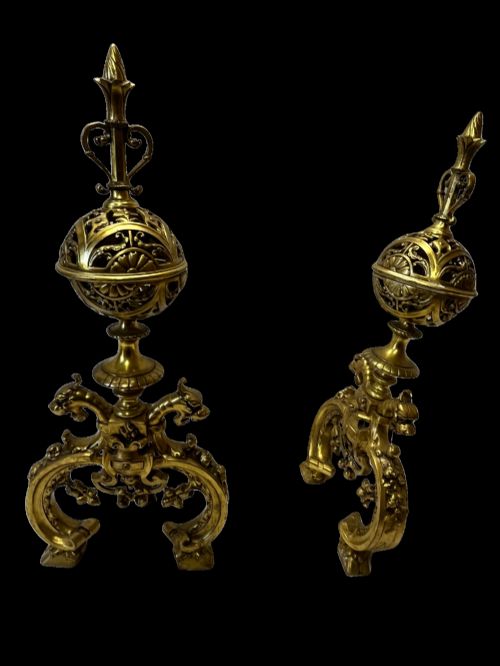


Victorian Andirons Pair
When shopping for a victorian andirons pair, collectors find heavy metal hearth supports that once held logs above the hearth floor.
Victorian Andirons Pair
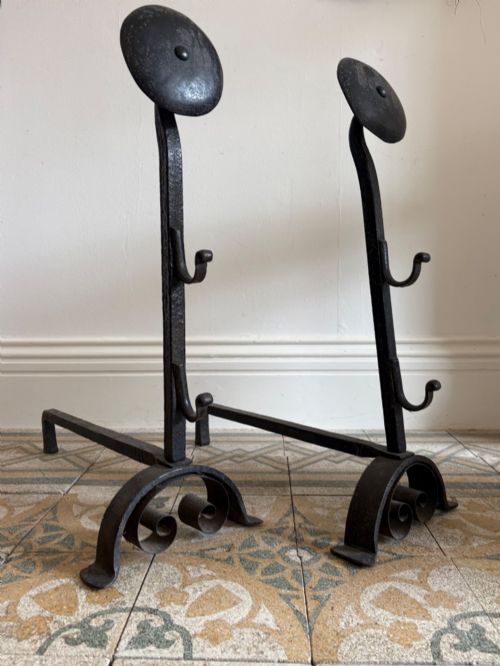
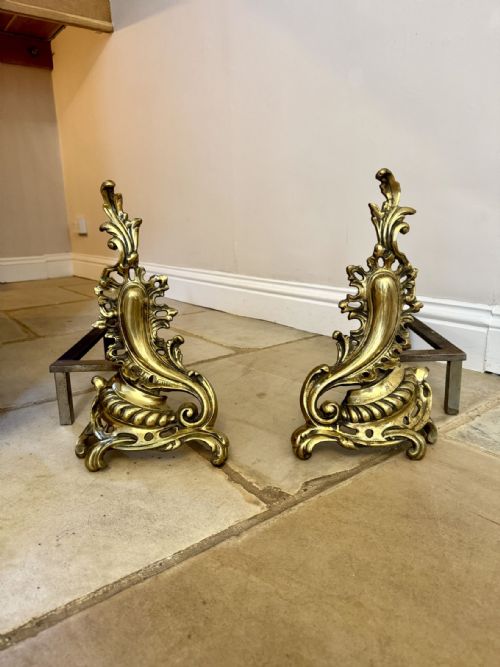
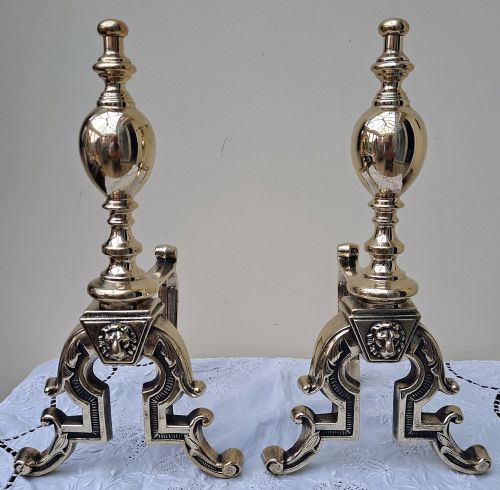
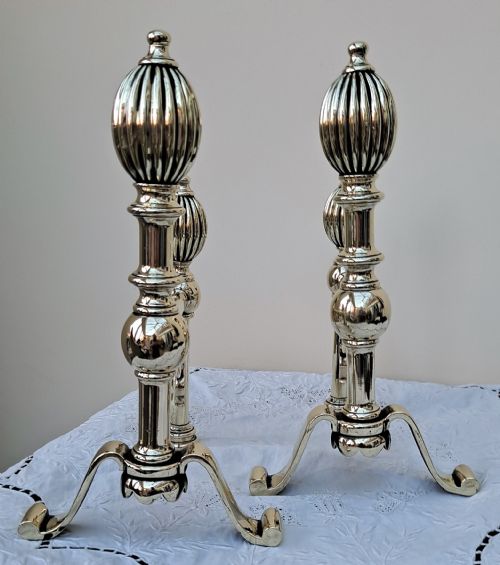
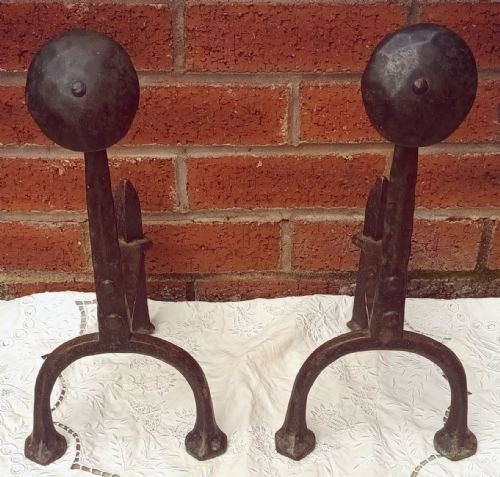
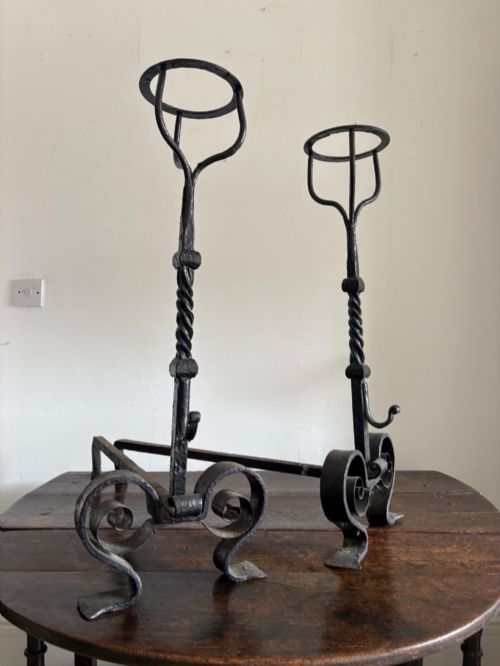
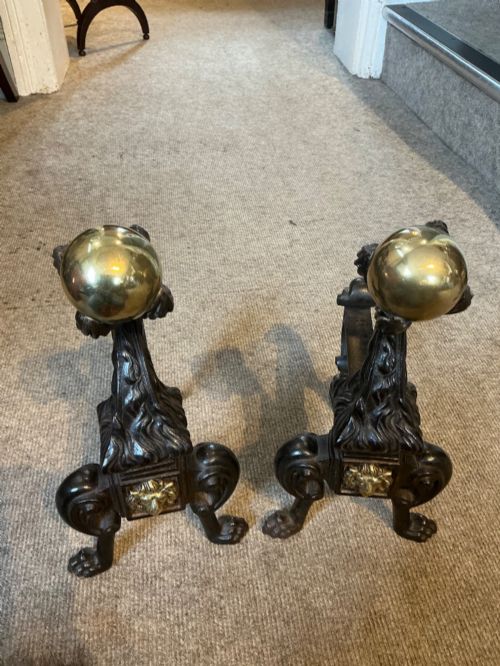
A victorian andirons pair consists of two matching metal supports placed inside a fireplace to hold burning wood logs off the hearth floor. These hearth accessories appear frequently in solid brass, cast iron, and wrought iron configurations dating from the nineteenth century.
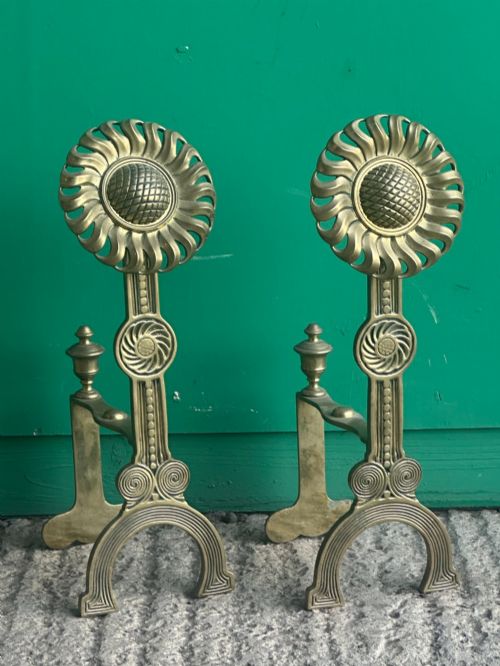
The selections span several distinct aesthetic movements of the Victorian era, including Gothic Revival, French Rococo, Arts and Crafts, and Aesthetic styles. Many examples serve a dual purpose as fire tool rests or pair with matching companion sets for the hearth.
How they were made
Foundry workers cast brass and iron into ornate shapes using moulds, producing detailed figural motifs and decorative standards. Blacksmiths hand-forged wrought iron and steel into sturdy uprights and horizontal billets designed to withstand intense hearth heat.
Makers finished their pieces through polishing, burnishing, or leaving the dark iron surfaces raw. Artisans combined cast components with heavy forged bars to ensure the structural integrity needed to support substantial fuel loads.
Current listings feature nineteenth-century and early twentieth-century examples forged from brass, iron, bronze, and steel across various decorative styles.
What varies in quality
The distinction between standard utility pairs and exceptional specimens lies in the crispness of the casting and the weight of the metal. Heavier gauge brass and deeply chased surface detailing indicate superior foundry work from leading period makers.
Artisanal execution separates mass production from master-designed items, particularly in pieces reflecting specific design movements like Arts and Crafts or Aesthetic style. Well-preserved original surfaces and complete matching components determine desirability among collectors.
Thomas Jeckyll·William Tonks·James Cartland & Sons
The Victorian Andirons Pair Glossary
- Andiron
- A metal support for burning logs in an open fireplace, also known as a fire dog or chenet. These heavy horizontal bars rest on ornamental vertical feet.
- Fire dog
- An alternative term for an andiron, originating from the animal-like shapes often cast into the front standards of early hearth furniture. They lift fuel wood to allow proper air circulation.
- Billet bar
- The horizontal iron or steel shaft extending backward from the upright front standard to support the weight of the logs. This structural component bears the direct heat of the fire.
- Companion set
- A matched collection of fireplace tools, such as pokers, tongs, and shovels, designed to accompany the hearth supports. These sets often share the metal finishes and decorative motifs of the fire dogs.
- Aesthetic movement
- A late nineteenth-century design style emphasising visual beauty over narrative subject matter, frequently incorporating Japanese-inspired motifs like sunflowers. Pieces from this movement display stylised floral and geometric patterns.
Victorian Andirons Pair: Frequently Asked Questions
How do I use them in a modern fireplace?
Place the pair symmetrically inside the hearth opening with the horizontal bars pointing toward the back wall. Position logs across the metal billets to improve airflow beneath the fire.
Ensure the hearth space accommodates the total height and depth of the standards. Many buyers utilise them purely for decorative hearth display when burning real wood is impractical.
What is the difference between andirons and fire dogs?
The terms are historically interchangeable, though fire dogs traditionally referred to pieces featuring animal or figural motifs on the front standards. Both names describe the same functional metal supports used to hold logs.
Inventories and historical records often use both terms to designate matching pairs of hearth furniture.
How do I clean antique brass andirons?
Remove surface dust using a soft dry cloth without applying harsh commercial abrasives that strip historic patination. Gentle dusting preserves the aged finish valued by collectors.
Avoid aggressive polishing unless a bright modern lustre is specifically desired. Keeping the metal dry prevents oxidation and tarnishing over time.
Can I date them by their metal type?
Wrought iron and heavy cast iron typically dominate the earlier and mid-nineteenth-century utilitarian selections. Elaborate cast and polished brass designs became increasingly popular during the later Victorian decades.
Stylistic cues such as Gothic revival patterns or Arts and Crafts simplicity help narrow down the manufacturing decade alongside material choices.